The World Luxury Chamber of Commerce (WLCC) proudly announces the induction of Peacock Concierge into its distinguished global network of elite luxury brands. This membership affirms Peacock Concierge’s position as a leading force in lifestyle management and exemplifies WLCC’s continued commitment to fostering excellence across the luxury landscape.
Peacock Concierge is renowned for its premium personalized lifestyle and concierge services, empowering affluent clients with exclusive experiences through seamless technology and trusted partnerships across the Middle East. Established in 2011 and headquartered in Kuwait, it serves affluent clients, major banks, and corporate partners throughout the GCC and MENA regions. The company redefines luxury service with 24/7 accessibility, exclusive regional insight, and a trusted global vendor network. Their model, operating both discreetly and powerfully behind premium bank brands, has set new standards for client engagement and lifestyle elevation in the Middle East.
Membership in WLCC offers strategic advantages, including access to a high-level network of international luxury leaders, cross-industry partnerships, and tailored global exposure. For Peacock Concierge, this alignment will unlock new avenues for collaboration, enabling the brand to extend its influence and contribute meaningfully to the global luxury dialogue.
“We are pleased to welcome Peacock Concierge to the World Luxury Chamber of Commerce,” said Alexander Chetchikov, President of World Luxury Chamber of Commerce.“Their sophisticated blend of technology, cultural intelligence, and bespoke service reflects the core values of our community. Their presence strengthens our collective mission to shape the future of luxury with innovation, discretion, and global relevance.”
By joining WLCC, Peacock Concierge is poised to not only enhance its international presence but also to help elevate industry-wide standards in experiential service, digital integration, and high-value client engagement.
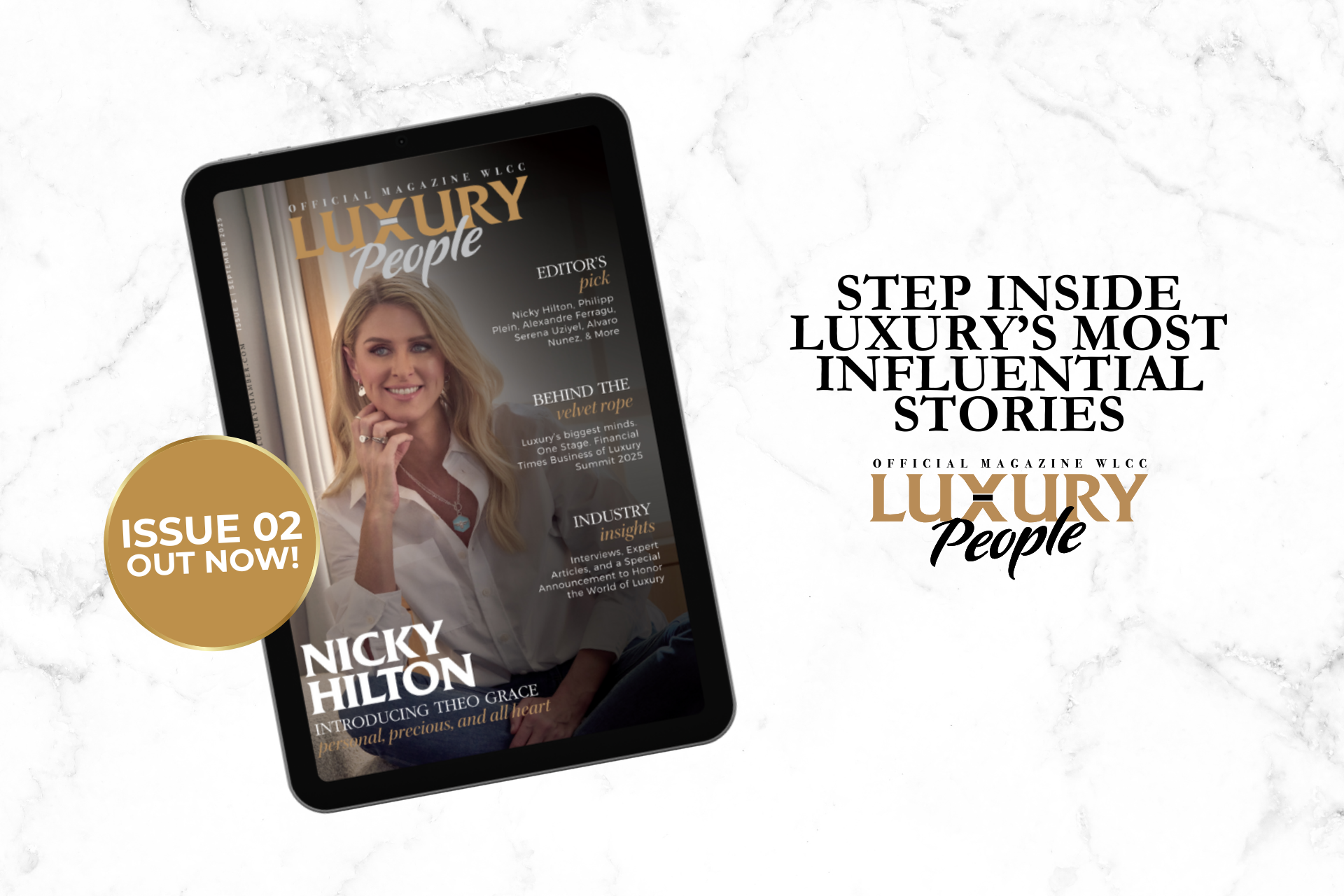
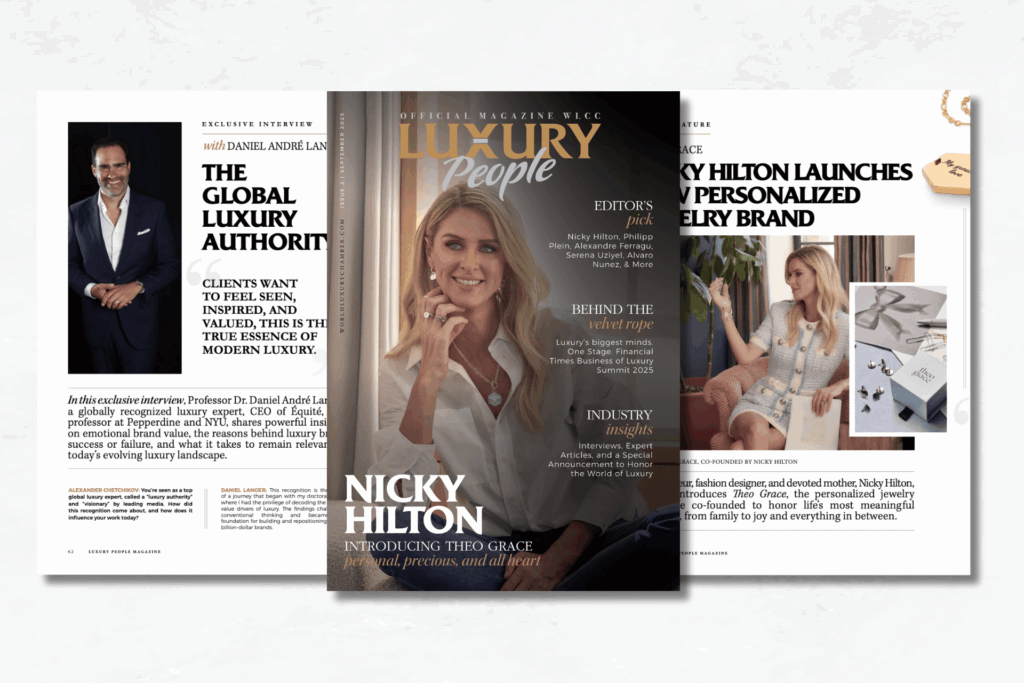
The World Luxury Chamber of Commerce (WLCC) proudly reveals the second issue of Luxury People Magazine, the official voice of the global luxury community. Packed with big names, fresh insights, and groundbreaking stories, this edition also marks a milestone moment: the launch of the very first World Luxury Day, taking place on October 8.
What’s inside? Think front-row access to the world of luxury visionaries and innovators:
Nicky Hilton introduces Theo Grace, her personalized jewelry brand inspired by love and connection.
Sanyukta Shrestha, ethical fashion pioneer, on reimagining haute couture with conscience.
Philipp Plein makes his bold entrance into global hospitality and entertainment.
Daniel Langer, one of the world’s leading luxury strategists, explores the industry’s identity shift.
Serena Uziyel unveils her new Madison Avenue flagship.
Plus: leadership insights from Chris Roebuck, property strategies from Álvaro Nuñez Alfaro, and highlights from the Financial Times Business of Luxury Summit 2025.
And that’s just a glimpse of what’s inside. From cover to cover, Luxury People Magazine is filled with exclusive interviews, bold ideas, and inspiring voices driving luxury forward.
“This magazine isn’t just about brands; it’s about the people rewriting what luxury means today,” says Alexander Chetchikov, President of WLCC. “With Issue 2, we celebrate creativity, courage, and purpose in luxury, and we’re excited to unite the world with the launch of World Luxury Day.”
From fashion and design to hospitality, wellness, and leadership, this issue dives deep into the ideas, people, and trends influencing luxury in 2025; not by price tag, but by passion and purpose.
The World Luxury Chamber of Commerce (WLCC) proudly announces the induction of Uptown Life Concierge, a boutique Canadian concierge and lifestyle management firm, into its distinguished circle of global luxury brands. This prestigious membership is reserved for companies that exemplify the highest levels of service, innovation, and excellence in the luxury sector.
Founded by hospitality industry expert Karen Frontin, Uptown Life Concierge has earned a reputation for personalized service, impeccable discretion, and a sophisticated understanding of the needs of high-net-worth individuals. From managing executive logistics and luxury property services to orchestrating milestone events and wellness experiences, Uptown Life Concierge provides an all-encompassing lifestyle solution for clients who value time, elegance, and trust.
“We are honored to welcome Uptown Life Concierge to the WLCC family,” said Alexander Chetchikov, President of the World Luxury Chamber of Commerce. “Their attention to detail, dedication to quality, and deep understanding of the luxury client’s evolving expectations make them a natural fit for our community. We are excited to support their continued success and to collaborate on future-forward initiatives that elevate the global luxury experience.”
Membership in WLCC grants Uptown Life Concierge exclusive access to a dynamic international network of elite brands and decision-makers across industries such as hospitality, fashion, real estate, fine dining, and private travel. This affiliation will provide the firm with unique opportunities to grow its influence, explore high-level partnerships, and gain insights into emerging global trends—all while contributing its own distinct expertise to the evolving dialogue of luxury.
As a brand that thrives on creativity, logistical mastery, and personalized care, the firm brings a refreshing, client-centric approach to the chamber. Its inclusion marks a commitment not only to raising standards in personal service, but also to fostering innovation across the broader luxury ecosystem.
With core values rooted in integrity, respect, confidentiality, and excellence in presentation, Uptown Life Concierge is poised to become an influential voice within WLCC. From providing effortless home management to easing senior life transitions, every service the firm offers is a reflection of its mission: to make life more beautiful, more manageable, and more rewarding for those who expect nothing less than the best.
Welcome to The Weekly Edit, your curated digest of the latest in the world of luxury. Each week, WLCC brings you a handpicked selection of industry news, insights, and stories influencing the future of high-end fashion, design, travel, real estate, and beyond. Consider this your insider’s guide to the latest in luxury.
UAE Real Estate Set to Hit $759 Billion: A Market Boom the World Can’t Ignore
The UAE real estate sector is on a transformative trajectory, projected to reach $759.04 billion by 2029, driven by Dubai and Abu Dhabi’s booming property markets. Shifts from renting to ownership, rising demand for luxury and family-friendly homes, and the dominance of off-plan projects are reshaping investor strategies. Government incentives, including the Golden Visa, coupled with robust infrastructure and tourism growth, are fueling confidence among international investors. Early access to prime developments and flexible payment plans are redefining entry points. Together, these trends signal a maturing market where innovation, strategic investment, and sustainable growth converge.
US Leadership Shakeup Signals L’Oréal’s Ambitious Growth Plans
L’Oréal is reshuffling its US leadership as Alexis Perakis-Valat is named CEO of its American business, succeeding David Greenberg, who will take on the newly created role of US chairman. Perakis-Valat, president of the consumer products division, has over 30 years at L’Oréal and grew the division’s sales from $14 billion to $19 billion, overseeing acquisitions like Korean skincare brand Dr. G. Greenberg. With 32 years at the company, helped make the US its top growth driver. Both appointments, effective Jan. 1, 2026, reflect the strategic significance of the US market for L’Oréal’s future expansion.
Fashion is entering a new era where algorithms become design collaborators. AI is breaking down barriers, allowing independent designers, students, and startups to generate, iterate, and refine concepts previously accessible only to elite fashion houses. Tools like text-to-image generators, HAIGEN (Human–AI Collaboration for GENeration) , and FedGAI (Federated Generative AI) enable creative exploration, collaboration, and privacy while supporting sustainable practices through digital prototyping. Beyond efficiency, AI fosters aesthetic diversity, cross-border inspiration, and redefined educational approaches. Challenges around authenticity, intellectual property, and equitable access remain, but ethical frameworks and industry dialogue aim to ensure AI enhances human ingenuity, making fashion more inclusive, innovative, and environmentally conscious.
The Future of Sustainable Luxury Packaging Begins with Gemini
When luxury meets sustainability, innovation takes shape. Toly and Eastman have unveiled Gemini, a breakthrough compact crafted with Eastman’s Cristal™ One Renew IM812, redefining beauty packaging with elegance and responsibility. The resin delivers glass-like clarity, up to 100% certified recycled content through molecular recycling, and seamless compatibility with global PET recycling streams. Toly, the first to apply this material in compacts, reinforces its reputation for premium, sustainable solutions. As Olaf Zahra notes, Gemini balances high-end aesthetics with sustainability goals, while Eastman’s Tara Cary highlights its readiness for future regulations.
The Cartier Prize 2025: Calling Tomorrow’s Watchmaking Visionaries
Cartier opens submissions for the 28th Cartier Prize for Watchmaking Talents of Tomorrow, continuing its long-standing commitment to nurturing emerging horological talent. The theme, Changing the Balance: Reading and Understanding Time Differently, invites apprentices and students from Switzerland, France, Belgium, and Germany to reinterpret a pendulette (desk clock) movement with bold creativity and technical skill.
The 12 finalists receive up to 80 hours over three months to develop their prototypes under the mentorship of external experts. Final presentations take place at Cartier’s Maison des Métiers d’Art in La Chaux-de-Fonds, Switzerland, with the awards ceremony scheduled for spring 2026, celebrating innovation and the preservation of watchmaking heritage.
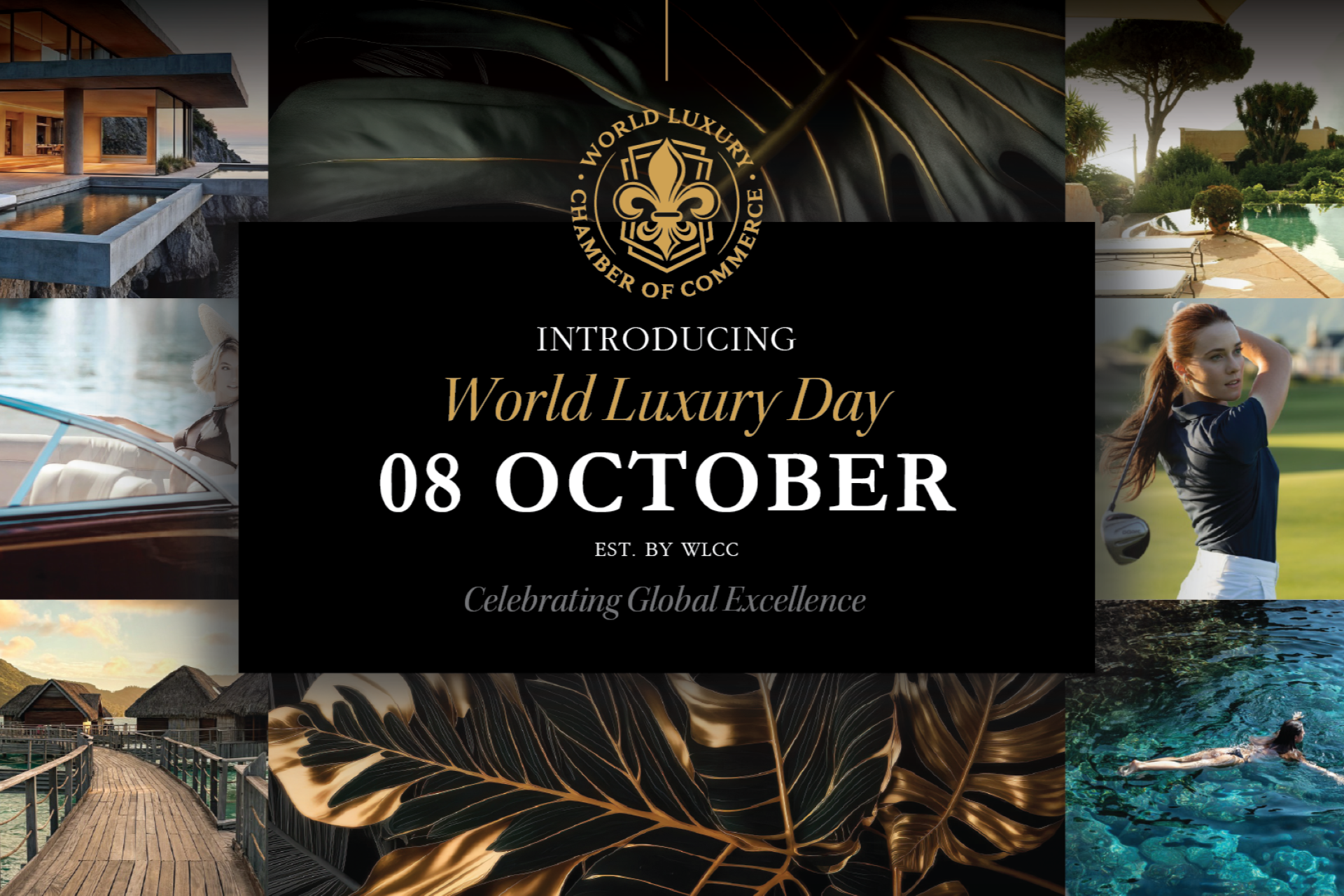
World Luxury Day, celebrated for the very first time on October 8 this year, is rapidly gaining momentum. Media, industry leaders, and global brands are turning their attention and support toward this new international initiative by the World Luxury Chamber of Commerce. This occasion is not only a celebration but also a multilayered effort to honor and redefine the contemporary meaning of luxury. It is the right time to uncover the essence behind World Luxury Day, its identity, and purpose.
Overview
World Luxury Day is a global celebration of excellence, craftsmanship, innovation, and sustainability. Launched by the World Luxury Chamber of Commerce (WLCC), it is the first professional holiday dedicated to those working in the luxury industry. October 8 was chosen as the date because it marks a milestone for the professional community, the founding of the WLCC. Its mission is to unite brands and leaders for networking, knowledge exchange, and collective growth.
Logo
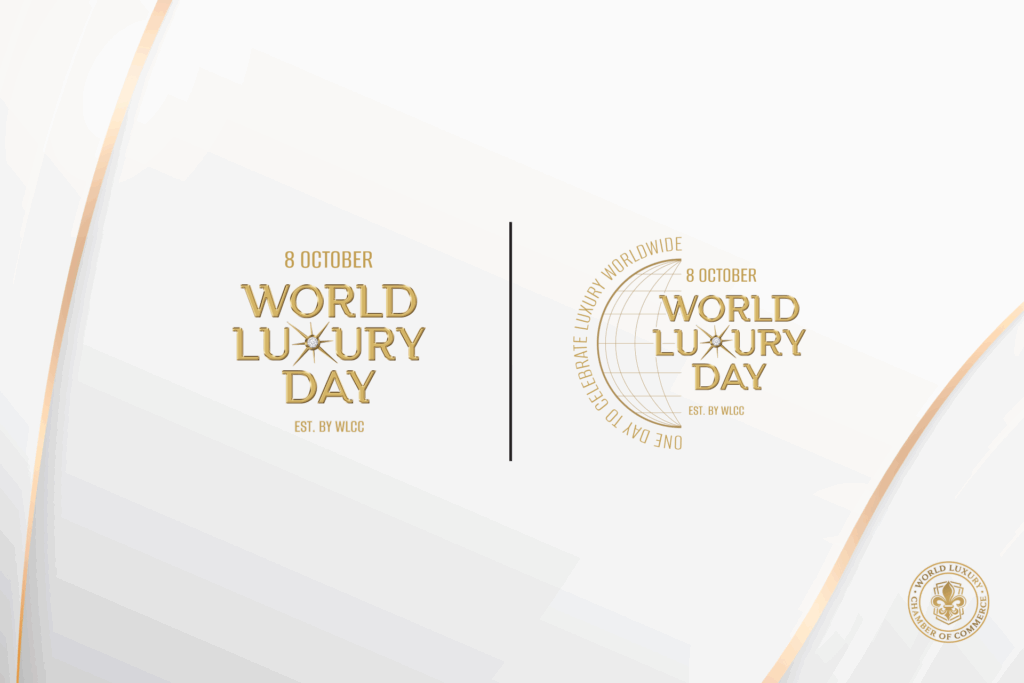
World Luxury Day features two variations of its logo.
The first highlights the event’s name, rendered in the hues of precious metals and accompanied by a shining diamond, symbolizing the brilliance of the dreams and talents of those devoted to the luxury industry. In Latin, Lux means “light,” and this very light is embedded in the identity of World Luxury Day, illuminating and inspiring millions of people worldwide.
The second version features a globe, emphasizing the truly international character of the event, which unites industries, cultures, and people worldwide to celebrate the authentic essence of luxury.
Slogan
One day to celebrate luxury worldwide The slogan reflects the vision of creating a single day when every corner of the global luxury industry comes together to celebrate its values, achievements, and people.
Goals
World Luxury Day is the first international celebration of luxury that places people, the professionals, creators, and innovators, at the forefront.
Celebrate the people behind the luxury industry: artisans, designers, innovators, entrepreneurs.
Highlight how excellence, creativity, and heritage shape our world.
Showcase sustainability and ethics as true benchmarks of luxury.
Unite professionals, brands, and enthusiasts in a global celebration.
Mission and Vision
World Luxury Day strives to become the annual global platform where the values of the luxury industry are honored, reimagined, and shared with the world. It celebrates not only products and services but also the dedication, vision, and artistry of the people who bring them to life. By bridging tradition with innovation, and prestige with responsibility, it aims to establish a legacy that reflects both excellence and purpose.
“I envision World Luxury Day as a global celebration where each sector showcases its uniqueness: fashion with shows or collaborations; hospitality with special packages; real estate with property viewings; and haute cuisine with tastings. The main goal is to honor craftsmanship, innovation, and unique experiences, but first and foremost, it’s a celebration for the people working in the luxury industry.” — Alexander Chetchikov, President of WLCC
What if your brand could stand among the world’s most recognized names in luxury, sustainability, and innovation? The World Luxury Chamber of Commerce offers exactly that, a gateway into an elite network where prestige meets opportunity. Whether you’re aiming to expand globally, strengthen your reputation, or connect with like-minded leaders in the luxury sector, WLCC membership could be the key. In this blog, we’ll explore membership benefits, criteria, the application process, and the recognition materials that highlight your place in this exclusive circle. Each section ends with actionable insights to help you take the next step with clarity.
Unlocking Membership Benefits
Members gain recognition and prestige by joining an exclusive group of respected luxury industry leaders. They enjoy access to impressive networking opportunities with other brands, experts, and collaborators through exclusive events and platforms. Membership also opens the door to exclusive experiences such as VIP events & exhibitions and also offers invaluable industry insights and expertise to help brands and individuals stay ahead of the curve. Beyond that, members can benefit from global promotion to gain visibility and participate in professional development opportunities such as advanced training sessions and development programs.
Actionable Insights:
Assess your current visibility: would global promotion significantly boost your growth?
Identify key people or brands you want to connect with: could WLCC events open those doors?
Focus on which benefits align most with your immediate and long-term goals.
A Selective Membership Criteria
Becoming a WLCC member is selective. To qualify for membership, applicants must meet one of the following criteria: Applicants must demonstrate outstanding achievement in their segment of the luxury industry, whether through quality, service, innovation, craftsmanship, creativity, or sustainability. They must also show international recognition or present solid plans for global reach. Equally important, members are expected to share WLCC’s values and contribute to advancing the luxury sector. In some cases, a reference from an existing member may be requested. Finally, sustainability is non-negotiable; members must prove a genuine commitment to responsible and sustainable practices.
Actionable Insights:
Review your brand’s practices in sustainability, craftsmanship, and innovation to identify strengths and areas for improvement.
If international recognition is lacking, plan milestones that can build your global reputation.
Reach out to current members for potential references and to learn from their experiences.
A Smooth Process
The membership process begins with completing and submitting an online application form. Next, applicants take part in an interview where their goals are discussed and the most suitable membership package is selected. Following this, the organizing committee reviews the application and makes the final approval decision. Once approved, the applicant confirms their membership and pays the annual fee. Membership is designed for continuity, renewing automatically each year.
Actionable Insights:
Update your portfolio, achievements, and sustainability credentials before applying.
Prepare for the interview by clarifying your goals and how WLCC membership will help achieve them.
Budget for the fee as well as participation in events and activities, since renewal is ongoing.
Member Recognition Essential Materials
Membership is accompanied by prestigious recognition materials that signify credibility and distinction. New members receive a certificate that can be proudly displayed, a gold-plated lapel pin to wear as a mark of honor, and a high-quality sticker suitable for storefronts or office entrances. A personalized welcome letter and a member plaque that provides a permanent display piece to reinforce brand prestige in any professional space. These tangible symbols validate membership and enhance brand image.*
Incorporate certificates, plaques, and pins into marketing efforts to highlight prestige.
Maintain these materials in pristine condition to preserve their impact.
WLCC membership offers prestige, global exposure, and powerful networking, while requiring excellence, shared values, and sustainability. If your brand aligns with these standards, joining WLCC can unlock opportunities for growth and recognition in the luxury industry.
The World Luxury Chamber of Commerce (WLCC) proudly announces the induction of CASA BOUTIQUE DEL MAR into its distinguished global network of elite luxury brands. This membership affirms CASA BOUTIQUE DEL MAR’s position as a leading force in luxury real estate and exemplifies WLCC’s continued commitment to fostering excellence across the global luxury landscape.
CASA BOUTIQUE DEL MAR is renowned for its boutique approach to luxury real estate, connecting clients with Mediterranean homes that reflect their unique stories and aspirations on the Costa Blanca. Headquartered in Javea , Espagne, the company blends expertise in real estate, law, finance, and design to provide a truly holistic and highly personalized service. Their dedication to empathy, integrity, and attention to detail ensures that every client’s journey is tailored to their individual needs, inspired in the Mediterranean.
Membership in WLCC offers great positioning for the firm, including access to a high-level network of international luxury leaders, cross-industry collaborations, and tailored global exposure. For the company, this alignment will unlock new opportunities for partnership and innovation, allowing the brand to contribute meaningfully to the growth and evolution of the luxury real estate sector.
“We are pleased to welcome CASA BOUTIQUE DEL MAR to the World Luxury Chamber of Commerce,” said Alexander Chetchikov, President of World Luxury Chamber of Commerce. “Their boutique methodology, commitment to personalized excellence, and holistic expertise embody the values of our community. Their inclusion strengthens our shared mission to elevate luxury standards and inspire innovation across industries worldwide.”
Through WLCC, CASA BOUTIQUE DEL MAR will enhance its global footprint and continue to set benchmarks for tailored real estate solutions, exceptional client care, and lifestyle-focused luxury innovation.
Once a driving force within luxury, beauty is entering a more intricate chapter. “The State of Fashion: Beauty, Volume 2”, published in June 2025 by The Business of Fashion and McKinsey & Company, reveals how the sector remains resilient yet faces new pressures. Still forecast to grow 5 percent annually through 2030, beauty is navigating economic uncertainty, shifting demographics, and sharper consumer expectations around value.
Cooling Growth, New Frontiers
At $441 billion in 2024, beauty is expanding at a steadier pace than the immediate post-pandemic years. Category dynamics are diverging:
Fragrance is poised for an 8 percent CAGR through 2030, lifted by younger consumers and niche high-end scents.
Haircare will grow at a 6 percent CAGR, driven by advanced routines and targeted treatments.
Skincare remains solid but increasingly price-sensitive.
Colour cosmetics show potential, though at slower rates after past surges.
Meanwhile, beauty’s borders are widening to encompass supplements, spa services, and aesthetic treatments, aligning more closely with wellness.
Fragmented Consumers, Shifting Power
Consumer preferences are more diverse than ever. In the US, wealth gaps pressure the middle tier while the affluent continue to spend. Europe remains highly price-sensitive, with downtrading common. China is rebounding slowly, with younger shoppers favouring domestic brands. India and Brazil are vibrant growth markets, while the Middle East shows a sustained appetite for premium beauty.
For global brands, success depends on strategies that balance affordability, exclusivity, and cultural nuance.
Distinctive Storytelling & Value
Value has become the central lens. 63 percent of consumers say mass products perform as well as luxury equivalents. Affordable disruptors, amplified by social media and fast innovation, have shifted expectations. Luxury players must prove their worth through efficacy, sensorial richness, and distinctive storytelling, while exploring entry-level products and new experiences to broaden reach.
Marketing & Retail in Transition
The founder era is waning, with performance and identity taking precedence over personalities. Influencers hold less sway, making originality in brand marketing critical. AI promises innovation in R&D and personalisation, but authenticity remains essential to maintain trust.
Retail continues to evolve: physical stores drive discovery. E-commerce and marketplaces have emerged as a preferred choice for shopping and restocking, driven by frequent discounts and the ease of ultra-fast delivery.
Conclusion
The report signals a shift. Beauty remains one of luxury’s strongest engines, but heritage and pricing power alone are no longer enough. The future belongs to brands that deliver proven efficacy, cultural fluency, and originality in a market where growth is more selective, but still full of promise.
WLCC Perspective: Beauty’s future will favour brands that prove their worth through innovation and authenticity. In luxury, trust and cultural resonance will matter more than heritage alone.
Welcome to The Weekly Edit, your curated digest of the latest in the world of luxury. Each week, WLCC brings you a handpicked selection of industry news, insights, and stories influencing the future of high-end fashion, design, travel, real estate, and beyond. Consider this your insider’s guide to the latest in luxury.
Luxury Market Defies Tariffs as Top Earners Keep Spending
Even as tariffs bite and supply chains face disruption, the luxury goods sector is holding its ground, buoyed by high-income consumers. Moody’s data reveals that the top 10% of earners now account for nearly half of all spending. At Semafor’s Business of Luxury event, executives noted that while tariffs squeeze margins, affluent buyers remain relatively indifferent to price shifts. Brands like Veronica Beard are cutting their dependence on Chinese production, and strategic price adjustments help maintain customer appeal. Sotheby’s reported continued demand for European watches despite trade hurdles, keeping the luxury market resilient amid slower overall economic growth.
Tesla Faces Growing Pressure from New BMW and Mercedes Electric Cars
Tesla is facing increased competition as BMW and Mercedes launch new electric vehicles in the U.S. and Europe. BMW’s iX3 can travel up to 497 miles, and Mercedes’ electric GLC reaches 457 miles, both exceeding Tesla’s updated Model Y long-range at 387 miles. Tesla’s U.S. market share fell to 38% in August, down from over 80% at its peak. Sales in Europe have dropped about a third, with BYD surpassing Tesla. Legacy automakers are investing in AI and digital features, partnering with tech firms to enhance vehicle capabilities, signaling a serious challenge to Tesla’s dominance.
Chanel, Dior, and Gucci Face High Stakes in Designer Shakeup
Top fashion houses are introducing collections from a new generation of designers as the luxury sector seeks to regain momentum after a post-pandemic slowdown and the death of Giorgio Armani. Chanel, Dior, and Gucci, among others, are relying on fresh creative leadership to reignite consumer interest amid inflation and changing tastes. Brands are balancing bold, attention-grabbing designs with economic realities, while previews on red carpets carry risks of social media backlash. With millions of shoppers lost last year, this season’s fashion shows in New York, London, Milan, and Paris will test whether the industry can reconnect with consumers.
Flexjet Adds Gulfstream G700, Raising the Bar for Private Jet Travel
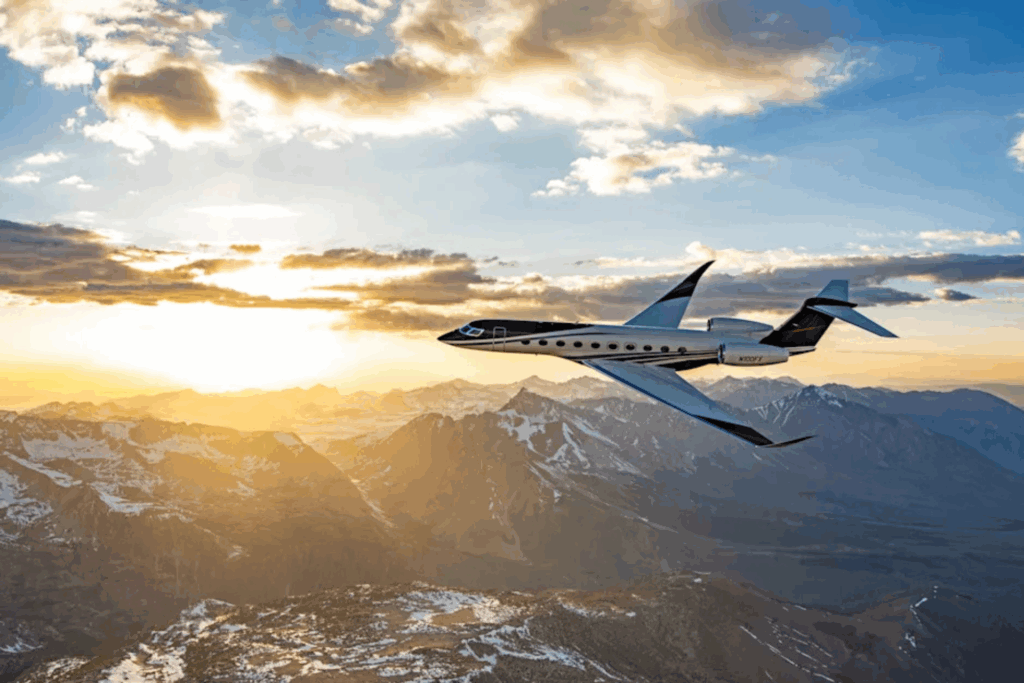
Offering one of the largest and fastest large-cabin private jets in the world, Flexjet has added the Gulfstream G700 to its fleet. The aircraft, priced at $96 million, features a spacious interior with four zones, a private bedroom, lie-flat seats, and panoramic windows, accommodating up to 15 passengers. Advanced wellness features include low cabin altitude, circadian lighting, noise suppression, and a clean air system. Operated under Flexjet’s Red Label program, the G700 provides dedicated crews, personalized service, and global access. The addition strengthens Flexjet’s fleet of over 340 aircraft, highlighting its leadership in private aviation as it celebrates 30 years.
Expanding beyond traditional hubs, luxury real estate new destinations are attracting high-end buyers seeking lifestyle, design, and community-focused living. Texas is moving from sprawling mansions to high-rise luxury, driven by tech and finance, offering upscale amenities and brand residences. Hudson Valley, NY, appeals to buyers seeking waterfront views and boutique-style living. Fiji is gaining traction for secluded, sustainable resort homes from brands like One&Only and Six Senses. Comporta, Portugal, and Sardinia, Italy, are emerging as luxury frontiers with development potential. As traditional markets like New York, Hong Kong, and London face challenges, these new locations signal a shift in global luxury real estate.
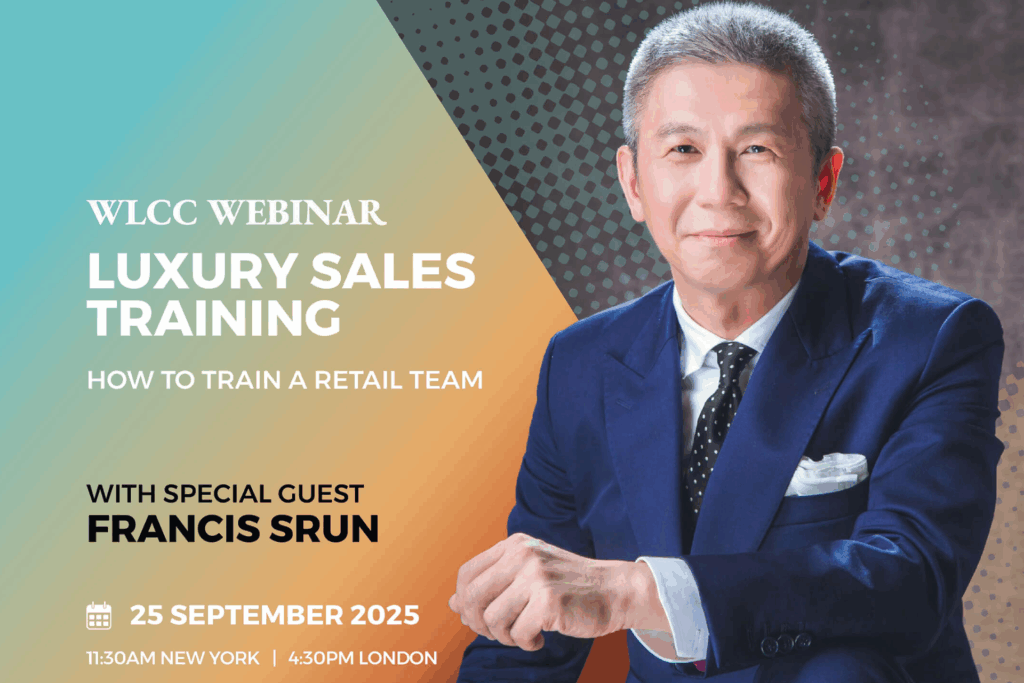
Join luxury sales expert Francis Srun for the interactive webinar “Luxury Sales Training: How to Train a Retail Team”. With over 20 years of experience, Srun will share proven strategies for coaching retail staff, developing essential skills, and enhancing customer experiences in the luxury industry. Topics include challenges in training retail teams, the importance of hard, soft, and “mad” skills, fostering potential, and effective methods for developing soft skills. As the founder of Luxury Selling, the first mobile training platform for luxury sales, Srun offers unique insights into customer psychology and sales leadership. Free for WLCC members.
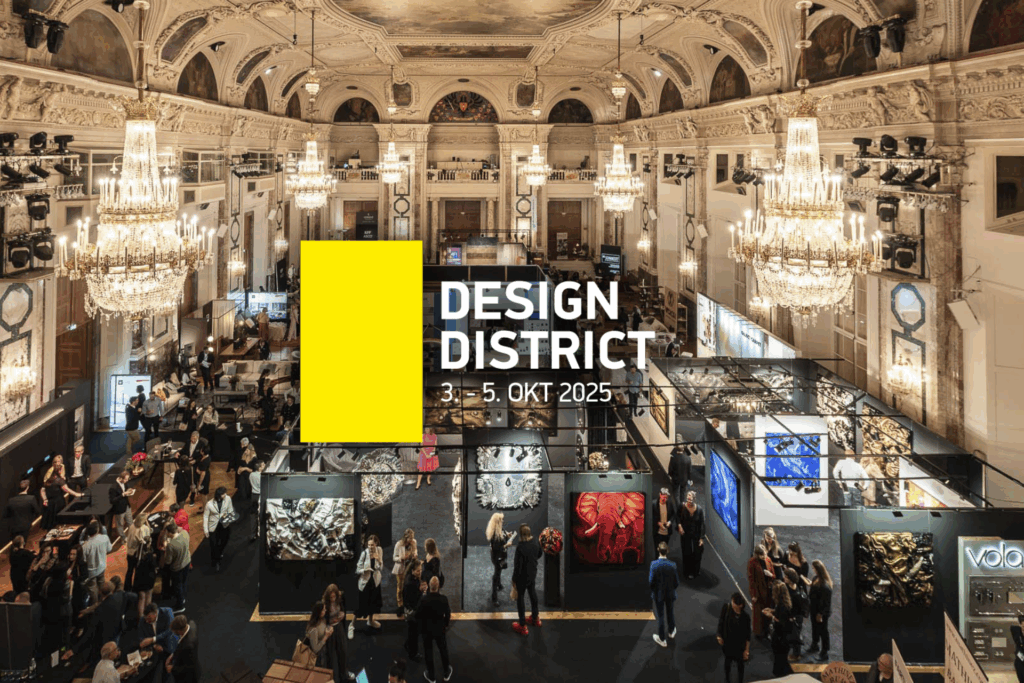
Every year the Design District transforms Vienna’s Hofburg into a world full of experiences for high-quality home design and lifestyle. National and international brands from the areas of design, real estate, automotive, interiors, technology & HIFI, art & accessories will once again invite you to taste, try and touch on more than 7.500 m² over three days.
Details: Vienna, Austria | Business | Design, Luxury Lifestyle | 03–05 October 2025 | 25% discount for WLCC Members (exhibitors booth + 100 visitor tickets) | Register Now: https://worldluxurychamber.com/events/design-district/
Cityscape Global 2025, the world’s most attended real estate event, will place Artificial Intelligence and technology at the heart of its agenda this November, showcasing how innovation is reshaping the built environment globally, and enabling the GIGA projects and mega developments that are part of Vision 2030.
The global PropTech market, valued at USD 36.55 billion in 2024, is projected to more than double to USD 88.37 billion by 2032. Meanwhile, AI – ranked as 2024’s top technology trend in real estate and construction by Business Insider – is being leveraged from design and construction to sales and asset management. With three quarters of leading US brokerages already using AI technologies to enhance operations and client interactions, Cityscape Global will provide a platform for real estate leaders to explore the tangible commercial potential of both technologies.
AI & PropTech Take Centre Stage
With AI disrupting every stage of the real estate value chain, it will be a focal point of the PropTech and AI Day at the Future of Living Summit – Cityscape Global’s Mainstage. The day’s programme will spotlight cross-sector AI applications, examine how emerging technologies are reshaping the built environment and share a global market outlook from leading PropTech and ConTech investors.
Among the visionary speakers shaping the future of PropTech and AI at Cityscape Global will be:
• H.E. Dr. Margarete Schramboeck, former Austrian Minister of Economy & Digital Affairs and current Board Member at Aramco Digital • Dr. Prof. Derek Woodgate, President of The Futures Lab and Head of the UNESCO Committee at the World Futures Studies Federation • Darren Bechtel, Founder and Managing Director of Brick & Mortar Ventures, leads the world’s largest venture capital firm focused on construction technology • Julia Arlt, Former Head of Digital Real Estate at PWC Global, and a globally renowned leader in PropTech • John Helm, Founder & Partner of RET Ventures, the industry-backed VC firm, supported by the largest network of residential owners and operators ever assembled • Will O’Donnell, Managing Director, Prologis Ventures, the investment arm of Prologis, the world’s largest owner and developer of logistics real estate
A Dedicated Showcase for Innovation
Today’s largest urban developments are setting unprecedented benchmarks for scale and complexity – ambitions that are only achievable by leveraging the full power of AI and emerging technologies. In urban design, digital twins and smart infrastructure platforms are enabling planners to model, optimise, and future-proof cities before a single brick is laid. In development, advanced construction tech and automation are accelerating delivery timelines across entire city districts. And in real estate investment, AI-driven analytics are identifying high-growth opportunities faster and with greater precision.
It is precisely for this reason that Cityscape Global is debuting a new AI & PropTech exhibition zone, connecting global developers, architects, and investors. Leading technology providers including Creative Fusion LLC, Property Automate, Trustangle, and Resimo will showcase their cutting-edge platforms that are revolutionising property development, management, and investment across the real estate ecosystem.
Innovation Challenge Now Open
The prestigious Cityscape Global Innovation Challenge is now accepting entries for 2025. The competition, hosted on https://innovationchallenge.cityscapeglobal.com, invites startups and scaleups to pitch transformative solutions across real estate, construction, and urban living.
Last year’s winners, PlanRadar, Hydraloop and Valocity have since had several breakthrough moments:
• PlanRadar has expanded its footprint across the GCC, citing the award as a key driver of new partnerships and market credibility.
“Winning the Cityscape Global Innovation Challenge in 2024 has been a major milestone for PlanRadar in the Middle East. The recognition amplified our visibility across the region, opening doors to new partnerships, expanding our footprint in key GCC markets, and reinforcing our reputation as a trusted technology provider in construction and facility management. Over the past six months, we’ve seen a marked increase in interest from forward-thinking developers, consultants, and FM providers looking to digitize their operations – a direct result of the credibility this award brought us”, said Dr. Vitaly Berezka, Regional Head – Central Asia, MENA & APAC from PlanRadar.
• Hydraloop has secured strategic partnerships and regulatory momentum behind its decentralised water recycling solutions.
Alexander Euler, Managing Director – Middle East and South Asia from Hydraloop commented: “Since receiving the prestigious Cityscape Innovation Challenge Prize at Cityscape Global 2024 in Riyadh, Hydraloop has achieved significant progress. We have been selected for key strategic initiatives, secured significant partnerships, and gained regulatory momentum across the GCC. We are proud of our Cityscape award and to be widely recognised for our pioneering highly decentralised recycling solutions”.
• Valocity credits Cityscape Global as a catalyst for regional market entry.
“Winning the Cityscape Global Innovation Challenge was a defining moment for Valocity and an incredible honour given the size and scale of the event. As a platform focused on connecting the property ecosystem with our digital mortgage valuation process, being recognised on a global stage for our innovation in the ‘Future of Living’ category validated our mission to create more sustainable, and intelligent cities. The exposure and credibility from Cityscape have helped accelerate our expansion across MENA, including deepening our partnerships in Saudi Arabia. Over the past year, we’ve seen tangible momentum as government agencies, lenders, and developers embrace smarter valuation and data solutions to drive transformation. Cityscape continues to be a world-class platform for showcasing innovation, and we’re proud to be part of a global community shaping the cities of tomorrow,” said Carmen Vicelich, Founder and Global CEO – Valocity
The Innovation Challenge is sponsored by Saudi-based real estate developer RETAL who are providing a lucrative USD 100,000 prize pot for Proof of Concept (POCs) to this year’s two winners, in addition to the 2025 conference speaking opportunities, complimentary stands and other benefits provided.
Abdullah AlBraikan, Chief Executive Officer of RETAL added: “At RETAL, we are proud to sponsor the Innovation Challenge at Cityscape Global 2025 – an initiative that perfectly aligns with our commitment to driving transformative change through technology. As AI and PropTech continue to redefine the future of real estate, we believe in championing bold ideas and breakthrough solutions that can shape smarter, more sustainable communities. Supporting this platform allows us to empower visionary startups and innovators who are not only reimagining the built environment but also contributing to the ambitions of Vision 2030. Cityscape Global is where ideas become impact -and we’re honoured to be part of that journey.”
Shaping Smarter Cities: The AI Prompt-a-thon
Another new feature in 2025 is the Cityscape Global AI Prompt-a-thon – where future leaders put their AI skills to the test in real-time, learning how to craft smarter prompts that drive faster, more accurate results.
This hands-on competition focuses on real estate use cases, challenges participants to master prompt engineering, unlocking faster insights, smarter designs, and better commercial outcomes across real estate investment, development, and operations. It’s a catalyst for the next wave of tech-driven decision-makers shaping the future of urban development.
Rachel Sturgess, Senior Vice President at Tahaluf, the organisers of Cityscape Global, said: “Cityscape Global 2025 will be a landmark edition for the real estate industry, as we spotlight the transformative power of AI and PropTech across the built environment. These technologies are no longer future-facing – they are reshaping how we design, construct, and experience urban spaces today. By convening global innovators, investors, and policymakers, we’re creating a platform where bold ideas become real-world impact. This year’s programme will not only showcase cutting-edge solutions but also accelerate the digital transformation of real estate in line with Vision 2030.”
Founded by Claire Domergue, Luxus + is a recognized news media specializing in the luxury and lifestyle business. This bilingual platform provides comprehensive coverage of the industry, offering in-depth insights across sectors including fashion, jewelry, gastronomy, perfumes, cosmetics, hotels, and prestigious real estate. By surrounding herself with industry specialists, Claire has created a publication that not only informs but also connects professionals across the entire luxury value chain.
For this insightful conversation, Alexander Chetchikov, President of the World Luxury Chamber of Commerce (WLCC), interviews Claire Domergue, Founder and Director of Luxus +, a specialist in luxury marketing with extensive experience working with major brands in the sector. Today, LUXperience(S) is a proud partner of the WLCC, and this interview is part of a WLCC Partner-hosted event highlighting industry insights and thought leadership in the luxury sector.
Alexander Chetchikov: Claire Domergue, launching a specialized media platform is a significant undertaking. Could you share the story of how Luxus + was founded and which insights from your seven-plus years in luxury communications proved most valuable in shaping the publication?
Claire Domergue: Luxus+ was born from a conviction: luxury is a constantly evolving sector that deserves in-depth analysis, beyond surface trends. After more than seven years working in luxury communications and marketing, I wanted to create an independent platform combining sector expertise — covering watchmaking, perfumes & cosmetics, beauty, and wine & spirits —, international perspective, and data. Luxus+ has since become a bilingual reference media, highlighting the entire luxury value chain – from creation to distribution – while connecting professionals across the industry.
AC: Luxus + holds a distinctive position within the luxury media landscape. Can you describe in more detail how your publication gathers, analyzes, and synthesizes data to deliver actionable insights that help luxury brands and professionals?
CD: Our strength lies in collecting and contextualizing data. We combine exclusive studies, such as the one we developed with IFOP, with daily monitoring of market trends and performance. On this occasion, we will share the first study conducted by Sociovision (Ifop group) in partnership with Luxus+ to identify new luxury consumer profiles and their expectations. The aim is to provide our readers not only with information, but also with tools for understanding and decision-making. Each investigation and report aims to show the concrete impact on luxury brands.
AC: Now, please tell us more about your upcoming event, LUXperience(S). What is the vision and mission of this event?
CD: LUXperience(s) was created with one ambition: to build a unique forum for dialogue between major houses, experts, and observers of the luxury sector. This year, we are exploring a fundamental shift in the consumer expectations, from ownership to experience. We want to offer decision-makers a morning that is both inspiring and practical, providing insights into how brands can strengthen client relationships through emotion, innovation, and personalization.
AC: How do you observe luxury companies adapting their products, services, and communication to address sustainability expectations while preserving the essence and identity of their brand?
CD: Sustainability has become an imperative, but it should not be seen as a constraint. Luxury houses know their role is to combine heritage and responsibility. We are observing a strong trend: an emphasis on traceability, artisanal know-how, second-hand, and circular economy practices, like reuse for example. Consumers expect brands to embody an authentic and sustainable excellence, without giving up on aspiration and dream.
AC: Technological innovations are rapidly transforming how consumers engage with luxury experiences. In your opinion, which developments are currently having the most significant impact on the way luxury brands interact with their clientele?
CD: Innovation is profoundly reshaping the customer experience. Artificial intelligence, augmented reality, and omnichannel platforms are redefining the purchasing and relationship journey. But what I see as most significant is the ability of brands to create immersive and personalized experiences, where digital becomes an amplifier of emotion rather than a substitute. The balance between technology and humanity will be decisive.
AC: Collaboration and expertise are clearly important to the success of Luxus + and the LUXperience(S) event. How do you select the experts, contributors, and partners who work with your team? And what role do they play in ensuring the publication remains reliable for luxury professionals?
CD: We work with recognized professionals—consultants, analysts, researchers—who contribute their specialized expertise and guarantee the reliability of our content. For LUXperience(s), we collaborate with partners such as IFOP, as mentioned above, but also Valtech, ISG Luxury Program, and Paris Packaging Week. We have also selected speakers from LVMH, Louis Vuitton, and Accor, for example, who can share a vision that is both forward-looking and practical. The diversity of expertise—in marketing, technology, sociology, and consumer behavior—is essential for anticipating the future of luxury and supporting our community.
AC: The luxury industry is increasingly global and interconnected. How do you see international trends and cultural differences influencing the strategies of luxury brands, and how does Luxus + help its audience navigate this global perspective?
CD: Luxury is by nature global and multicultural. Consumer behaviors differ between Asia, Europe, the US, and the Middle East, and these nuances directly shape brand strategies. Luxus+ offers an international perspective through bilingual content and global partnerships. We help our readers identify local dynamics while keeping a global outlook, because the future of luxury depends on reconciling cultural diversity with global ambition.
Thank you, Claire, for sharing your insights and experiences. Innovation, data, and collaboration are essential for luxury brands navigating today’s dynamic market.
The ability to anticipate where the next wave of travelers will journey, how they will spend, and what experiences they will seek is as essential as the refinement of the experience itself. “The 2025 Travel Industry Outlook” by Deloitte provides precisely that vantage point, a detailed view of global travel’s direction, from demand dynamics to the forces of technology, geopolitics, and consumer sentiment.
The report captures an industry at a crossroads. Post-pandemic enthusiasm continues to propel strong demand, yet questions of affordability, the balance between human service and automation, and the uneven pace of international recovery shape the horizon. For leaders in luxury hospitality, retail, and travel, the insights are not merely academic: they are strategic signals, offering clarity on where opportunity converges with challenge.
The Demand Landscape
Travel demand remains resilient, driven by three key dynamics:
Reprioritization of lifestyle values: Since the pandemic, travel has become a central priority for many, with 40% of surveyed Americans increasing budgets for trips. Millennials lead this trend, signaling a generational shift that will influence the industry for decades.
The rise of mobile work: Nearly half of travelers plan to work while abroad, extending trips and blending professional and leisure motives.
Confidence in personal finances: Improved outlook on household income, especially in the United States, continues to fuel willingness to spend.
Affordability remains the most significant barrier. One in five Americans skipped a trip in 2024 due to cost. Yet, luxury travelers, particularly high-net-worth millennials, exhibit strong intent to maintain or elevate their travel habits, positioning high-end hospitality and experiences as resilient assets in the market.
WLCC Perspective: In luxury, the willingness of millennials to spend more on travel suggests a generational pivot: experiences now carry greater prestige value than material assets.
Artificial Intelligence: Promise and Caution
Generative AI is entering the mainstream of travel. In one year, usage among travelers doubled, with many relying on AI-driven platforms to book accommodations, activities, and even choose destinations. The luxury segment stands to gain from hyper-personalized experiences, enhanced predictive service, and intelligent merchandising.
Still, challenges remain in fragmented data systems, legacy technology, and the irreplaceable role of human interaction. For premium travel, the balance between automation and bespoke service will define guest satisfaction. Deloitte highlights that most travelers still prefer personal touchpoints: particularly at check-in, concierge services, and problem resolution.
WLCC Perspective:For luxury operators, AI must serve as an invisible enabler; personal attention that defines exclusivity remains important.
Mega Micro Merchandising
Airlines, hotels, and online agencies are accelerating efforts to expand offerings beyond base services. This “modern retailing” trend aims to monetize personalization, from priority lanes to in-destination entertainment. High-income millennials and “laptop luggers” show the greatest receptivity to ancillary purchases, while older demographics remain more reserved.
For luxury operators, this underscores the importance of segmentation: tailoring ancillary services to both psychographics and trip type. Strategic partnerships (whether in gastronomy, fashion, or wellness) offer untapped opportunities to extend brand engagement beyond the stay or flight.
WLCC Perspective: The lesson for luxury is clear: additional services must feel like privileges, not transactions, ensuring that every upsell elevates status.
Outbound Enthusiasm, Inbound Challenges
While outbound US travel has surged, inbound arrivals lag, with projections indicating recovery only by the end of 2025. Key insights include:
Arrivals from India are projected to double pre-pandemic levels by 2026, rivaling the UK as a top market.
The United States continues to underperform with China and Japan, largely due to limited flight capacity and visa delays.
A strong dollar makes the US an expensive destination, compounding inbound challenges.
For luxury hospitality and retail, this signals the importance of strategic focus on high-growth source markets, notably India, while lobbying for structural improvements in visa and air capacity.
WLCC Perspective: Markets like India are fast becoming a key luxury market, with growing wealth and a strong appetite for high-end travel experiences.
Policy Watch: A New Administration
The shift in US political leadership introduces new uncertainties. Potential tax changes could support disposable income, yet tariffs and immigration policies may hinder inbound travel and increase operational pressures. For luxury brands dependent on global clientele and specialized labor, these developments warrant close monitoring.
WLCC Perspective: In times of political flux, luxury brands must remain agile: protecting global clientele access while safeguarding supply chains and specialized talent.
Conclusions
The report portrays a sector buoyed by strong demand yet tested by affordability constraints, uneven global recovery, and shifting policy landscapes. Artificial intelligence offers vast potential, but its success depends on data integration and maintaining the human touch that luxury travelers expect. For the luxury industry, the takeaway is clear: sustained success will come from combining innovation with authenticity, leveraging technology without sacrificing personalization, and anticipating global shifts with agility.
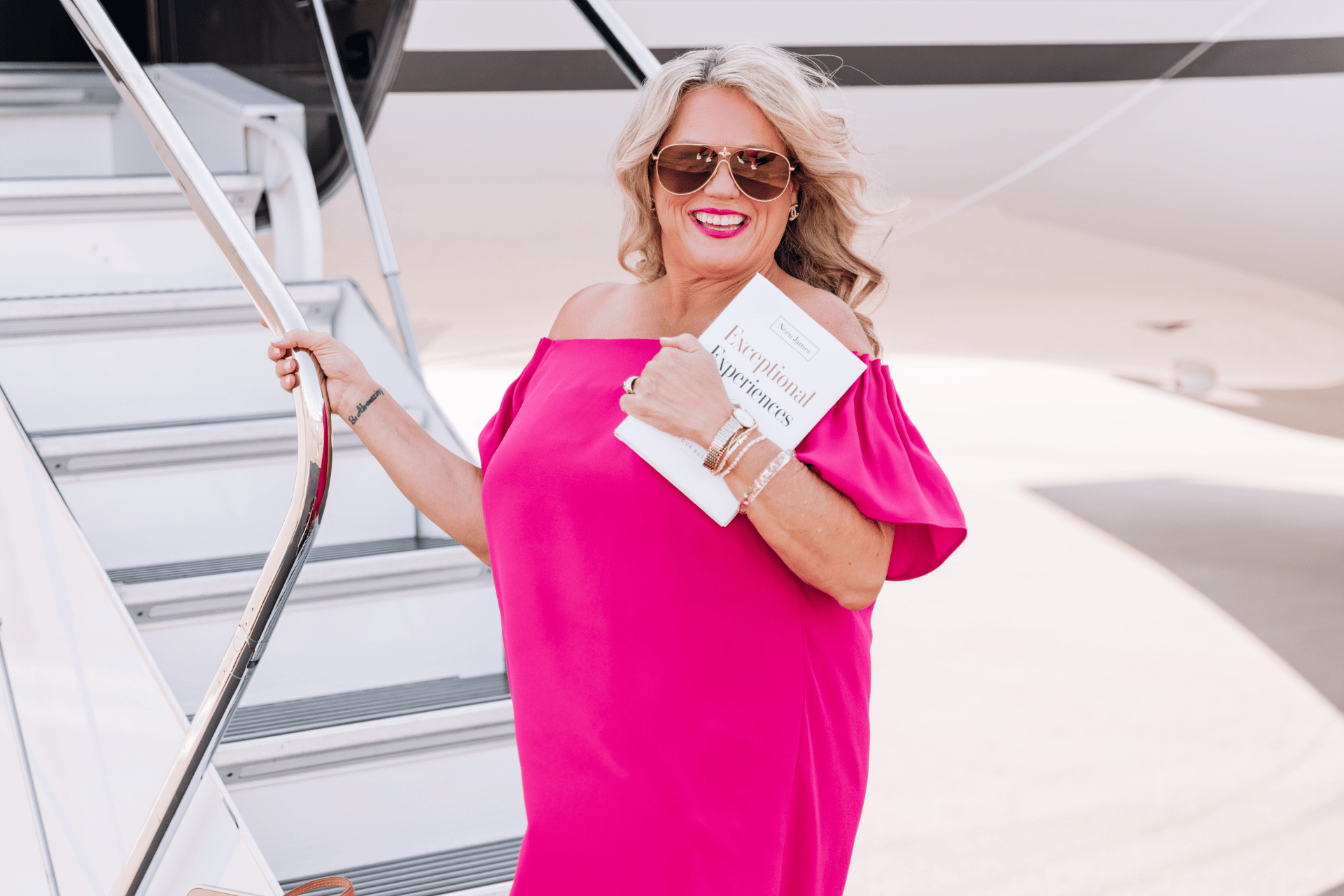
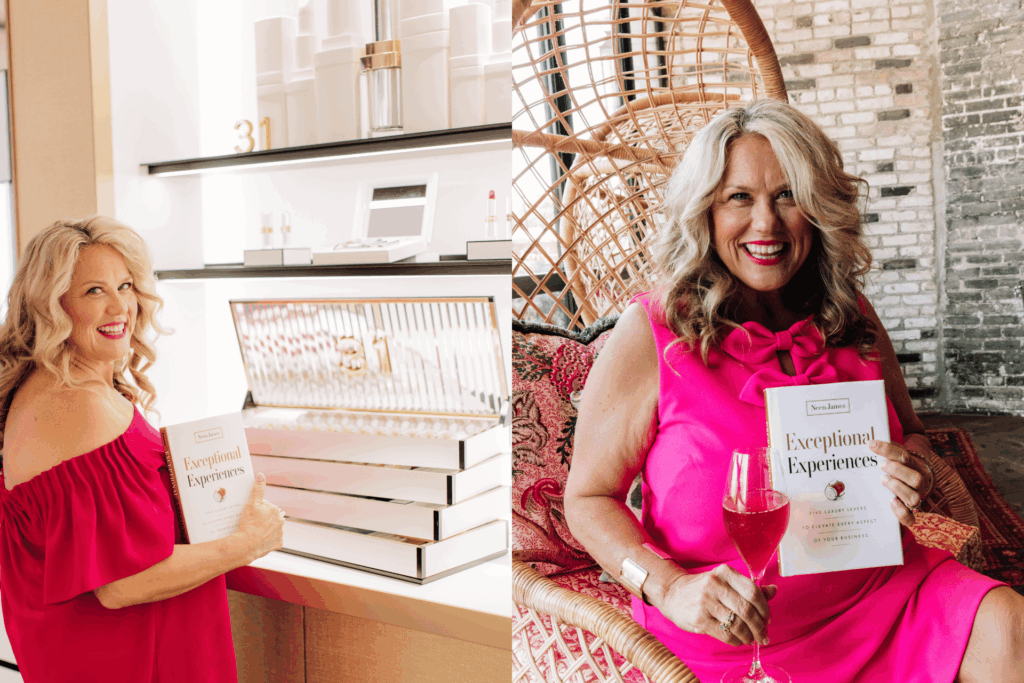
In this exclusive feature, the World Luxury Chamber of Commerce brings readers into an insightful conversation with Neen James, celebrated keynote speaker, author, and thought leader in luxury strategy. With the upcoming launch of her highly anticipated book, Exceptional Experiences, Neen shares how her Experience Elevation Model™ empowers brands to transform ordinary touchpoints into extraordinary moments that inspire loyalty and advocacy.
Alexander Chetchikov: Neen, congratulations on the upcoming launch of Exceptional Experiences! Could you share with our readers an overview of the five luxury levers in your Experience Elevation Model™, and how these can be applied to advance a brand or business?
Neen James: I’m thrilled to share the Experience Elevation Model™ with your readers. This framework is my answer to leaders who ask, “How does luxury thinking actually drive market share?”
Exceptional Experiences is filled with strategies for brands to gain mind share and market share. It will help drive revenue, differentiate your brand, and create advocates for your business.
The five luxury levers work together like a symphony to transform every client touchpoint into an extraordinary moment:
Entice captures attention through storytelling and emotional connection. Your clients are asking, “Why should I pay attention to you?” This is where you break through the noise of 150-500 daily messages they might be receiving with unique, personalized experiences that make them feel special and valued.
Invite demonstrates your experience through luxury language and communication that creates a sense of belonging. Clients wonder, “How do I get access to that special level?” You’re giving them that coveted “red carpet” experience that shows thoughtfulness and attention to detail.
Excite creates share-worthy experiences engaging all five senses. Your clients are thinking, “What else will they do?” This lever builds anticipation and leaves them wondering what delightful surprise comes next.
Delight anticipates needs they didn’t even know they had. They’re amazed, asking, “How did they know what I needed before I did?” This is where personalization and systems of elevation really shine.
Ignite builds lasting loyalty and turns clients into passionate advocates eager to share, asking, “Who else can I tell about my experience?” These clients become an extension of your brand.
The beauty of this model is that it doesn’t need to be linear—you can strategically start anywhere, based on where your clients are and what they need most. When you consistently apply these luxury levers, you create advocates who actively promote your business, and that’s the golden key to revenue in any industry.
AC: Luxury means different things to different people. What’s the biggest misconception you’ve encountered, and how do you define it for yourself?
NJ: The biggest misconception about luxury is that it’s only about expensive things or available to a limited few. That couldn’t be further from the truth!
Luxury is both inclusive and exclusive.
Inclusive because everyone deserves it, and exclusive because you can create experiences for those you serve.
My mum taught me the real definition of luxury when I was just a little girl. Growing up in humble beginnings in a small caravan in Australia, she couldn’t afford anything beyond our basic needs for my sister and me. But luxury came from the simplest things. Walking home from her late-night shifts, Mum would pick a flower from a community garden and bring it home, placing it in a glass, which she’d elevate by calling it a “vase” to feel fancy. That little gesture brought beauty and luxury into our everyday lives. She reminded us that, regardless of money or things, we all deserve luxury.
Luxury is about connection—it’s how we make people feel seen, heard, and valued. Luxury is about experiences, not things. It’s accessible to everyone, regardless of budget or industry. Whether you’re a real estate agent creating a memorable home-buying experience, a financial advisor making clients feel valued and understood, or a retail store owner adding personal touches, luxury is about how you make people feel and the memories you create.
When I consult with executives across diverse industries, sharing our luxury mindset research, that there are four mindsets and brand leades need to be able to speak the luxury language of the clients they want to attract and while these mindsets view luxury differently, all four agreed on two fundamental things—luxury is a reward for hard work, and luxury is about experiences, not things.
AC: You led a unique study that revealed four distinct luxury mindsets. Can you walk us through what they are and why recognizing someone’s luxury mindset is so important?
NJ: I’m thrilled to share our proprietary research study, the only one of its kind in the world, on the luxury mindset. We partnered with Audience Audit. When conducting executive strategy sessions with luxury and legacy brand leaders, I believed luxury is a mindset, and needed evidence to support that.
What we discovered is fascinating—there are four distinct ways people think about luxury:
The Reluctant and Removed (28%) find luxury hard and believe brands don’t understand them. They’re often busy and overwhelmed, feeling guilty about luxury purchases. For them, luxury is about reducing busyness, hassle, and worry. To attract them, show how luxury makes their lives easier and more efficient.
The Pro Prioritizers (25%) use luxury to advance their career and reputation. For them, luxury is power—they leverage it to dress for success and look the part professionally. They champion brands that align with their values and favor practical, sustainable luxury. They want to feel more confident and improve their impression.
The Confident and Content (22%) think “I’ve got this!” Luxury isn’t often a priority, nor does it have to be expensive. They enjoy creating memorable experiences for people they care about—luxury allows them to improve connections with friends and family.
The Luxury Lovers (25%) believe everyone deserves luxury every day and have what I call “big mouths”—they love sharing exceptional experiences! They want luxury that improves their professional and social status, and they become your best advocates because they actively tell others about their experiences.
Understanding these mindsets is critical because each responds to completely different language and experiences. When you can speak the luxury language of your specific clients, you transform your relationship from transactional to transformational. It’s the difference between having customers and having passionate advocates who drive your business forward.
AC: In what ways can crafting exceptional experiences give brands a competitive edge and directly impact the bottom line?
NJ: When brands deliver exceptional experiences using the five luxury levers, they create something I call “the golden key to revenue”—passionate advocates who actively promote their business.
In our global marketplace, people are bombarded with choices. Service has become the price of entry, but exceptional experiences are what truly differentiate brands and enable them to thrive. When you make clients feel seen, heard, and valued through systematic luxury principles, you’re not just creating customers—you’re creating advocates who become an extension of your marketing team and brand.
Our research also revealed: Luxury Lovers are the most influential over the other three mindsets. They can guide the Reluctant and Removed by showing them how an offering saves time and hassle. They align with the Confident and Content by explaining how it creates memories for people they care about. For Pro Prioritizers, they demonstrate how luxury enhances career and reputation.
The competitive edge comes from being memorable when everyone else is forgettable. When you systematically apply the Experience Elevation Model™, you create what I call “champagne moments”—those special times when something extraordinary happens that makes clients smile and brings joy. These moments stick in people’s minds and hearts.
The bottom line impact is substantial: advocates drive revenue through referrals, repeat business, and social media promotion. They become your welcome committee, actively posting about their experiences and recommending you to their networks. When you transform ordinary touchpoints into extraordinary moments through attention to detail and luxury thinking, you’re building a sustainable competitive advantage that compounds over time.
Remember, people don’t just buy products or services—they buy experiences and feelings. When you master the art of exceptional experiences, you master the art of business growth.
AC: You describe ‘champagne moments’ as a way to turn ordinary interactions into extraordinary connections. What are some practical ways professionals can bring these moments to life within their own industry?
NJ: I love this question because champagne moments are all around us. We can create these for others (and ourselves) – a way to make people smile, bring joy, and celebrate something or someone. They’re opportunities to pause, reflect, be present, and create joy just like bubbles in a glass of champagne.
Here’s what professionals across industries can do:
For Real Estate Professionals: Instead of just handing over keys, create a “key ceremony” with a beautifully wrapped box, a handwritten note about their new beginning, and perhaps a bottle of champagne with their closing documents. One agent I know leaves a personalized welcome basket with local artisan treats and a plant that represents “growing roots” in their new home.
For Financial Advisors: When clients reach investment milestones, don’t just send a statement. Create a personalized celebration—a handwritten note acknowledging their discipline, a small gift that reflects their goals (like a beautiful compass if they’re saving for travel), or an exclusive client appreciation event where they can connect with other successful clients.
For Retail and Hospitality: Train your team to notice and celebrate small moments. If someone mentions it’s their anniversary while shopping, bring them a complimentary glass of champagne (or sparkling cider). If a hotel guest is celebrating a promotion, leave a congratulatory note and a small treat in their room.
For Professional Services: Instead of generic follow-up emails, send handwritten thank-you notes on beautiful stationery. Consider creative ways to make digital documents more tangible, creating an impression with a unique delivery. Create exclusive behind-the-scenes access to your expertise through private workshops, events, or early access to new services.
The key is systematic thoughtfulness. I encourage leaders to create what I call “systems of elevation”—repeatable processes that ensure every client interaction has the potential to become a champagne moment. It’s about anticipating needs, adding personal touches, and making people feel like they’re part of an exclusive experience.
Remember, champagne moments don’t require expensive champagne—they require intention, attention, and a commitment to making others feel seen, heard, and valued. When you consistently create these moments, you’re not just building a business—you’re building advocates who will celebrate your brand long after the moment has passed. This is how you become top of mind (mind share) and top of market (market share).
Thank you, Neen!
As this conversation with Neen James makes clear, luxury today is not confined to price tags or exclusivity; it is about creating meaningful experiences that make people feel seen, valued, and connected. Her five luxury levers and insights on champagne moments provide a roadmap for brands and professionals seeking to elevate client relationships into lasting advocacy.
Welcome to The Weekly Edit, your curated digest of the latest in the world of luxury. Each week, WLCC brings you a handpicked selection of industry news, insights, and stories influencing the future of high-end fashion, design, travel, real estate, and beyond. Consider this your insider’s guide to the latest in luxury.
The Awakening of “Quiet Luxury” Homes
The luxury housing market is focusing on “quiet luxury,” emphasizing understated comfort over size and extravagance. Buyers now favor smaller, high-end homes with features that bring personal satisfaction, like porches or cozy spaces, rather than ostentatious estates. Recent data indicate that average home sizes are shrinking, while luxury finishes remain in high demand. Emerging markets include Sonoma County, Park City, Lake Burton, and Florida’s panhandle, offering scenic views, convenience, and lifestyle appeal. Affluent buyers seek homes that require minimal maintenance, allow for cash purchases, and offer meaningful experiences over flashy displays, signaling a new era in luxury real estate.
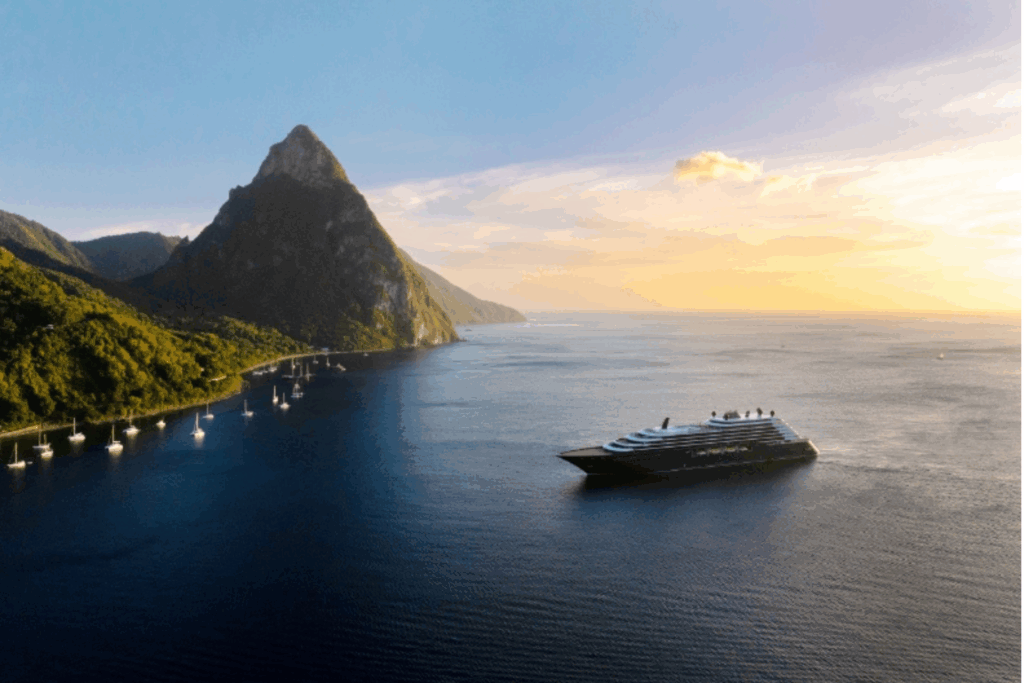
The Ritz-Carlton Yacht Collection has announced Ilma’s Winter 2026–2027 Caribbean voyages, including more than 20 exciting itineraries from Miami and San Juan. Sail 3–7 nights to stunning destinations like St. Barth, Antigua, and St. Lucia. Celebrate the season with Thanksgiving at sea, a dazzling New Year’s Eve in the Grenadines, or a romantic Valentine’s escape. Onboard, guests enjoy all-suite accommodations with private terraces, Michelin-inspired dining, and The Ritz-Carlton’s signature service. Ashore, experiences range from snorkeling with sea turtles to immersive West Indies cooking classes. With festive sailings, adventure, and refined comfort, Ilma offers the ultimate Caribbean escape.
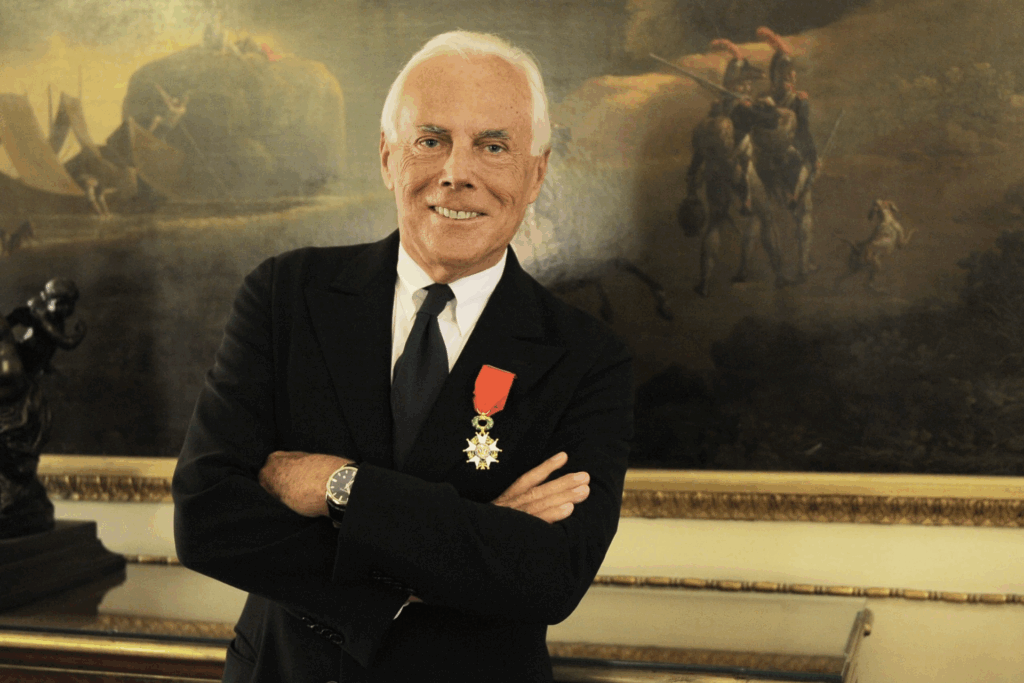
Giorgio Armani, Iconic Italian Designer, Passes Away at 91
Giorgio Armani, the legendary Italian designer and sole owner of the Armani Group, has passed away at 91. Known for his soft tailoring and modernized Neapolitan styles, Armani redefined men’s and women’s wardrobes, making power suits stylish and comfortable. From humble beginnings as a window dresser, he built a multibillion-dollar empire spanning fashion, fragrances, furniture, and hotels. Armani served as both creative director and CEO, guiding his company for decades. He passed peacefully, weeks before the brand’s 50th anniversary. Remembered for his precision, consistency, and belief that “elegance is about being remembered,” Armani leaves an enduring legacy in fashion.
Sustainable Luxury Becomes the Standard for Island Hotels
Eco-luxury island hotels and resorts readapting. They are focusing on offering high-end comfort while prioritizing sustainability. Guests enjoy private villas, farm-to-table meals, and renewable energy–powered amenities without sacrificing luxury. Resorts such as The Brando, Amanpulo, Soneva Jani, and Petit St. Vincent focus on conservation, local sourcing, and community support. Trends like “calmcations,” digital detox escapes, and nature-focused designs show travelers value experiences that connect them to the environment. Despite challenges like logistics and storm recovery, eco-luxury is growing as ecotourism moves toward $830 billion by 2035. These resorts demonstrate that travel can be both luxurious and responsible, with sustainability at its core.
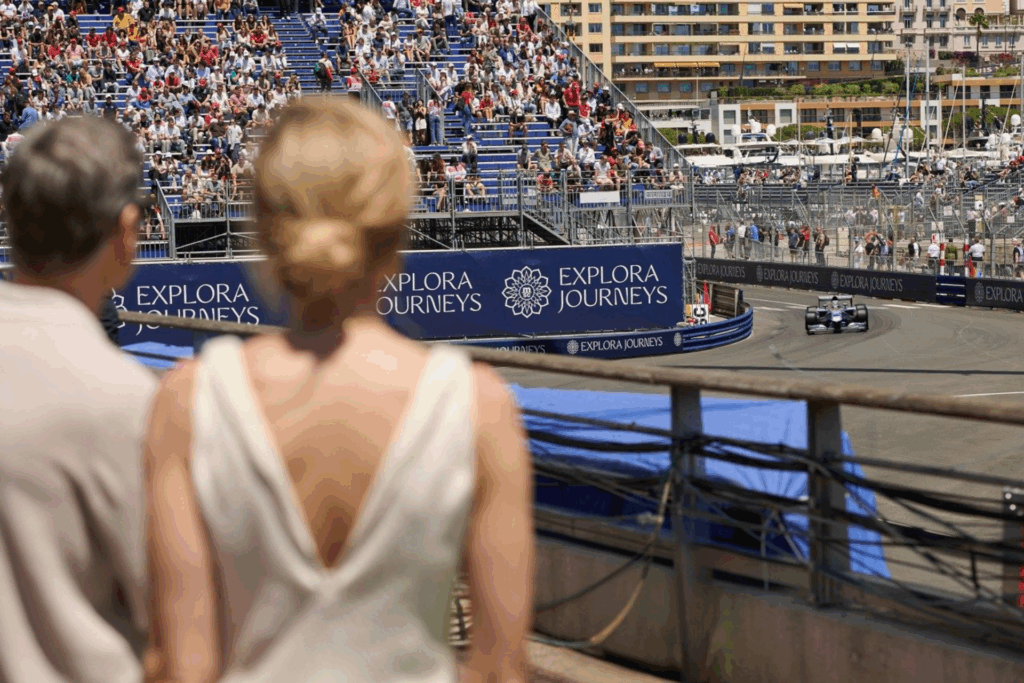
Guests will be able to feel the thrill of the Monaco Grand Prix from the deck of EXPLORA I, where luxury ocean travel meets high-octane racing. Explora Journeys has opened reservations for Suites and Residences aboard the ship during the 2026 event. Docked at Port Hercule, EXPLORA I offers sea or Monegasque views and optional 3-day Grandstand access for a fuller experience. Guests can enjoy the excitement of the race while relaxing in sophisticated accommodations, making the most of Monaco’s legendary weekend from an exclusive vantage point on the water.
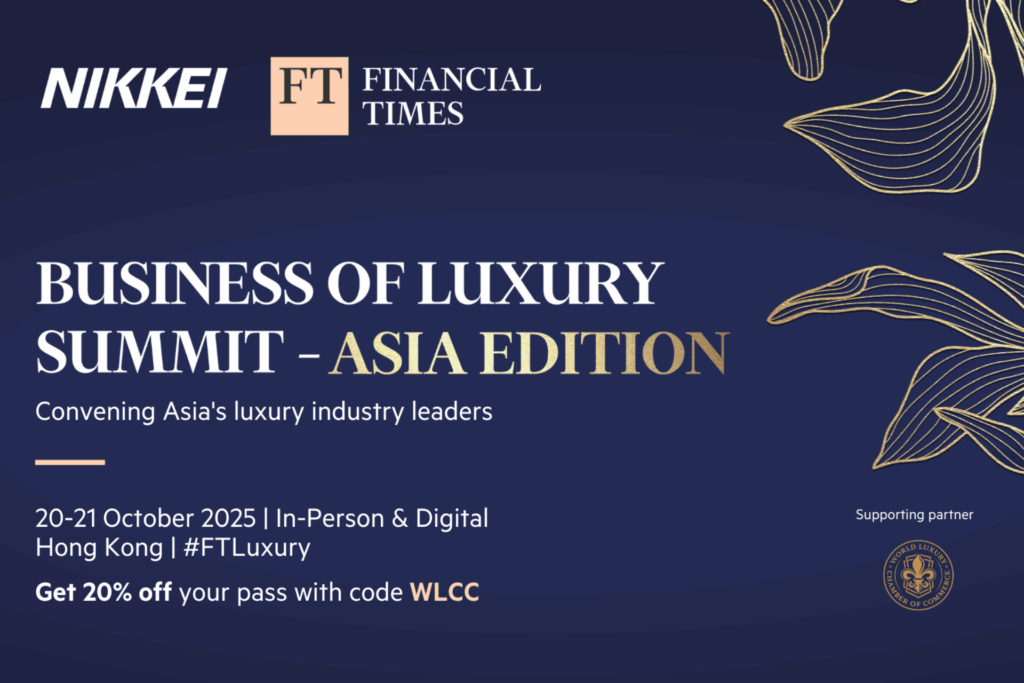
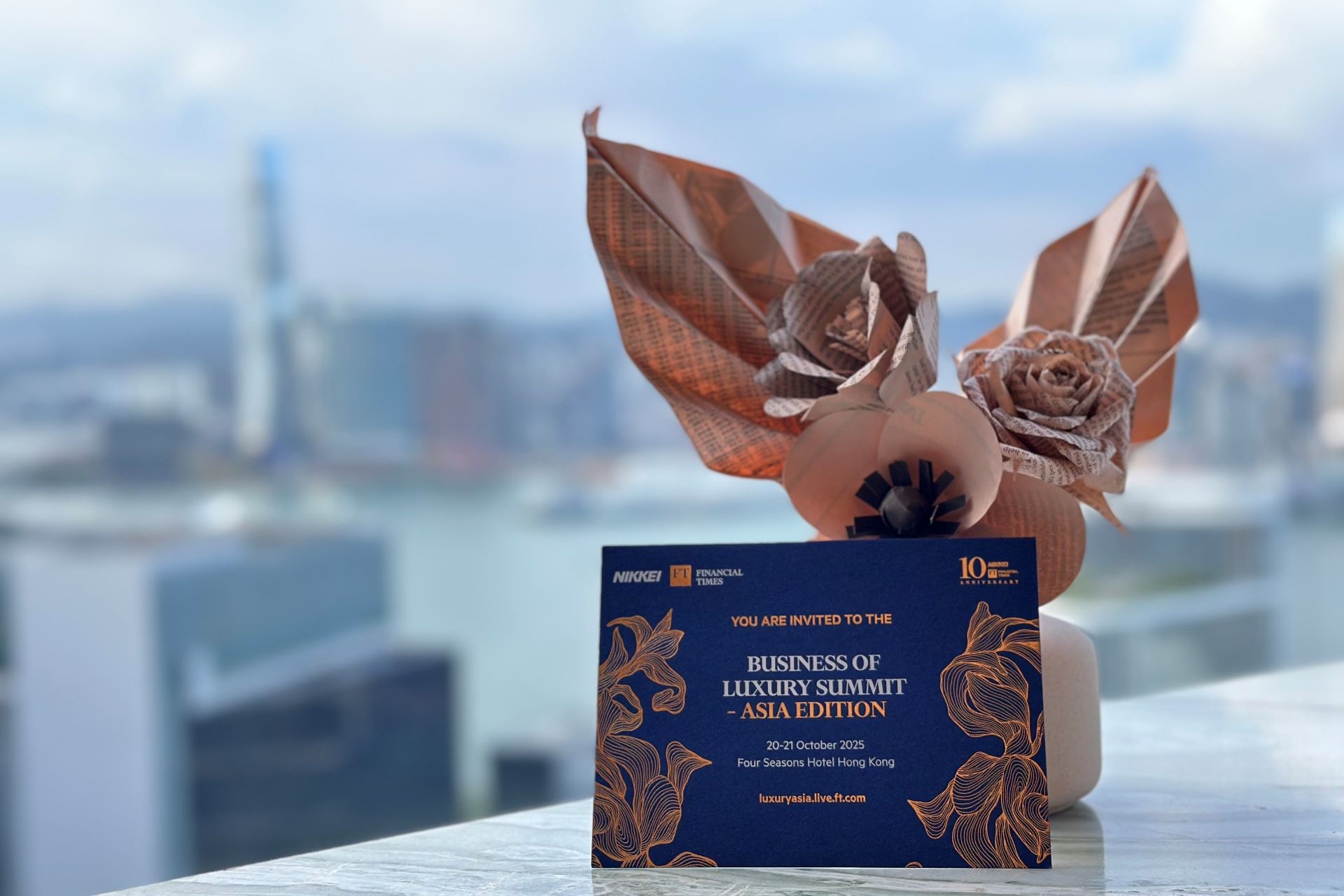
Nikkei and the Financial Times will celebrate a successful ten-year partnership by hosting the Asian edition of the Business of Luxury Summit. This landmark event offers a unique platform for Asian luxury leaders to engage with investors, brand executives, entrepreneurs, and industry professionals, to explore future trends and learn how to create further growth opportunities across the region.
The Financial Times, in partnership with Nikkei, will host the Business of Luxury Summit – Asia edition in Hong Kong on 20-21 October 2025.
Hosted in Hong Kong for the first time, the Business of Luxury – Asia edition will convene a network of senior executives from key luxury businesses, entrepreneurs, investors and cultural tastemakers to examine the future trends of luxury and how to unlock growth opportunities across the region. The agenda-setting summit will explore regional investment patterns, demographic shifts, digital innovation and the evolving playbook for luxury brands in Asia.
FT and Nikkei moderators for the event will include Jo Ellison, editor of HTSI; Martin Wolf, chief economics commentator, FT; Mikio Sugeno, chair of Nikkei editorial board, and, Akito Tanaka, editor in chief, Nikkei Asia. The summit’s speaker lineup of global and regional industry leaders includes Siddhartha Shukla, deputy CEO, Lanvin; Matthew Growdon, president, APAC & travel retail worldwide, Estée Lauder Companies; Georgina Wilson, co-founder, Sunnies Studios; Toby Smith, deputy chairman, Swire Hotels; Masahiro Horie, president, Tokyu Corporation; Putri Tanjung, chief experience officer, CT Corp and Director, Transmedia; Giuseppe Oliveri, group COO, Central Group; Kevin Poon, co-founder, Clot and founder, WOAW and District; Toshiko Yamazaki, CEO, GINZA SIX Retail Management; Kate Richdale, Partner, Head of Global Client Solutions Institutional Sales & Family Capital, Asia Pacific, KKR.
Angela Mackay, chief commercial officer and managing director, APAC, Financial Times, said: “Asia continues to be at the epicentre of the global luxury conversation. With Hong Kong as the gateway to the region’s most sophisticated consumers, the city is the perfect stage to host the Business of Luxury Summit – Asia edition. As we mark ten years of partnership with Nikkei, we are proud to convene the region’s leaders, innovators and rising stars for a compelling conversation on the next chapter of growth for luxury in Asia.”
Daisuke Arakawa, senior managing director for global business, Nikkei, said: “We are pleased to co-host the Asia edition of the Business of Luxury Summit with the Financial Times, especially in a year that marks ten years of our global partnership. As Asia becomes an even more influential force in the luxury industry, this summit offers a timely platform for convening the region’s leading voices in luxury. We look forward to exploring how innovation, heritage and emerging markets will shape the next era of luxury.”
Special offer for WLCC Members: 20% discount on event attendance tickets
The FT Group, part of Nikkei Inc., includes the Financial Times and a number of other services that provide essential news and analysis for the global business community. The Financial Times is one of the world’s leading news organisations, recognised internationally for its authority, integrity and accuracy. The FT has a record paying readership of 1.5mn, while the wider FT Group has a global paying audience of 3mn across its portfolio of journalism, products and services.
About Nikkei Inc
Nikkei Inc. is a world-renowned media brand for Asian news, respected for quality journalism and for being a trusted provider of business news and information. Founded as a market news provider in Japan in 1876, Nikkei has grown into one of the world’s largest media corporations, with 37 foreign editorial bureaus and approximately 1,500 journalists worldwide. Nikkei acquired the UK-based Financial Times in 2015. Our combined digital and print circulation totals about 2.5 million, and we are continually deploying new technologies to increase our readership.
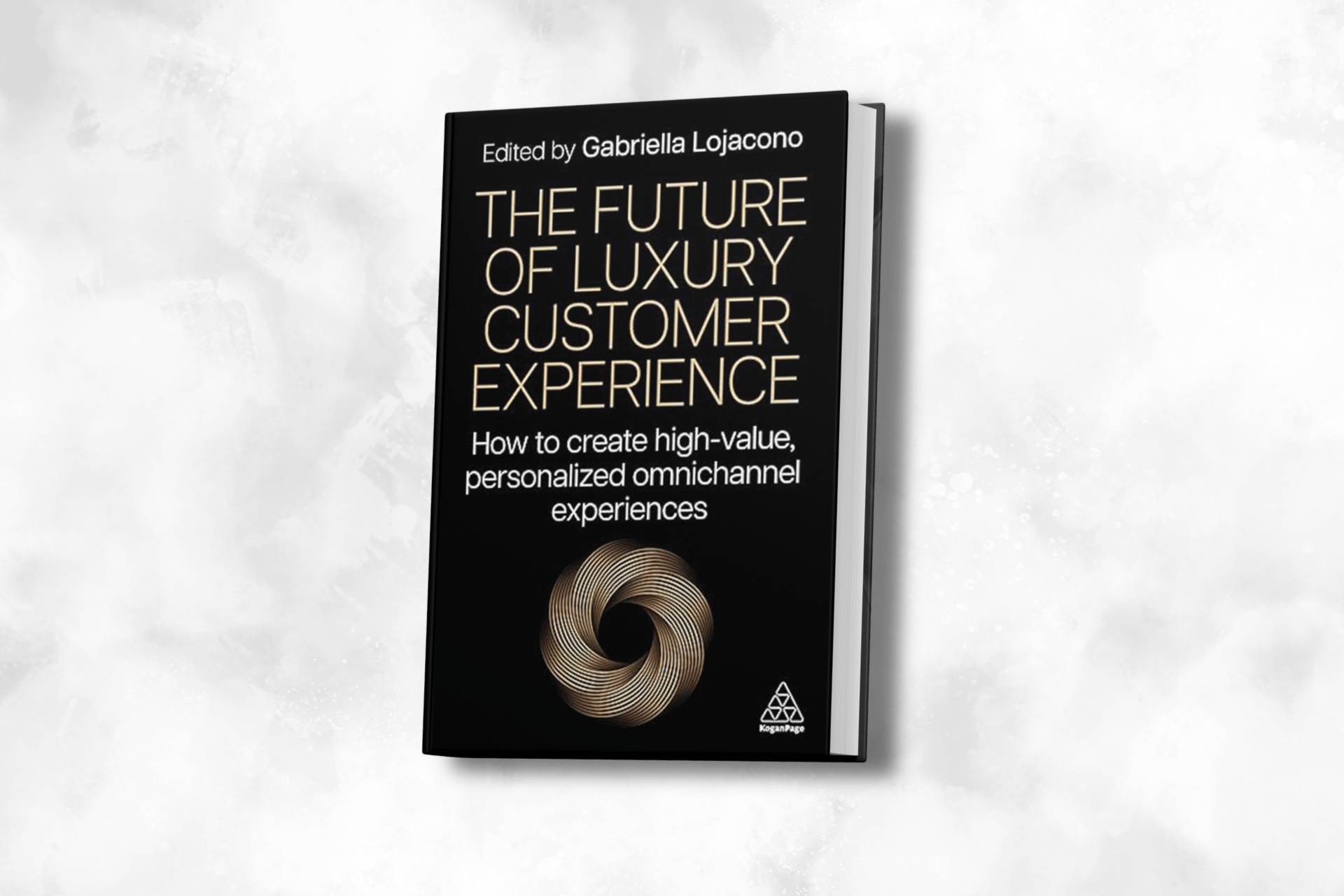
The WLCC Luxury Library is a vital hub for luxury professionals and enthusiasts, offering a curated collection of insights, trends, and knowledge in the luxury sector. Tailored for members of the World Luxury Chamber of Commerce, it offers up-to-date resources on branding, marketing, and high-end consumer behavior. Through a focus on learning and collaboration, the Luxury Library seeks to inspire innovation and raise the bar within the luxury sector.
The Future of Luxury Customer Experience by Gabriella Lojaconoexplores how luxury brands can enhance their interactions with customers by combining human touch with emerging technologies. It examines the evolving expectations of high-end consumers and offers insights on creating personalized, engaging experiences across multiple channels.
Drawing on examples from leading luxury names such as Ferrari, Cartier, and Valentino, the book offers a comprehensive guide to meeting the demands of modern luxury buyers while respecting their privacy and values.
Interesting Lessons Include:
Personalization is essential: Tailoring services and communications based on detailed customer data helps brands stand out and foster loyalty.
Human interaction remains vital: Despite technological advances, the human element enriches luxury experiences and builds emotional connections.
Privacy must be prioritized: Customers expect brands to protect their personal information while still offering customized experiences.
Omnichannel approach: Delivering consistent, high-quality experiences across physical stores, digital platforms, and events is critical.
Innovate thoughtfully: Use technologies like AI and virtual reality to create memorable moments without overwhelming or alienating customers.
Cultural engagement: Integrating arts, culture, and social responsibility strengthens brand identity and appeals to conscious consumers.
Measuring success: Establish clear key performance indicators to assess the impact of customer experience initiatives and refine strategies accordingly.
For luxury brands ready to reshape how they connect with customers, this book serves as a roadmap to blending tradition with forward-thinking innovation. It shows how integrating advanced technology with authentic, personalized interactions can create experiences that resonate deeply and foster long-term loyalty. Filled with practical tips and inspiring case studies, it’s an indispensable resource for those shaping the future of luxury retail and customer service.
A global transfer of USD 83.5 trillion is underway, marking one of the most significant wealth shifts in modern history. By 2048, this capital will pass largely from baby boomers to Generation X, millennials, and Gen Z, fundamentally changing the financial landscape. More than just a change in balance sheets, this handover is already redefining investment behavior, service expectations, and cultural influence.
This evolution matters well beyond financial institutions. The luxury field, long intertwined with the preferences of high-net-worth individuals, now finds itself directly influenced by the expectations of this younger, globally mobile, and digitally fluent clientele. For insiders, understanding their mindset is essential for maintaining relevance in the next era of affluence.
Global Wealth at a Turning Point
The Report highlights that in 2024, global high-net-worth individual (HNWI) wealth expanded by 4.2% while the HNWI population rose by 2.6%. North America drove the strongest growth, with wealth up 8.9% and population rising 7.3%. Asia-Pacific followed, recording a 4.8% increase in wealth and a 2.7% increase in population. Europe performed more modestly, showing just 0.7% growth in wealth alongside a 2.1% decline in HNWI population, influenced by weakened demand in the luxury and automotive sectors. Latin America was the weakest region, with wealth down 2.6% and population down 8.5%.
Beyond market momentum, however, the defining story is the transfer of wealth across generations. By 2048, an estimated USD 83.5 trillion is expected to pass from baby boomers to Generation X, millennials, and Generation Z. Women are anticipated to inherit a significant share of this wealth by 2048.
The Next-Gen HNWI Profile
The report underscores clear differences between younger inheritors and older generations. Unlike baby boomers, who favor preserving their wealth, younger HNWIs are more willing to take risks, with a growing appetite for private equity and cryptocurrency. They are also highly international in outlook, pursuing opportunities not only in traditional wealth centers such as London, Switzerland, and New York, but increasingly in emerging destinations including Singapore, Hong Kong, the UAE, and Saudi Arabia.
Their expectations extend well beyond investments. Next-gen HNWIs seek broader value in estate planning, philanthropic advisory, concierge offerings, and lifestyle management. Importantly, they demand a digital-first experience that matches the convenience of the platforms they use in their daily lives.
Relationship Managers: A Decisive Factor
Relationship managers, or RMs, remain a decisive element in retaining and attracting wealth. The report shows that 62% of younger clients would follow their RM if the advisor were to move to a different firm. Yet at the same time, 47% of RMs report dissatisfaction with their firm’s digital tools and technology. This limits their ability to deliver the proactive, highly personalized services expected by their younger clients. The issue is compounded by demographics: nearly half of all current RMs are expected to retire by 2040, raising the risk of a looming talent shortage just as demand for their skills is intensifying. Capgemini stresses that firms must act urgently to equip RMs with AI-driven systems, advanced analytics, and integrated digital channels to preserve client loyalty and secure long-term growth.
Where Wealth Meets Luxury
The report also reveals significant intersections between wealth management strategies and luxury consumption. Next-gen HNWIs increasingly approach luxury purchases with an investment mindset, viewing fine goods, collectibles, and high-end experiences as assets with long-term value and transmission potential. Inheritance planning directly shapes how these clients approach luxury spending.
Concierge services are evolving beyond bespoke travel and exclusive access. Education advisory for heirs, medical support, and even cybersecurity are emerging as priorities. At the same time, financial education and empowerment programs are demonstrating that knowledge, governance, and intergenerational preparation are now as vital to loyalty as portfolio returns. Luxury and wealth management providers that can address this broader lifestyle and generational needs will stand out in an increasingly competitive environment.
Strategic Directions
Capgemini proposes a three-part framework for navigating this transformation. Firms must design investment strategies tailored to next-gen appetites, particularly in alternatives and sustainability-linked assets. They must also broaden their service models to incorporate global diversification, estate planning, philanthropy, and holistic concierge support. Finally, they must empower relationship managers with technology, analytics, and ongoing training to ensure that advisory talent remains strong as generational expectations rise.
To Conclude:
The USD 83.5 trillion generational wealth transfer is already underway and will accelerate through 2048.
81% of younger HNWIs plan to switch firms after inheritance unless wealth managers adapt quickly.
Women will inherit a significant share of global wealth, making them central decision-makers in financial and luxury markets.
Relationship managers remain critical, but a looming talent shortage and inadequate digital tools threaten continuity.
Next-gen HNWIs view luxury purchases as investments tied to legacy, shaping demand for both financial and lifestyle services.
Firms that adopt tailored strategies, expanded concierge ecosystems, and advanced digital capabilities will secure both assets and long-term cultural relevance.
WLCC Commentary: “The largest wealth shift in history is underway, and this is not only about finance but also about how culture and influence will evolve. Luxury industry insiders should take it as both a challenge and an opportunity.These inheritors expect more than products; they seek legacy, purpose, and experiences. WLCC members stand at the forefront of this redefinition of luxury. “
In this exclusive conversation led by Alexander Chetchikov, President of the World Luxury Chamber of Commerce, Beatrice de Quervain Blanchard, Strategic Advisor for the Luxury Markets of the Americas and Partner at WinHouseCorp., shares her expertise in guiding luxury brands to success. With over 25 years of experience in the U.S. and a career that spans leadership roles across watch and jewelry houses, she offers a candid, pragmatic view of what it truly takes to enter and thrive in some of the world’s most competitive luxury markets.
Alexander Chetchikov: As a Strategic Advisor for the Luxury Markets of the Americas, what are the key challenges and opportunities you see for luxury jewelry and watch brands entering or expanding in North and Latin American markets?
Beatrice de Quervain Blanchard: As a brand enters the Americas, it makes strategic sense to begin with the U.S. market before expanding into Canada, Mexico, Latin America, and key high-luxury destinations in the Caribbean. However, many new brands underestimate what it truly takes to do business and build brand equity in this market.
I’m often surprised by how ill-prepared brands are when they launch in the U.S. Let me put it another way: You don’t enter an F1 race in a streetcar. A good product, opening a few retail accounts, and promoting it through some public relations efforts may be a start, but they aren’t a viable market entry strategy. What’s often missing is a well-defined roadmap—spanning three, five, even seven years—outlining how the brand will grow, adapt, and establish itself as a serious player. Without a strong plan in place, I’ve seen too many companies lose a lot of money in a very short time and consequently disappear altogether from the American market.
To succeed, a brand must bring the full package: a differentiated, clearly defined product that stands out in an already saturated luxury market, a plan for how to structure the local organization, a professional sales team on the ground, and a multilayered marketing and communication plan. The headquarters must work hand in hand with the local subsidiary to provide all the tools needed and be flexible enough to adapt certain tools to the U.S. market details.
A common mistake is focusing solely on the end consumer while ignoring the commercial realities of market entry. In truth, success in the U.S. often starts with wholesale partnerships. It’s a difficult path, but it’s essential for building brand awareness before considering your own boutiques or retail footprint.
As the U.S. strategy takes shape, it’s smart to begin exploring opportunities in Canada and Mexico—markets that offer logical next steps and can be prepared for in parallel.
AC: With over a decade leading WinHouseCorp. and acting as part-time CEO for various brands, how do you approach building and maintaining brand awareness and brand equity in the highly competitive luxury segment?
BdQB: The market entry ticket is high. Launching in this market requires significant investment, but true brand-building goes far beyond financial resources.
At its core, the luxury industry remains a people business—whether it’s B2B relationships with wholesale partners or direct interactions with high-net-worth clients at exclusive events. Success comes from knowing how to engage, communicate, and collaborate at every level to build brand presence and brand trust. This includes properly training on-the-ground teams to represent your brand effectively and adapting your approach to the cultural nuances.
When it comes to marketing plans, it’s essential to understand where and when to invest. No brand can maintain a constant nationwide campaign year-round and organize multiple high-end events, so efforts must be strategically concentrated, targeting the right sub-markets at the right time, with the right intensity. A scattered approach in large markets like North and South America brings little impact. Focus and timing are everything, and knowing where to start is a critical part of building a strong U.S. market entry strategy.
AC: How do you integrate your multicultural background and deep industry experience to advise luxury companies on navigating cultural nuances and consumer behaviors across diverse American markets?
BdQB: Naturally, it’s an advantage to understand both sides: I bring a deep knowledge of the French, Italian, and Swiss approaches to luxury, and with over 25 years of experience in the U.S. market, I’ve gained a strong grasp of what truly resonates with high-net-worth American consumers. The differences between markets are significant—and must be respected.
I often see European luxury brands fixating on details that may matter greatly in Europe but hold less relevance for U.S. clients. In contrast, American customers tend to prefer a more relaxed approach to experiencing luxury; however, they place a high value on instant gratification paired with hands-on customer service—factors that are non-negotiable in this market.
Another area that requires adaptation is brand storytelling. While in other parts of the world storytelling tends to focus on history, craftsmanship, and heritage, in the U.S., the narrative must be far more dynamic and emotionally engaging. It needs to spark curiosity, build aspiration, and offer social reassurance—demonstrating that other respected or influential individuals are already buying into the brand.
Recognizing the unique wholesale approach is critical when launching a new brand, especially in the watch and jewelry industry, where many retail operations are family-owned. These businesses value respect and reliability, and they don’t like being told how to run their operations. While this should be obvious, key retailers will highlight how many new brands stall early by neglecting their wholesale partners. Navigating these relationships and committing to a near-constant market service are key to success. This must be the mantra for everyone, from sales to customer service and marketing teams.
AC: As a keynote speaker on luxury industry topics, what major trends or shifts do you highlight as influencing the future of luxury goods, particularly jewelry and timepieces?
BdQB: As indicated, the U.S. luxury market is one of the most saturated and competitive in the world. Every major luxury group has a strong presence here, making it essential to approach the market with a clear and thoughtful strategy. In my talks, I always begin by stressing the importance of the planning phase. The first question to ask is simple but crucial: Why do you want to enter this market? This is the foundation on which everything else is built. From there, I show how to guide brands through the process of identifying key elements like expectations, timelines, product offerings and future development, and financial constraints. I emphasize that it is vital to develop a comprehensive “playbook” upfront before taking any action, setting a solid strategy in place to ensure long-term success.
When it comes to longevity in luxury, I often highlight that I don’t put much stock in fleeting trends or dramatic shifts. Instead, I believe in a grounded, pragmatic approach—one that focuses on consistency, quality, and most importantly, human connection—especially when it comes to high-end jewelry and watches, which are products with a high emotional component. That’s why I’m passionate about the importance of building genuine relationships at every level. Luxury success isn’t just about the product; it’s about how you engage with your business partners, end consumers, and local communities.
By focusing on authenticity, respect, and care in all interactions, a brand can establish deep, meaningful connections that transcend short-term trends. Ultimately, it’s through these human-centered, relationship-driven strategies that a brand can truly thrive in competitive markets like the U.S., Canada, and Latin America.
For more about my strategic approach and the themes I explore in my keynote speeches, I invite you to visit my website: www.winhousecorp.com.
Thank you, Beatrice!
Beatrice de Quervain Blanchard’s perspective is a masterclass in pragmatic luxury strategy, rooted in respect for local markets, precision planning, and the irreplaceable value of human connection. As her insights reveal, thriving in the Americas isn’t about rushing in with a good product; it’s about bringing the complete package: vision, structure, adaptability, and relationships built on trust. For brands willing to embrace this approach, the rewards extend far beyond sales, they create a legacy.
Luxury is often described through its products: rare diamonds, leather goods, perfumes, or couture gowns. But behind every maison that endures lies something less visible: the architecture of its brand. Few people know that structure better than Philippe Mihailovich, founder of HAUTeLUXE, WLCC Honorary Board Member, and one of the earliest thinkers to give brand architecture its academic foundation.
His career path defies linearity: FMCG marketing with giants like Nivea and Wella, the creation of Couture Brands to bring fragrances to designers without them, and finally, advising luxury houses at the highest level. Along the way, he has shaped categories, challenged assumptions, and helped CEOs navigate the delicate balance between immediate sales and long-term identity.
In this conversation with Alexander Chetchikov, President of WLCC, Mr. Mihailovich discusses the recurring challenges luxury leaders face, why sustainability must be treated as an investment, and how ethical sourcing can coexist with exclusivity, and much more.
Alexander Chetchikov: Your career has spanned from working at FMCG brands to creating Couture Brands and then HAUTeLUXE, a strategic brand consultancy business to serve luxury houses (primarily those in high jewelry, leather goods, fashion, beauty, and boutique hotels). How did this broad experience across diverse sectors prepare you to serve as a confidential advisor to CEOs and Chief Branding Officers in the luxury industry?
Philippe Mihailovich: Great Question. A long story.
Actually, as a student, I had worked as a fashion photographer for magazines and newspapers, so I had the chance of seeing that world from the inside and shooting what was to be introduced in the future. I loved the photography of Serge Lutens for Shiseido. He created the first Dior make-up line. Today, he is better known for having started the trend towards perfume as an art and not as a fashion accessory (no male perfume or female perfume). I reached out to him to publish his photos in Creative Photography Magazine, and he ignited my interest in beauty products, prestige branding, and chic cross-cultural imagery.
After my degree I was employed by a top fashion company and received retail management training up to area management level, but hated to be so distanced from the creative side, so I switched to beauty and personal care product management and found that one of the easiest ways to add value to mass products was to look upwards to see what the luxury houses were doing. As such, I found myself eventually working with the same top French Master Perfumers as YSL and Dior were using.
Then when I was responsible for Nivea, I was learning from La Prairie (same corporate group) and when I was at Wella I looked at Professional Salon formulas to improve on consumer products and spotted the opportunity to create ‘designer hair care’ using hairdresser names (e.g. John Frieda, Nicky Clarke) to compete with the faceless corporations such as L’Oreal and Wella. I also noticed that British designers such as Vivienne Westwood, or fashion brands like Monsoon, did not have their own fragrances. I founded Couture Brands to develop those categories. It was such a pleasure working with visionary creatives, founders, and CEOs that I got hooked on it.
AC:At HAUTeLUXE, you sit at the intersection of creativity and strategy, often working with leaders who are under immense pressure to deliver both short-term results and long-term relevance. When these executives bring you their brand dilemmas, what recurring challenges do you see, and how do you help reframe their future into something sustainable?
PM: At first, they were projects primarily linked to brand exploitation, such as brand stretching across categories. The risk of damaging an established reputation is huge. It is what has happened to Gucci, a house that once competed strongly against Hermès in handbags. Not anymore. Under designer Tom Ford, Gucci evolved into a highly successful R2W fashion brand; the style was more American and less Italian, and people seemed to be buying Tom Ford more than they were buying Gucci. The leather craftsmanship heritage of the house collapsed in the process. I’d love the new President and CEO of Gucci, Francesca Bellettini, to call for my help, but she is ex-Bottega Veneta and Saint Laurent, so she is sure to know what to do. The Kering Group also has a new CEO. Let’s hope that I will meet him this year.
To go back to your question, the recurring challenges are remodifying the DNA of a brand and constructing or reconstructing the pillars of its Brand Building before any storytelling begins, which includes brand culture, universe, values, and principles. However, another recurring challenge is when the client feels that they have learned enough from us to go it alone with their commercial team. This happened with an important diamond project, and it all got botched up.
Regarding sustainability, we are already in an “Era of meaningful luxury” and are all seeking the ultimate no-waste circular eco-system. Sustainability must not be seen as a marketing tool. It is an investment. Every manufacturer needs to become sustainable, and luxury houses are in a position to set the example. These houses don’t communicate or position themselves as “sustainable luxury” because sustainability references are mostly rational and tend to kill the dream. Also, many Gen Z say that they want to buy sustainable luxury but will go off to buy something trendy like Jacquemus instead. This suggests that design, social media hype, influencers, and celebrities still carry more weight than sustainable practices.
We believe that all ethical brands have already made significant strides towards sustainable, circular solutions, bio-fabrics, and similar approaches. Hopefully, in the near future, customers will no longer be given the option to purchase anything that damages our planet. Meaningfulness will also imply efforts to eliminate poverty. I’ve been so supportive of Conscious Corporations, such as the Kering Group, and it breaks my heart to see that group suffering a significant decline in sales across its major brands, but mostly Gucci.
We wish them a great recovery. The new CEO must be under immense pressure to deliver both short-term results and long-term relevance; however, the Pinaults (owners of Kering, which owns Gucci) are not known for chasing short-term success to the detriment of their long-term vision.
AC: You’ve been a key figure in academic alliances with business schools in both France and globally. How does the academic perspective at institutions like NEOMA and Toulouse Business School inform your real-world consulting with brands at HAUTeLUXE?
PM: Actually, I was focused more on facilitating alliances between luxury houses and potential retail partners abroad, while also spending five years conducting educational exchanges in China. The academic perspective helps in many ways. Firstly, I’m obliged to keep up with everything going on across the luxury industries globally, as they all change so quickly, and so do the clients. Thankfully, my students are from all over the world, and they keep me in tune with their thinking and desires. I learn so much from their cross-cultural perspectives.
Additionally, I enjoy creating cases for them around brands that I find are weak, lost, damaged, or otherwise struggling, so that I can present students with real-world problems that the brand has not yet resolved. Shang Xia, the Chinese luxury retailer, co-founded with Hermès and now owned by the Agnellifamily (Ferrari) is one of them. I always try to develop strategies before briefing the students, and in many cases, I get so excited by these ‘solutions’ that I will try to reach out to the house in the hope that they will commission me to assist them. Some do, and others don’t even bother to reply. Many won’t even recognize the identified problems that they are facing until it is almost too late. The lovely Chinese TTF Haute Joaillerie house, for example.
Shang Xia, after Hermès, made many terrible errors, but it could still be turned into a global powerhouse. I will continue tracking the brand and its actions to further my learning. Whatever solutions the brand may try, I am likely to appreciate them more because I have lived through their problems. Ultimately, my research informs the academic papers I publish, which contribute new findings, key success factors, and the like to the field.
Sadly, I am forbidden from discussing most of our real cases in any form, just as a psychiatrist cannot reveal who his clients are, so I try to find other ways to share the lessons learned. Often, when working with these CEO’s, even their own staff do not know it.
AC: You co-authored the very theories that gave shape to the discipline of Brand Architecture. In your view, how has the science and art of Brand Architecture evolved since those early days, and what function is critical for luxury portfolios navigating the modern era?
PM: Well, considering that my PhD supervisor at Surrey European Management school was not accepting branding or my ‘brand architectural models’ as a legitimate subject. That just shows how far we have come. Luckily, Professor Leslie de Chernatony understood and eventually helped to co-author my first paper, which was published in Volume 1 of the Journal of Brand Management. David Aaker was on the editorial board, and the rest is history. Prof. David Aacker coined the phrase “Brand Architecture,” which I found to be very clever, and with Erich Joachimsthaler, adapted our Brand-Bonding Spectrum to become their Brand Relationship Spectrum. It is thanks to them that the field took off.
At the time, many corporations, such as Accor Hotels, were slapping the corporate name onto every hotel they owned, ranging from the lowest-end hotel, “Formula 1,” to their luxury Sofitel Hotels. It was disastrous for Sofitel, and I was very critical about that. What meaning did they want to give to the brand Accor? Was the promise about great service, meaning I can expect the same level of service in a Formula 1 as I can in a 4- or 5-star Sofitel? In French Accor means agreement. For the hotel guest, it means nothing because it refers to the group being made up of many who agree to fall under that umbrella, and agreements will be entered into with other corporations. A bit like Business Class. The client is the corporation that pays and not the traveler. As such, I thought they were ruining Sofitel. If Accor were symbolic of a promise to offer only organic food in every hotel, it would be more meaningful in attracting guests, even to the Formula 1.
However, it was not a mistake but a deliberate strategy to show massive growth on the stock market to raise the funds to invest in their brands, primarily Sofitel. So as soon as the money was raised, they dropped Accor off the Sofitel signage, shifted all Sofitels up to 5-star hotels, and launched smaller boutique hotels under the So… name, such as So Paris, So New York.
At that time, few companies were thinking it through strategically. The Branding agencies were mostly selling graphic design and would often be the ones to propose brand visuals and sub-brand names. With the advent of the internet, the world quickly became more brand literate and often rushed into creating too many brands and sub-brands for the wrong reasons. The heritage luxury houses stuck to using their house name only, while others created a simple form of brand architecture to support their pyramid structure, for example, Christian Dior Couture at the top, Dior for the R2W, and J’Adore Dior beneath it.
The great Giorgio Armani introduced Armani Privé as a Haute Couture label to try to pull the brand upwards above Armani Jeans, AX, Armani Collezioni, Emporio Armani, and the Giorgio Armani labels, but he never sketched out his pyramid. Retail architects, staff, and licensees (L’Oreal) had to feel it. Hermès has one for their perfume division, but keeps it discreet – although you can find it in our book. Does anyone understand the BOSS pyramid? There’s BOSS and Hugo and Hugo Boss and Boss Green, Boss Orange, Boss Black.
What is critical is not to confuse your customer. For instance, the backlash against some brands that have been selling industrial goods under the very same house name as their handmade luxury goods or special orders. Customers feel that they were duped and are now quite angry and, in some cases, strongly supporting “dups”. Old money defected from brands that were being seen everywhere, and counterfeits helped to over-expose these brands even further. We are now seeing rampant “luxury fatigue” taking place. One of the strategic reasons for artist collaborations was to create a manufactured rarity that not all customers can be seen with the very same bag and offset the risk of over-exposure.
Brand Architecture primarily serves to avoid confusion, to educate, and also enable brand stretching upwards, downwards, or across categories while creating or enhancing a certain pedigree and legitimacy in each category. We are now living in an era that demands transparency, and we believe that Brand Architecture helps to give a certain clarity and thereby a form of transparency. It also serves to highlight expertise and legitimacy.
AC: Scarcity has always been a driver of luxury, yet your current passion for rare, ethical colored diamonds also brings questions of responsibility and transparency to the table. In your opinion, how can luxury houses embrace ethical sourcing without diluting the aura of exclusivity that makes them so desirable in the first place?
PM: Yes, you are absolutely right about that. Transparency can kill the mystique. However, the mystique should ideally lie in the creative den, the little sanctuary of the creator’s mind, and not necessarily in the process of making, and certainly not in the details of the sourcing. Those days are gone. The Blood Diamonds story was shared very widely and obliged mining companies to show transparency, beginning with the person who discovers the stone. Funnily enough, it is now the so-called eco-friendly lab-grown diamonds that are not being transparent, hiding how much energy they are using for CVD (Chemical Vapor Deposition) diamonds and how much coal they are burning to produce HPHT (High Pressure High Temperature) diamonds.
Only solar-grown diamonds can claim to be energy-sustainable, but they all remain soulless, have zero resale value, and do nothing to pull communities out of poverty. The term “scarcity” cannot apply. It is more like buying screws in a hardware store. However, the intense emotion one can feel when holding an unearthed or freshly cut, warm diamond, especially one of color, cannot be explained, and nowadays, rocks are scanned before releasing the diamond from the rock, so the environment suffers far less damage than before. The transparency is there, and that includes the eco-resort plans that kick in once a mine is depleted.
We should also understand why certain houses cannot reveal with full transparency where their craftsmen are to be found, especially in high jewelry, not only for security reasons but also to prevent competitors from poaching these craft masters, who may be independent contractors. Perhaps the rule should be, “As transparent as possible, as secretive as necessary”.
AC: From pioneering masstige haircare to sparking the designer fragrance wave, what’s the most valuable lesson from those earlier breakthroughs that continues to shape how you guide luxury brands today?
PM: Some small lessons were most valuable. For instance, to discover how much the consumer was prepared to trust a brand that carried a person’s first and last name over a made-up name. For instance, Graff, David Morris, or Harry Winston Diamonds over Pandora. When one’s family reputation is on the line, the owners work harder in honor of their name. They are not hiding behind fake names. This is something we are used to seeing in luxury. Most of them are first and last names, except perhaps Rolex, but that is an industrial brand, unlike F.P. Journe, where each watch is made by only one Master Jeweller.
Perhaps the largest lesson was not to invent fake fairytale stories other than for seasonal collections. The luxury maison requires authentic and meaningful stories. Never lie. So, if we are to construct or reconstruct a brand story, we aim to add real legitimacy. This is what Louis Vuitton did before introducing their perfume collection. They had failed 100 years ago. I suppose that a luxury house making waterproof canvas trunks had no legitimacy in the fragrance world other than for fragrances that go inside the box or ambiance fragrances, but not those to wear on your person.
LV acquired a storied 18th-century ex-perfume manufacturing building in Grasse, the capital of French perfumery. They employed an experienced ‘nose’ who was born in Grasse and is a third-generation Master perfumer. Jacques Cavallier-Belletrud’s CV adds tremendous legitimacy to the house of LV. Additional credibility was given to the building by sharing it with Christian Dior’s perfumers. Luxury requires a Master in the house, unlike Ralph Lauren, which will stick its label on products made by someone else.
Perhaps another lesson was to stick to working with founders / CEOs only because you can be direct with them and vice versa. They listen, are curious, offer great insights, ask sharp questions, and are sometimes quite funny. They understand things quickly and can make things happen. Most are very humble, sincere, and generous. They have nothing to prove to anyone, so they are a real pleasure to serve. However, on this point, we have also come to conclude that “nobody can destroy a brand better than its owner or its managers“. Tesla currently offers a perfect example, as does Boeing.
Above: Turandot Lily Necklace, Anna Hu Haute Joaillerie
Thank you, Mr. Mihailovich!
Philippe Mihailovich’s perspective reveals how luxury today is defined not only by heritage and scarcity, but also by authenticity, responsibility, and long-term brand stewardship. From the evolution of brand architecture to the challenges of sustainability and ethical sourcing, his insights remind us that the future of luxury depends on clarity, cultural relevance, and meaningful leadership at the very top.
For more valuable perspectives from Philippe Mihailovich, make sure to follow him on LinkedIn.
Celebrated for its fusion of hospitality, culture, and wellness,Swissôtel Büyük Efes, Izmir has become a defining landmark in Turkey’s coastal city of Izmir. Beyond offering world-class accommodation, the hotel is distinguished by its extensive contemporary art collection, award-winning culinary experiences, and a holistic approach to wellbeing.
At the center of this success is General Manager Rıza Elibol, whose visionary leadership continues to shape the hotel’s reputation as both a premier destination and a cultural landmark. Under his guidance, the property offers world-class hospitality, ensuring that every guest enjoys a stay that is as inspiring as it is luxurious.
Alexander Chetchikov:Mr. Elibol, luxury hospitality continues to evolve rapidly. From your perspective, what are the biggest shifts you’ve observed in the industry over the past few years?
Rıza Elibol: Over the past few years, luxury hospitality has shifted from being defined purely by material opulence to being measured by depth of experience and personalization. Today’s guests seek more than just exceptional service and comfort; they want authentic cultural connections, memorable culinary journeys, and a sense of wellbeing that extends beyond their stay.
Sustainability has also become a key driver of choice. Guests are increasingly conscious of how hotels operate, and they value properties that embrace responsible practices while still delivering refined luxury.
At Swissôtel Büyük Efes, Izmir, we embrace these shifts in line with Accor’s global vision. Together with our teams, we continually invest in training, innovation, and new practices to further specialize in delivering exceptional guest satisfaction. This, too, represents a major transformation in our industry—where true luxury is not only about comfort, but also about creating meaningful experiences, powered by people who are passionate and well-prepared.
AC: Sustainability has moved from being a trend to an expectation, especially in luxury travel. How is Swissôtel Büyük Efes integrating sustainable practices into its operations while still delivering an exceptional experience?
RE: Sustainability is no longer a trend; it has become an expectation, particularly in the luxury segment. At Swissôtel Büyük Efes, Izmir, we have embraced this shift as a core principle of our corporate policy. We operate with a shared roadmap that prioritizes environmental awareness and sustainable practices, ensuring that every aspect of our service is aligned with this commitment.
Being part of projects that create real value for the world we live in is something we are deeply mindful of. Our Green Key certification is a strong demonstration of this dedication and an important milestone in our journey.
Today, sustainable choices have become embedded in the culture of many organizations, and responding to these expectations with credible certifications like Green Key provides us not only with a competitive advantage in the market but also strengthens the trust and collaboration with our partners. In this way, we continue to deliver exceptional guest experiences while honoring our responsibility to the environment.
AC:Art and culture are becoming central to how luxury hotels differentiate themselves. With Swissôtel Büyük Efes home to an impressive contemporary art collection, how do you see this creative dimension shaping the atmosphere of the property and the way guests connect with it?
RE: The legacy of art and history has always been an integral part of our hotel. At Swissôtel Büyük Efes, Izmir, we invite our guests to enjoy an immersive journey into the world of contemporary art—the property itself resembles a modern art gallery.
From the moment they arrive, guests are surrounded by more than 800 artworks, including Botero’s renowned 2.5-meter-tall Cavalier sculpture, Rabarama’s Guillotine, Lorenzo Quinn’s Love, Antony Gormley’s pieces, as well as works by leading Turkish artists such as Bedri Rahmi Eyüboğlu, Atilla Galatalı, and Varol Topaç.
This extensive collection not only enriches the guest experience but also contributes to Izmir’s cultural landscape, positioning our hotel as a hub for art enthusiasts. Through our annual Büyük Efes Art Days, we welcome galleries, artists, and collectors to engage with both staying guests and the local community.
Ultimately, art shapes the very atmosphere of the property. It transforms a stay into something far beyond accommodation—it becomes a cultural discovery that deeply connects our guests to the spirit of Izmir.
AC:The boundaries between business and leisure travel continue to blur, particularly with the rise of “bleisure” trips. In this context, how does the hotel ensure it caters equally well to corporate travelers and those arriving for relaxation and wellness?
RE: The rise of bleisure travel has indeed redefined guest expectations. At Swissôtel Büyük Efes, Izmir, we ensure that business and leisure are seamlessly integrated rather than separate experiences. Our extensive conference and meeting facilities, executive lounge, and central location cater perfectly to corporate travelers, while our 12,000 m² gardens, award-winning restaurants, contemporary art collection, and holistic Pürovel Spa & Sport provide the ideal setting for relaxation and wellbeing.
This balance allows guests to move effortlessly between business commitments and moments of leisure. Whether they are attending a major conference or enjoying a wellness retreat, our goal is to create an environment where productivity and rejuvenation go hand in hand.
AC: Expanding into new markets remains key for growth in hospitality. With the Middle East, Europe, and the United States as your focus, what strategies or initiatives are you pursuing to strengthen the hotel’s reach in these regions?
RE: Our guest profile and digital reach show strong interest from Europe, the Middle East, and the United States. While we do not limit our strategy to specific regions, we focus on broad initiatives that strengthen our visibility and appeal across international markets.
This includes investing in digital marketing and partnerships with global travel platforms, leveraging Accor’s worldwide distribution network, and ensuring our property is represented at international exhibitions and trade events. We also place great emphasis on storytelling—highlighting Izmir’s unique culture, gastronomy, and art alongside Swissôtel Büyük Efes’ award-winning hospitality.
By consistently elevating both our digital presence and our on-the-ground partnerships, we aim to remain a top choice not only for these regions but for discerning travelers worldwide.
AC:Leadership in luxury hospitality requires a balance of operational expertise, cultural sensitivity, and guest-centric thinking. In your view, what qualities are most important for a General Manager leading a property of this scale?
RE: Leading a landmark property like Swissôtel Büyük Efes requires a combination of strategic vision and genuine human connection. Of course, operational expertise is essential to ensure flawless delivery, but what truly defines success is the ability to inspire and empower teams, foster cultural sensitivity, and keep the guest experience at the very heart of every decision.
Equally important is adaptability—our industry is evolving rapidly, and a General Manager must be able to embrace change, drive innovation, and anticipate guest expectations before they are even voiced. Ultimately, leadership in luxury hospitality is about creating an environment where colleagues feel motivated and valued, and where guests feel not only cared for but deeply connected to the spirit of the property.
AC:Gastronomy and wellness have become defining elements of the guest experience. Your hotel has achieved recognition in both areas. How do you foster innovation across these different disciplines so they remain relevant and exciting for returning guests?
RE: Gastronomy and wellness are indeed two of the strongest pillars of the guest experience at Swissôtel Büyük Efes. In gastronomy, we continuously enrich our offerings by blending global flavors with local Aegean inspirations, curating vitality-focused cuisine, and hosting distinctive dining concepts. A highlight is Ristorante Scappi, our Italian restaurant recognized on the Michelin Guide’s recommended list, which brings authentic Italian culinary artistry to Izmir.
On the wellness side, our Pürovel Spa & Sport embodies a holistic philosophy inspired by the Swiss seasons and alpine nature. From tailored fitness programs to restorative spa rituals, we focus on helping guests achieve balance and renewal.
Innovation for us means evolving these disciplines in ways that feel both fresh and relevant, so returning guests always discover something new—whether it is an exclusive chef’s collaboration, a seasonal vitality menu, or a personalized wellness journey. This dynamic approach ensures that gastronomy and wellness remain exciting, memorable, and integral to our identity.
AC:Reviews often highlight the service culture at Swissôtel Büyük Efes, with many guests praising the attentiveness of the team. What role does staff training and development play in ensuring this consistency over time?
RE: Training and development are absolutely central to our success—they are among the most important areas we have invested in and will continue to prioritize. Delivering consistent, high-quality service requires more than procedures; it requires colleagues who feel confident, empowered, and inspired to anticipate guest needs.
At Swissôtel Büyük Efes, Izmir, we work closely with Accor’s global training programs while also designing tailored initiatives that reflect our property’s unique identity. This combination ensures that our team members grow both professionally and personally, fostering a genuine culture of attentiveness. In the end, it is our people who bring hospitality to life, and ongoing investment in their development is what sustains the service excellence our guests so often recognize in their reviews.
AC:Finally, looking ahead, what is your long-term vision for Swissôtel Büyük Efes within this evolving landscape, and how do you see the city’s profile growing on the international stage?
RE: Over the past five years, Izmir has shown remarkable growth in urban hospitality, gastronomy, and cultural life. Hotels and restaurants in the city have been recognized with both national and international awards, strengthening Izmir’s reputation as a destination defined by hospitality, quality service, and a commitment to sustainability. These accolades not only highlight the city’s rising standards but also contribute to its brand value on the global stage.
Swissôtel Büyük Efes plays a vital role in this journey. With our modern and versatile convention center, we are well equipped to host international conferences, exhibitions, and large-scale events. This infrastructure positions Izmir as an attractive destination for business gatherings, while also giving participants the opportunity to discover the city’s rich cultural heritage, gastronomy, and natural beauty.
Looking ahead, we believe Izmir’s potential lies in expanding its reach beyond the summer season by attracting diverse industries and global events throughout the year. Increasing the number of direct international flights—especially from key European and Middle Eastern markets—has already improved accessibility and is a major advantage for the city’s tourism profile.
Our long-term vision is to continue elevating Swissôtel Büyük Efes as a benchmark for luxury hospitality in Turkey, and to contribute actively to Izmir’s growing role as a dynamic, international hub for both leisure and business travel. With sustained investment in quality, innovation, and cultural exchange, we are confident that Izmir will strengthen its position as one of the Mediterranean’s most compelling destinations.
Thank you, Mr. Elibol, for sharing your thoughtful perspectives on hospitality, leadership, and the evolving role of art and wellness in luxury travel. Your insights highlight the strengths of Swissôtel Büyük Efes and the growing appeal of Izmir as a destination.
Welcome to The Weekly Edit, your curated digest of the latest in the world of luxury. Each week, WLCC brings you a handpicked selection of industry news, insights, and stories influencing the future of high-end fashion, design, travel, real estate, and beyond. Consider this your insider’s guide to the latest in luxury.
After A Weak Year, HSBC Forecasts 2026 Growth in Luxury
After a challenging year, HSBC believes luxury brands are turning a corner, forecasting stronger performance from late 2025 into 2026. Sales across its coverage are expected to climb 3% in the second half, helped by recovery in China, easier comparisons in Europe and Japan, and launches at more accessible prices. Hermes was downgraded to Hold as growth looks limited, while LVMH and Kering were upgraded to Buy with higher price targets. HSBC highlighted Dior’s rebound, cost measures, and new leadership at Kering as key drivers, stressing that investors should track sales momentum over valuations or margins.
Luxury Takes the Court: Fashion Shines at the US Open
At the 2025 U.S. Open, luxury fashion has made a striking serve, joining the athletic legacy of Nike and Adidas. High-end brands like Gucci, Miu Miu, Burberry, Dior, and Bottega Veneta are now prominently partnering with players (Coco Gauff, Jannik Sinner, Lorenzo Musetti, Jack Draper, Stefanos Tsitsipas, and Zheng Qinwen), blurring the lines between sport and style. Tennis’s prestige, global reach, and individual star power make it a rich marketing opportunity for luxury labels seeking both elite and aspirational consumers. As a result, courts are emerging as vibrant stages where fashion and competition intersect.
Spotlight on France’s Nautical Powerhouse: Cannes Yachting Festival 2025
The Cannes Yachting Festival, running September 9th to 14th, 2025, remains a must-attend industry event, showcasing over 700 vessels from 5–50 meters and drawing roughly 55,000 visitors to Vieux Port and Port Canto. Established in 1977, the festival reflects the global superyacht market, which generated €5.9 billion in 2023, with nearly 90% of yachts over 30 meters built in Europe. Highlighted innovations include the first Pershing GTX70 model, new entries from Beneteau, Ferretti Yachts, Jeanneau, Prestige, Lagoon, and the Allures Horizon 47. In France’s Provence-Alpes-Côte d’Azur region, the yachting industry contributes around €1 billion in turnover and supports over 10,000 jobs.
Sotheby’s Launches Luxury Auction Week in Abu Dhabi
Sotheby’s is set to debut its inaugural Collectors’ Week in Abu Dhabi this December, signaling a major expansion into the Gulf’s luxury market. The four-day event from December 2nd to the 5th it will showcase an exceptional selection of high jewelry, rare watches, collector cars, real estate, and museum-quality art, appealing to ultra-wealthy regional and international collectors. Iconic pieces, including rare diamonds, bespoke timepieces, and exclusive supercars, will headline the auctions, reinforcing Sotheby’s reputation for curating exceptional objects of desire. The event also reflects Abu Dhabi’s growing cultural prominence and strategic investment in the global luxury ecosystem, positioning the city as a premier destination for elite collectors.
Soho House Transitions to Private Status with $2.7 Billion Acquisition
Soho House & Co has agreed to a $2.7 billion acquisition led by MCR Hotels, marking its return to private ownership. The four-day event, hosted at the St. Regis Saadiyat Island Resort, will feature high-jewelry, rare timepieces, collector cars, real estate, and museum-quality art, with highlights including a 31.86-carat pink diamond (The Desert Rose), a rare Rolex Daytona (Oyster Albino), a 2010 Aston Martin One-77, a Pagani Zonda 760 Riviera, and even competition McLaren chassis tied to the F1 Grand Prix. The auction aligns with Abu Dhabi’s cultural ascendance and ADQ’s minority stake in Sotheby’s, targeting ultra-affluent regional and global collectors.
Chanel and Dior Preview New Designers at Venice Film Festival 2025
At the 2025 Venice Film Festival, fashion took center stage as Chanel and Dior previewed creations from their newly appointed designers ahead of official Paris debuts. Jonathan Anderson, Dior’s new creative director, unveiled more than a dozen looks, including a deconstructed minidress and a navy gown. Chanel’s Matthieu Blazy teased his vision with understated white trousers and a blouse adorned with shimmering CC buttons. Using Venice’s red carpets and gondolas as backdrops, both houses signaled a shift in strategy, soft launching collections through Hollywood glamour before the runway.
This webinar explores how ongoing price hikes affect consumer behavior, loyalty, and perceptions of value. It will address shifting spending habits, the psychology of pricing, and strategies for brands to sustain trust in a climate of rising costs.
About the Speaker: Alexandre Ferragu, professor of Marketing and Luxury Marketing, brings expertise in business development, strategy, and retail. With deep experience in branding, e-marketing, and leadership in the luxury watch and retail sectors, he provides practical insights for professionals navigating market challenges.
Organized by Luxus+ Club in partnership with IFOP, Valtech, ISG Luxury Program, and Paris Packaging Week, LUXperience(s) is the phygital conference dedicated to new experiences in luxury. At the heart of the program: the exclusive presentation of a major international study conducted by IFOP x Luxus+ with 4,500 luxury consumers across 7 countries. Keynotes and round tables will bring together leading voices from Louis Vuitton, Accor, LVMH, IFOP, Valtech, ISG Luxury Program, and more, to explore the shift from ownership to experience.
In an exclusive interview led by Alexander Chetchikov,President of the World Luxury Chamber of Commerce, three visionaries: Serhii Cheromush, Founder of Airship Expeditions; Igor Pasternak, Founder & CEO of Aeros; and David Richman, Founder of DOM WORLD, share how Celestia is rewriting the definition of luxury in 2025 and beyond. Together, they explore how airships, curation, and alignment of values are creating not just new ways of travel, but entirely new dimensions of experience.
Alexander Chetchikov: Luxury is often associated with excess, but Celestia seems to pursue a quieter, more intentional kind of opulence. How do you characterize luxury in 2025?
Serhii Cheromush, Founder of Airship Expeditions: Luxury today—and even more so in the near future—is silence from the constant “noise” of the outside world. Most of us live in a state of reaction: to endless news, to other people’s demands, to external agendas. What gets lost is time for ourselves, for what we truly love, and for what matters most. Real luxury is reclaiming that time and attention. It means turning back to self-love as the starting point of harmony—both within ourselves and with the world around us.
And for accomplished individuals, luxury also means building bonds with like-minded peers—people who inspire you not because of their status or resources, but because of who they are. Celestia is designed as a platform for these kinds of encounters and reconnections.
AC: Airships aren’t the obvious choice for modern travel. What inspired you to revive this format, and how does it cater to the kind of luxury experience today’s customers are seeking?
SC: That’s exactly why they are so compelling. In the 1930s, airships were icons of glamorous travel—floating palaces that crossed the Atlantic in style. And then, for nearly a century, they vanished. They remained symbols of freedom and wonder, but with serious limitations. Traditional airships relied on massive ground crews, external ballast, and behaved more like balloons than aircraft.
What changed everything for me was discovering that Aeros had reimagined the airship. Our partnership with Igor Pasternak and Aeros allows us to bring this dream back—this time as one of the safest, most elegant, and versatile forms of air travel.
Igor Pasternak, Founder & CEO of Aeros, Board Member of Airship Expeditions: Our breakthrough is variable buoyancy control. The Aeroscraft can manage its heaviness internally, which means it can take off and land vertically—no airports, no runways, no support infrastructure. It is a truly independent and mobile platform for travel.
This opens the door to a completely new kind of luxury. That’s where Neona comes in—our sky yacht, built for VVIP travelers. It combines the elegance expected of luxury travel with the freedom to reach extraordinary destinations. Today, luxury isn’t only fine service or materials. It’s also access—to remote landscapes, untouched views, and moments only a handful of people will ever experience. Imagine expedition air tours to the Amazon rainforest, the North Pole, or remote deserts—stunning, but unreachable with conventional transport.
Behind this is our larger model, the ML806, with a 6-ton payload capacity. It is expected to be operational in 2028, primarily for logistics and expedition support. Its existence proves how robust and scalable this technology is.
SC: And looking further ahead, we are already integrating Aeros’ ML866 with a 66-ton payload into Celestia’s vision. This model will power our transatlantic and round-the-world expeditions. Inside, Celestia will feature 13 luxury suites, panoramic lounges, media and dining salons, a retreat space for quiet reflection, and private areas for curated gatherings. Two full decks create a next-generation boutique hotel in the sky, hosted by a crew of 15, including curators, chefs, and dedicated staff.
AC: Celestia is built around curation—from guests to experiences. In your view, is the future of luxury less about access and more about alignment?
SC: Exactly. Traditional luxury has always been about access—to rare places, exclusive clubs, or exceptional things. But in 2025 and beyond, the real value for leaders and visionaries isn’t access—it’s alignment.
Celestia is founded on the idea that true luxury is being in the right company, surrounded by people who share your values and worldview. We design expeditions that cannot be mass-produced: unique routes, sacred sites, and transformative practices. Crafting them requires expertise possessed by only a handful of people in the world.
Every journey is curated to bring together not just participants, but a community of co-creators: scientists, artists, entrepreneurs, philosophers, and environmentalists. Their encounters onboard spark new ideas, friendships, and shared meaning. That’s why I say: the future of luxury is less about possession, and more about alignment—with people, ideas, and spaces that can transform your life.
AC: From Antarctica to Burning Man, your expeditions span extremes. What’s the common thread that ties all Celestia journeys together, beyond the destinations themselves?
SC: The common thread is the spirit of adventure. Celestia journeys combine the cinematic thrill of Indiana Jones, the expeditionary odyssey of Jacques Cousteau, and the imagination of Jules Verne. Each voyage pushes beyond the ordinary, opening worlds few have seen, with the elegance and depth that define a new century of exploration. Celestia is not just about where we go—it’s about the stories and meanings born along the way.
AC: Where do you see Celestia in 10 years? Is it a one-of-a-kind experience, or the beginning of a new category in luxury travel?
SC: Celestia is unique today—but unique projects are often the ones that open new eras. We are building it in three stages. The first is an immersive museum and series of events that introduce the world to this new mode of aerial adventure. Already, anyone can step into this experience through our partner Dom.World, where Celestia exists as a living metaverse presence.
David Richman, Founder of DOM WORLD, Board Member of Airship Expeditions: Celestia is more than a futuristic airship. It’s a symbol of a new era of mobile spaces and travel. Together with Airship Expeditions and Aeros, we are creating its phygital presence inside DOM WORLD—long before it takes to the skies. Visitors can already:
Walk through a 3D interior and exterior of the ship
Explore lounges, suites, and observation decks
Interact with an AI guide telling the story of Celestia
Watch 360° videos and VR content
Join quests, shows, and gamified experiences
This isn’t a render. It’s a living, evolving experience of the project.
SC: The second stage is our first demonstration flights in Southern California. During the 2028 Olympics, VVIP guests will personally experience the 6-ton version of the airship. And 1.5 billion people worldwide will witness “Celestia: Into the Fifth Dimension,” a nighttime spectacle featuring the 360° LED airship and 1,000 synchronized drones.
The third stage is the launch of full-scale transatlantic and round-the-world expeditions. These journeys will transform not only the lives of participants but also the very definition of luxury travel itself.
Yes, for now, Celestia is a singular format. But it holds the potential to grow into a new category of conscious luxury travel—where science, culture, and transformation converge.
Let’s Journey Begin!
As the conversation draws to a close, one thing becomes clear: Celestia is more than an airship; it is a philosophy of travel, community, and discovery. With its blend of pioneering technology, curated encounters, and a vision of conscious luxury, Celestia stands poised to redefine what it means to journey in the 21st century. For those who seek more than movement from place to place, but rather transformation along the way, the sky is no longer the limit; it is the beginning.
Artificial intelligence is the new force that is taking hold in the ever-evolving world of luxury. The report, “Evolve or Fade Away: Enriching Luxury Heritage in the AI Era,” by Vogue Business in partnership with IBM, presents a clear directive for established brands. With a cooling global economy and a new generation of consumers, the industry is at a crossroads. The message is simple: AI is not a trend to be observed but a tool to be wielded, not just to improve efficiency, but to amplify the very experiences that define luxury.
Meaningful Insights from the AI Transformation
The integration of AI is not a single switch; it’s a fundamental shift across every facet of a brand’s operation. AI works best when it is considered across all aspects of the value chain. The report identifies where this technology will have the greatest impact, moving beyond simple automation to create meaningful value. Understanding the shifting markets, the advantage of AI, and how the innovation is transitioning into being responsible is key.
Shifting Markets: The Changing Global Landscape
The Slowdown and Growth Waves: China and Europe’s markets are slowing, while emerging powerhouses like India, Brazil, and South Korea are gaining momentum. India is forecasted to become the world’s fourth-largest economy by 2025.
Price & Brand Loyalty: This shift is also driven by consumer behavior, with 62% of global consumers now considering price as a key reason for brand loyalty, or a lack thereof.
The AI Advantage
The report outlines a two-phase approach to AI adoption. The first phase uses AI for data analysis, while the second leverages generative AI for creative endeavors.
Creative Processes: Generative AI can assist in everything from product design to digital prototyping, reducing waste and sparking new ideas from a brand’s archives.
Operational Excellence: Predictive AI enhances inventory management and logistics, ensuring that a customer who checks a website for a specific item can actually find it.
Personalized Client Relations: AI moves beyond demographics, grouping clients by their values and interests. It also provides client advisors with data to offer unique, one-to-one product recommendations.
Responsible Innovation
The report highlights that embracing AI requires a responsible framework, especially with new regulations on the horizon, such as the EU’s Digital Product Passports (2026) and the European AI Act (2024).
Transparency is key: Brands must be transparent about their AI usage and work with trusted partners who prioritize ethical data practices.
Caring for the Future: The long-term impact, including the energy consumption of AI, must be a key consideration.
The Way Forward
The question is not whether to adopt AI, but how to integrate it in a way that respects heritage while building a future-proof business. For brands to remain competitive, they must embed AI as a core strategic asset. By focusing on personalization, operational efficiency, and a responsible framework, AI can empower the industry to navigate current market challenges and to solidify its position for a new era of growth. In a landscape where change is constant, the strategic application of AI is the key to enduring success.
Successful travel always begins with great planning, and Makani Travel & Tourism, proudly based in the UAE, has made waves in 2025 by landing a spot on the TOP 100 Travel Agencies & Tour Operators of the World, as recognized by Luxury Lifestyle Awards. Known for turning travel plans into smooth adventures, Makani has become a go-to for everything from sun-soaked getaways to high-powered business trips and group escapes, with every detail handled like clockwork and a touch of flair.
National and International Growth
Established to meet the growing demand for high-quality travel services in the UAE and beyond, Makani Travel & Tourism has developed a strong regional presence while expanding its international reach. The company functions as both a Destination Management Company (DMC) and a Travel Management Company (TMC), a dual structure that allows for precise control of both inbound and outbound travel logistics.
With a team of industry professionals and multilingual staff (speaking more than 6 languages), Makani offers a full spectrum of travel services: flight bookings, hotel reservations, transportation, tours, visa processing, and event support. Their ability to handle both large-scale business events and individual travel plans makes them a versatile player in a highly competitive market.
Guided by Local Expertise
Makani’s destination programs across the UAE are shaped by local insight and attention to operational efficiency. From desert safaris to modern city tours, the company emphasizes immersive travel options designed to help visitors engage more deeply with local culture and landscapes. Group tours and MICE services (Meetings, Incentives, Conferences, and Exhibitions) are carefully organized to support smooth execution, offering clients convenience and reliable coordination.
In the corporate space, Makani also manages end-to-end travel arrangements for business travelers and international firms. Whether handling executive itineraries or large corporate delegations, the company focuses on clear communication, timely execution, and practical solutions.
Trusted Partnerships and Industry Recognition
Makani Travel & Tourism maintains close working relationships with key players in aviation and hospitality. These partnerships provide their clients with access to preferred rates and exclusive services across a global network of destinations. The company is also a member of several respected industry associations, reinforcing its position as a professional and dependable operator in the travel sector.
Its selection as one of the TOP 100 Travel Agencies & Tour Operators of the World reflects both its consistent performance and its capacity to adapt in an ever-changing tourism environment.
A Strong Focus on Authentic Experiences
One of Makani’s distinguishing features is its ability to design travel programs that go beyond surface-level sightseeing. Their itineraries often include opportunities to explore the heritage, cuisine, and natural beauty of each destination. The UAE, in particular, is presented not only as a modern hub but as a place rich in history and diverse cultural offerings.
Through these experiences, clients are invited to connect more meaningfully with the places they visit. This approach has proven especially popular among travelers seeking depth, context, and originality in their plans.
Looking Ahead
Makani Travel & Tourism is continuing to invest in technology and service development to improve efficiency and client engagement. Plans include digital tools that simplify booking processes, customizable travel packages, and further expansion into international markets.
As global travel trends evolve, Makani aims to remain agile while offering reliable and innovative services to meet changing expectations. The company’s ability to balance operational strength with cultural insight has helped it stand out in the global arena.
Conclusion: Travel, Designed with Care
Makani Travel & Tourism’s recognition as one of the TOP 100 Travel Agencies & Tour Operators of the World reflects years of strategic growth and a consistently high standard of service. The company remains focused on delivering practical, thoughtful, and engaging travel experiences to individuals, groups, and corporate clients.