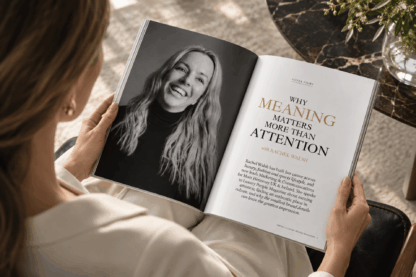
Neen James, author of Exceptional Experiences and one of the featured titles in the TOP Luxury Books for 2026 by WLCC, argues that growth does not come from better products alone, but from how clients feel in every interaction. In this conversation, she explains why advocacy is the most overlooked driver of market share and how leaders can build it deliberately. She also shares how to deliver personal, memorable experiences without sacrificing scale.
WLCC: In Exceptional Experiences, you introduce the five luxury levers. Which of these do you see most misunderstood or underutilized by leaders outside traditional luxury sectors, and why?
Neen James: Leaders of brands invest significant energy into the first four luxury levers of our Experience Elevation Model™ of entice and invite to attract clients, then excite and delight existing clients, and yet the most underutilized, and the most profitable to drive market share, is ignite to create advocates.
They work hard to attract attention, create a warm welcome, build excitement, and deliver delight in the moment. And then once someone becomes a client, some brands just leave the relationship exactly where it was. Ignite is about turning those exceptional experiences into something the client carries with them and shares with others, and they become an advocate for your brand, referring others to you.
It is about creating what I call Champagne Moments: unexpected, perfectly timed gestures that make someone feel truly seen, heard, and remembered. Turning the ordinary into the extraordinary… that’s creating Champagne Moments.
The research I conducted for my book, Exceptional Experiences, with Audience Audit confirmed my theory: luxury is about experiences, not things.
Across every segment of luxury consumers, regardless of income or industry, two research findings you will enjoy knowing are that luxury is viewed as a reward for hard work and experiences consistently outweigh things.
Leaders outside traditional luxury sectors often assume they need more product features, a better price point, or a flashier launch, and yet, what they need is to share a story with their clients that is worth telling. Ignite creates advocates from the experiences they have with your brand and the stories you share. And when clients carry your story into the world, that is the most powerful marketing available to any brand. This is how you grow market share by igniting your advocates.
WLCC: You emphasize that luxury is about experiences, not products. How can executives in high-growth or volume-driven industries apply this mindset without compromising scale or efficiency?
NJ: The luxury mindset is not reserved for brands with a certain price point or in the luxury industry. It is a philosophy about how you make people feel seen, heard, and valued. It requires you to be intentional with your attention. The Luxury Mindset Research I conducted for Exceptional Experiences revealed four attitudinal segments among luxury consumers: Reluctant and Removed, ProPrioritizer, Confident and Content, and the Luxury Lover. What struck me was that the desire for meaningful experiences was not confined to one group. Even the segment I call Confident and Content, those who are less conspicuous about their relationship with luxury, responded powerfully to being made to feel genuinely valued.
That insight translates directly into high-volume businesses. Scale and personalization are not opposites when you build the right systems. What I call Systemized Thoughtfulness is the practice of operationalizing the small gestures, the precise language your clients want to hear, the anticipatory service details that make every client feel like the only person in the room, and doing it consistently, across an entire team, without depending on individual heroics.
The leaders who do this well train their people to notice what others overlook. They build it into onboarding, into follow-up sequences, into the way a call is opened and closed, and into how to keep detailed records on every client. That is how you scale the luxury mindset without losing what makes it exceptional. If you are always asking, ‘How can I make my clients feel seen, heard, and valued?’ you can bring the luxury mindset into every interaction. It’s moving from transactional interactions to transformational experiences.
WLCC: Your Experience Elevation Model™ focuses on moving from transactional to transformational relationships. What are the first practical shifts a leadership team should make to start embedding this into their client strategy?
NJ: Start with orientation. Many leadership teams are designed around what they deliver, not around how the client will experience their journey with you. In Exceptional Experiences, I outline what I call B.D.A, the before, during, and after framework, because the experience does not begin when the product or service lands. It begins the moment someone decides to engage with you. Start there and map what your client feels, thinks, and notices before they are even in the room with you.
The second shift is in language. Luxury brands have always known that the words you choose shape the feelings you create. A transactional team talks about processes and deliverables. A transformational team talks about the individual person. The third shift is accountability. The organizations I have worked with that make the leap from transactional to transformational do not leave the client experience to chance. They assign ownership, measure it, and celebrate the moments where a team member created something extraordinary, a Champagne Moment. Once leaders make those shifts, orientation, language, and accountability, the culture begins to follow. And that culture is where exceptional experiences live.
WLCC: Having worked with brands like Four Seasons and Virtuoso Travel, what distinguishes organizations that consistently deliver exceptional client experiences from those that struggle to maintain that standard?
NJ: The organizations that sustain exceptional client experiences share one defining trait: their leaders experience the brand through their clients’ eyes, and they commit to this for every touchpoint in their clients’ journey. The brands I have had the privilege of working alongside, including Four Seasons and Virtuoso Travel, have built an almost obsessive team culture of noticing and paying attention to every small detail and then capturing those details to elevate the experiences in the future. Every touchpoint is considered, every marketing piece, every word spoken in language is intentional, the complete sensory experience, and that is supported by a team that is empowered to personalize and customize client interactions to elevate their experience.
What separates them from organizations that struggle is not budget or the size of the team; it is the deep belief held by leadership and modeled consistently, that the smallest detail matters as much as the grandest gesture. The Luxury Mindset Research I conducted for my book reinforced this. Across every segment of luxury consumers, the experience of feeling genuinely cared for consistently outweighed any specific product or service feature. The organizations that understand this build systems of elevation to make that feeling reproducible. Brands that struggle tend to rely on their best people to carry it, and that can create challenges when these best people get promoted, move on, or simply have an off day. You cannot build a category-defining brand on something that is inconsistent; you need what we call Systems of Elevation (outlined in the Experience Elevation Model™) because systems create freedom.
WLCC: Looking ahead, what changes do you expect in client expectations within the luxury space, and how should leaders prepare now to remain relevant and competitive?
NJ: We can all agree that clients are now more sophisticated and more discerning. My Luxury Mindset Research surfaced something important: across every attitudinal segment, there is a growing conviction that luxury is earned, it is a reward for hard work, and that the experiences tied to it need to justify not just the financial investment but the investment of time. Time is the ultimate luxury currency right now.
What that means for brand leaders is to remain competitive, we need to value our clients’ time as the most precious resource in the relationship. Anticipate needs before they are expressed. Remove friction before it is encountered. Create moments (Champagne Moments) so thoughtful and so specific that the client feels the experience was designed just for them. In Exceptional Experiences, I describe this as building your Experience Elevation model. If you want to stay current and relevant, grow your reputation, and ignite a brand that advocates refer others to, these five luxury levers will help you.
In our digital, AI world, investing time and resources to elevate the human connection differentiates you and your brand.
Thank you, Neen!
Follow Neen James on LinkedIn for practical leadership insights on client experience and attention strategy, or visit her website to explore her work and schedule a conversation.
WLCC regularly features conversations and insights from global luxury leaders. Join our community to receive new interviews and perspectives weekly: https://worldluxurychamber.com/wlcc-community/.