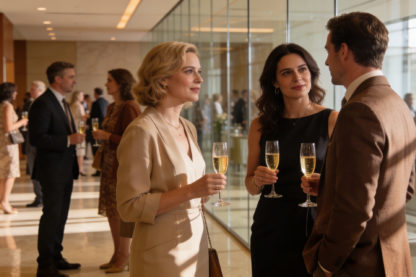
The luxury industry has long been defined by heritage, leadership, craftsmanship, and a commitment to long-term value creation. Today, the geography of luxury is evolving. Markets such as India, the Middle East, and Southeast Asia are becoming increasingly influential, introducing new clients, capital, and cultural contexts. As a result, the industry is beginning to confront a strategic question that extends beyond retail expansion or market entry: how to prepare the next generation of leaders capable of sustaining luxury’s values in a truly global ecosystem.
This piece features insights from Richa Chopra, luxury branding specialist and researcher, on how leadership must evolve in an increasingly multi-polar global landscape.
Luxury’s Expanding Geography
Luxury growth is no longer defined solely by traditional Western markets such as France, Italy, or Switzerland. Emerging regions are increasingly shaping demand patterns, digital behavior, and cultural expectations. This shift has significant implications for the industry’s talent model.
While brands can replicate retail environments and distribution strategies across markets relatively quickly, cultivating professionals who deeply understand the operational and cultural codes of luxury takes far longer. Talent pipelines in many emerging regions are still developing, and professionals often enter the industry through marketing, fashion, or retail backgrounds without exposure to the full ecosystem that supports luxury brands.
This is not a lack of interest in luxury careers. On the contrary, interest is growing. The challenge lies in the gap between how professionals are trained and how luxury organizations actually function. As luxury becomes increasingly global, this gap becomes more visible.
Industry Signals
Several signals suggest that luxury talent development is becoming a strategic priority. Major luxury groups are expanding internal academies, hospitality brands are building structured leadership pipelines, and luxury education programs are increasingly emerging in markets such as India and the Middle East.
These developments reflect a broader recognition: sustaining luxury’s global expansion will require more than retail growth – it will require the deliberate cultivation of leadership capable of operating across cultures and complex operational systems.
Three Structural Shifts Reshaping Luxury Leadership
Three structural developments are accelerating the urgency of this conversation.
1. The Rise of a Multi-Polar Luxury Market
Luxury demand is no longer concentrated in a handful of Western markets. Emerging regions are becoming powerful drivers of growth, influence, and innovation.
India, the Middle East, and Southeast Asia are shaping new expectations around hospitality, retail experiences, and digital engagement. As these markets mature, luxury brands must navigate increasingly diverse cultural environments while preserving the coherence of their identity.
This requires professionals capable of operating between cultures, translating global heritage into locally meaningful experiences.
2. Increasing Operational Complexity
The luxury ecosystem has evolved far beyond product design and boutique retail.
Today it encompasses:
• advanced clienteling strategies
• data-driven personalization
• hospitality and experiential services
• omnichannel retail systems
• highly sophisticated global supply chains
Managing this complexity requires professionals who understand how creative, operational, and commercial systems interact.
Luxury leadership today therefore demands both cultural sensibility and operational fluency.
3. The Challenge of Cultural Translation
Perhaps the most delicate challenge for luxury brands is maintaining coherence across markets with different cultural expectations. A brand’s heritage may originate in Paris, Milan, or Geneva, while its clientele may increasingly be based in Dubai, Mumbai, or Singapore.
Ensuring that a brand’s identity remains authentic while adapting to local cultural contexts requires professionals capable of navigating both perspectives simultaneously. In this sense, luxury leadership is becoming an act of cultural translation.
The Skills Defining the Next Generation of Luxury Leaders
As the industry becomes more global and more complex, the capabilities required from future leaders must evolve accordingly. Several competencies are becoming increasingly essential.
Cultural Intelligence
Luxury professionals must understand how to translate a brand’s heritage and codes into markets with different cultural expectations without diluting authenticity.
This requires not only market knowledge but also deep sensitivity to cultural nuance.
Operational Fluency
Understanding how retail, merchandising, supply chains, and clienteling systems interact is critical for sustaining brand consistency and service excellence.
Luxury is not sustained by storytelling alone. It relies on sophisticated operational ecosystems.
Data Literacy
Personalization and client analytics are becoming increasingly central to luxury strategy. As brands deepen their understanding of client behavior, professionals must combine intuition with analytical insight.
The modern luxury leader must be comfortable navigating both art and analytics.
Long-Term Stewardship
Perhaps more than any other industry, luxury rewards patience and institutional knowledge.
While many sectors operate on short-term cycles, luxury brands think in decades. Leadership therefore requires the ability to balance innovation with the careful preservation of brand heritage.
In luxury, leadership is not only about growing a business – it is about protecting and evolving a cultural asset.
Building the Future Talent Ecosystem
Addressing the talent question requires deliberate and long-term investment.
Luxury brands, educational institutions, and industry platforms all have a role to play in cultivating the next generation of leaders.
Partnerships between brands and universities can help emerging professionals understand the structural realities of the luxury ecosystem earlier in their careers.
Cross-market apprenticeship models are also likely to become increasingly valuable. Rotating future leaders across regions can build the cultural fluency necessary for a multi-polar industry.
Equally important is ensuring that talent development extends beyond brand storytelling. Exposure to operational systems, commercial decision-making, and client relationship management is what ultimately prepares professionals for leadership roles.
Industry networks and global platforms also play an important role by connecting experienced leaders with emerging talent and fostering dialogue around the future of luxury leadership.
As luxury becomes increasingly interconnected, global industry platforms like World Luxury Chamber of Commerce also have a role to play in shaping the conversation around leadership and talent development. By bringing together executives, entrepreneurs, and emerging leaders from different regions, WLCC creates spaces where knowledge, experience, and perspectives can be exchanged across markets.
These ecosystems can become important catalysts for building the cultural and operational understanding required for a truly global luxury industry.
A Strategic Priority for the Industry
Luxury has always understood the importance of protecting its heritage. Yet as the industry continues to expand globally, the next competitive advantage may lie not only in creativity, craftsmanship, or distribution, but also in how effectively it cultivates the people capable of sustaining luxury’s values.
The future of luxury will not be defined solely by where brands expand. It will also be defined by how thoughtfully the industry prepares the foundation for those who will lead it.
Stay aware of the latest luxury leadership insights and global industry shifts — join the WLCC community and connect with the next generation of luxury leaders: https://worldluxurychamber.com/wlcc-community/