A luxury brand’s identity is expressed through hundreds of decisions: the silhouette of a product, the atmosphere of a store, the language of a campaign and the symbols customers recognise. Their combined effect determines how clearly the brand communicates its value.
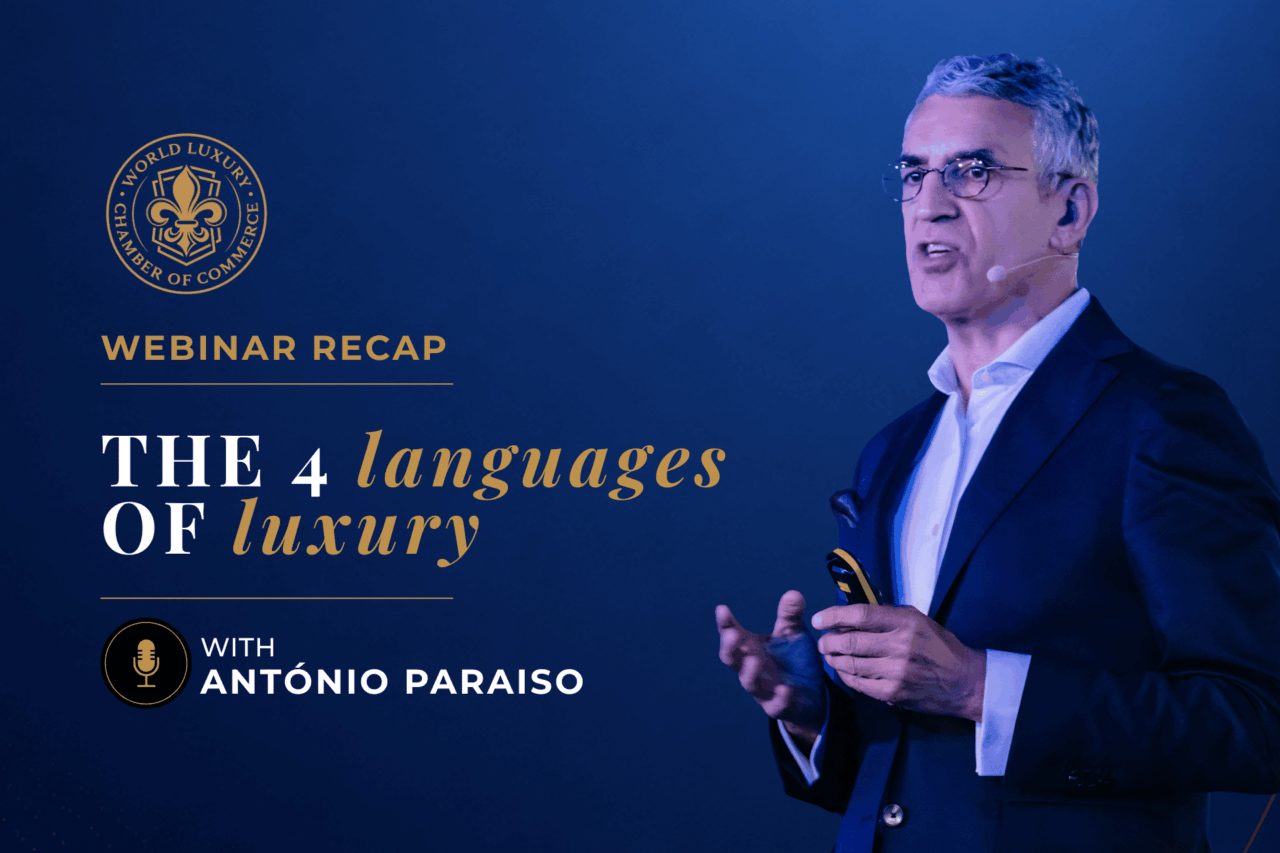
In WLCC’s members-only webinar, The 4 Languages of Luxury, luxury marketing consultant and international speaker Antonio Paraiso examined four dimensions of brand identity: visual, aesthetic, narrative and symbolic. His framework offers a useful lens for examining how brands build recognition, communicate value and sustain emotional connection.
Recognition takes time to build and discipline to retain
Tiffany’s blue, Hermès’ orange and the Porsche 911 silhouette illustrated how consistent design choices become recognisable brand signatures.
That recognition has implications for decisions about renewal. A redesign changes elements customers have learned to associate with the business. Before introducing something new, a brand needs to understand which existing details carry meaning and how much recognition depends on them.
Continuity deserves the same consideration as novelty.
Aesthetic identity gives creative decisions a shared direction
Aesthetic language expresses the style, feeling and lifestyle a brand represents. Paraiso explored this through examples including Versace’s Baroque expression and Bottega Veneta’s woven leather.
A clearly defined aesthetic provides a reference point across products, spaces and communication. It allows creative expression to develop while retaining a recognisable character. Without that clarity, individual decisions may be compelling yet contribute little to a coherent identity.
Narrative makes the sources of value understood
Paraiso’s discussion of Loro Piana’s storytelling around vicuña wool demonstrated how communication can connect materials, provenance and craftsmanship to desire.
The question is how well customers understand the qualities behind a product’s value. Specialist knowledge, sourcing and production processes provide rich material for communication. Carefully chosen language makes those qualities meaningful and gives customers a deeper appreciation of what they are buying.
Symbolic value depends on a credible connection
Symbols can carry recognition, emotional meaning and a sense of belonging. During the Q&A, Paraiso emphasised that they should connect to the brand’s origins, founder or history.
The implication is clear: symbolic meaning needs a foundation. A brand’s stories and imagery become more credible when their connection to the business can be understood. Its own history and distinctive characteristics provide a starting point for developing that meaning.
Modernisation begins with understanding the customer
Asked whether luxury brands should update their typography for younger generations, Paraiso resisted a universal answer. People of the same age can have very different tastes, backgrounds and expectations.
Generational labels alone provide limited direction for brand decisions. Changes to identity should reflect a precise understanding of the intended customer and the aesthetic position the brand wants to maintain.
The four languages ultimately raise one demanding question: do the brand’s design, experience, words and symbols reinforce the same identity? The answer reveals whether individual investments in creativity and communication are building a distinctive, recognisable whole.
Missed the session and want to attend another? Join our community to receive event invitations & more: https://worldluxurychamber.com/wlcc-community/