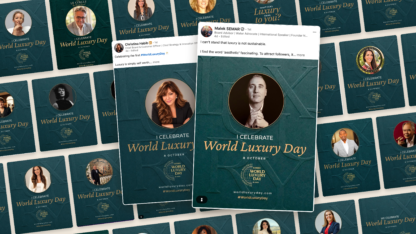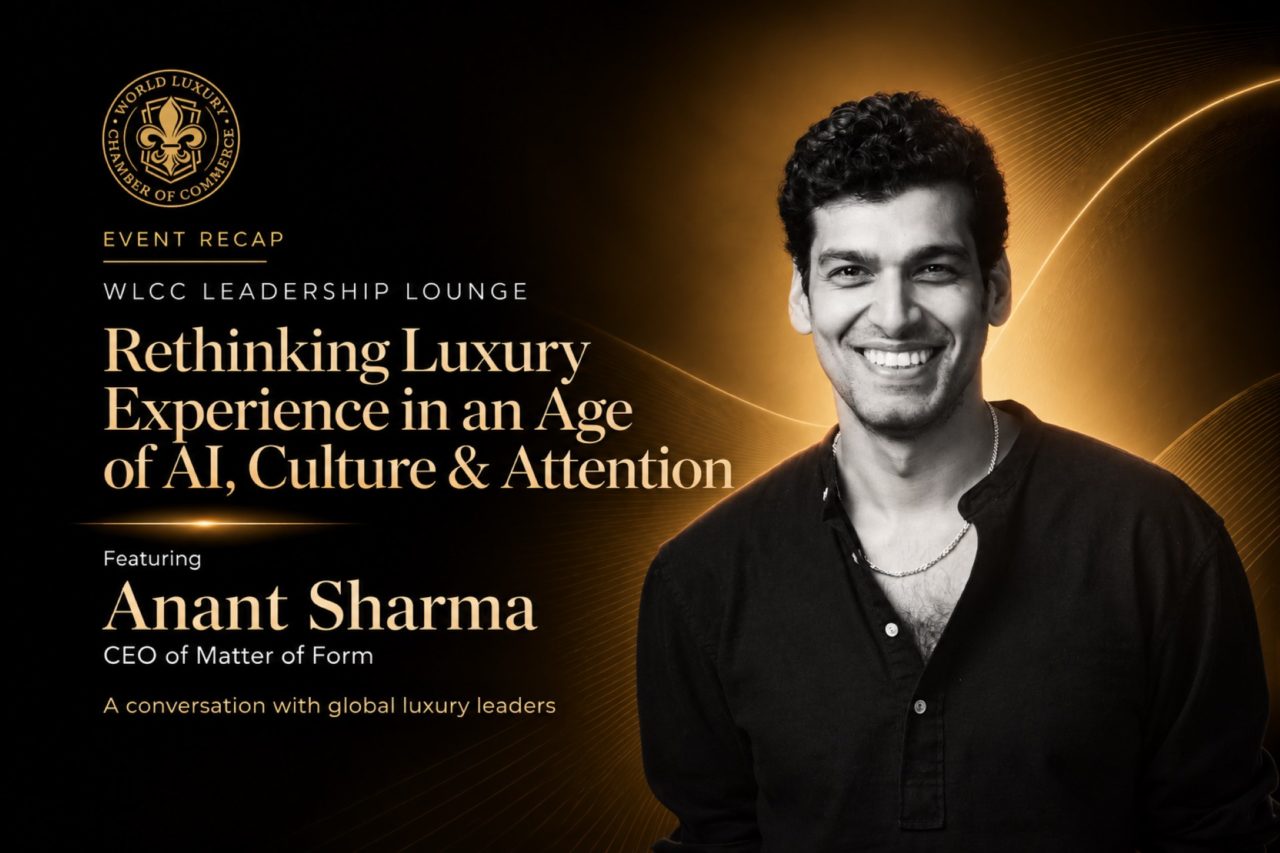
On October 8, in celebration of World Luxury Day, the World Luxury Chamber of Commerce (WLCC) welcomed Anant Sharma, Founder & CEO of Matter Of Form, as the featured speaker of its WLCC Leadership Lounge.
Under the theme Rethinking Luxury Experience in an Age of AI, Culture & Attention, the session commenced with a fireside conversation where Anant shared his perspective on how luxury brands can navigate technological change, rethink customer engagement, and create lasting value through authentic, emotionally resonant experiences.
Drawing on his experience in brand strategy, customer experience, and behavioral design, Anant explored the evolving definition of luxury, questioning whether higher prices, exclusivity, and constant digital visibility truly translate into greater customer value.
“A higher price point is not a richer experience,” Anant pointed out, highlighting the importance of genuine differentiation, creativity, and long-term brand value.
His central message was clear: As technology becomes more sophisticated, the human qualities that cannot be automated may become luxury’s greatest competitive advantage.
Key Insights from the Conversation
Luxury Must Return to Its True Foundations
Anant opened the discussion by questioning how the word “luxury” has become increasingly overused, often associated with premium pricing rather than meaningful differentiation.
He identified three defining characteristics of genuine luxury: long-term thinking, the innovative spirit of a brand’s founders, and design as a competitive advantage.
Referencing the pioneering ambitions of figures such as Ettore Bugatti, Coco Chanel, and César Ritz, he emphasized that great luxury brands were built by individuals who challenged conventions and pursued distinctive visions.
Today, he argued, many brands risk losing this originality through short-term commercial priorities, artificial scarcity, and price increases that are not matched by greater perceived value.
AI Should Enhance Craftsmanship, Not Replace It
Artificial intelligence is transforming business operations, customer engagement, and creative processes. Yet Anant encouraged luxury leaders to distinguish between what technology can improve and what should remain fundamentally human.
AI can automate administrative tasks, support decision-making, and strengthen capabilities outside a company’s core expertise. However, the craftsmanship, creativity, and personal judgment that define a luxury brand should not be sacrificed for efficiency.
The opportunity is not to replace people with technology, but to use technology to free up time and resources for the activities that create genuine differentiation.
For luxury businesses, AI should support the experience, not become the experience itself.
Luxury Needs Deeper Engagement, Not More Attention
In a digital environment dominated by short-form content and constant competition for visibility, Anant challenged the assumption that consumers have lost their ability to concentrate.
People remain willing to invest significant time in content and experiences they genuinely value. The depth of their attention depends on the context, platform, and relevance of what they encounter.
The real challenge for luxury brands is therefore not simply capturing more attention, but creating experiences worthy of sustained engagement.
Anant questioned the industry’s growing dependence on superficial visibility metrics and short-term content performance, suggesting that brands should place greater emphasis on meaningful storytelling and deeper relationships.
Rather than competing for fleeting impressions, luxury businesses have an opportunity to create richer editorial content, immersive experiences, and narratives that strengthen emotional connection.
Time, Belonging, and Human Connection Are Becoming The Ultimate Luxuries
As AI accelerates everyday activities, luxury has an important role to play in helping people reconnect with what matters.
Despite technological progress, fundamental human needs remain unchanged: status, belonging, autonomy, recognition, and impactful connections.
Luxury hospitality, in particular, offers opportunities to slow down, appreciate culture, connect with loved ones, and experience moments of stillness.
These principles extend beyond hospitality to fashion, design, automotive, and other luxury sectors, and brands can create lasting value by making customers feel welcomed, understood, and part of a community.
Exceptional Luxury Experiences Must Be Designed Around Emotion
Anant encouraged luxury leaders to approach brand building as the deliberate design of a customer journey.
Rather than starting with technology or marketing channels, brands should first define their promise and the emotional outcome they want customers to experience.
Every interaction, from initial discovery to purchase and beyond, should contribute to delivering that promise.
He also highlighted the importance of multisensory branding. While digital communication predominantly emphasizes visual experiences, elements such as scent and sound can play a powerful role in shaping emotional memories and brand associations.
For luxury brands with physical environments and personalized client relationships, these sensory opportunities represent an important competitive advantage.
The objective is not simply to create an impressive experience, but one that customers remember and associate with a distinctive feeling.
Trust Will Become Luxury’s Greatest Competitive Advantage
Looking toward 2030, Anant expressed the growing importance of trust in a world overwhelmed by information, options, and decisions.
Consumers are often presented with more choices than they can comfortably evaluate. While choice is frequently associated with luxury, an abundance of options can also create uncertainty and decision fatigue.
This creates a different form of luxury value: confidence, reassurance, and freedom from unnecessary complexity.
As Anant explained, “A brand is a trust marker, and when you truly trust a brand, you allow it to make decisions on your behalf.”
A Dialogue Beyond the Fireside Conversation
Following the fireside conversation, participants had the opportunity to connect with fellow luxury founders, executives, and decision-makers from different industries and regions to introduce their businesses, exchange expertise, and identify opportunities for collaboration.
Building on Anant’s insights, participants also reflected on where they are already using AI in their businesses and where they believe human interaction will remain essential.
Christian Kurtzke, Former CEO of Together Group, raised the challenge of protecting brand equity and long-term vision within organizations facing quarterly financial pressures, whilst Kenneth Hatton from CBRE offered an additional perspective, noting that financial discipline and public ownership need not prevent luxury businesses from pursuing long-term brand development.
The exchange reinforced a central theme of the session: Luxury businesses must find ways to balance commercial performance with the long-term investments that sustain brand desirability.
These conversations reflect the purpose of the WLCC Leadership Lounge: transforming industry perspectives into lasting professional relationships, potential partnerships, and new business opportunities.
Connecting Global Luxury Leaders Through WLCC
The WLCC Leadership Lounge offers more than a traditional virtual event. By combining forward-looking industry discussions with curated networking, WLCC continues to create opportunities for luxury leaders to exchange perspectives, explore collaborations, and strengthen their international business connections.
The October 8 session carried additional significance as part of World Luxury Day, an initiative established by WLCC to celebrate the creativity, craftsmanship, innovation, and people shaping the global luxury industry.
What Comes Next for Luxury Brands
The conversation offered a clear perspective on the future of luxury: technological progress should not come at the expense of the human qualities that make exceptional brands desirable.
The future of luxury is not a choice between technology and humanity. It is about using innovation intelligently while protecting what makes luxury irreplaceable.
Already a WLCC member?
Join an upcoming WLCC Leadership Lounge to continue exchanging perspectives and building relationships with founders, executives, and decision-makers from across the global luxury industry.
Not yet a member?
Become a member of the World Luxury Chamber of Commerce and connect with a global network of luxury industry leaders. Gain access to exclusive industry discussions, curated networking experiences, strategic connections, and opportunities to strengthen your brand’s global presence, forge valuable partnerships, and unlock new opportunities for international growth.