For years, we’ve adapted to technology. Now technology is starting to adapt to us.
Instead of expecting people to adapt to digital systems, technology is increasingly learning to understand human behavior, preferences, and context. For luxury brands, this shift presents an opportunity to strengthen relationships, create more meaningful experiences, and rethink how value is delivered.
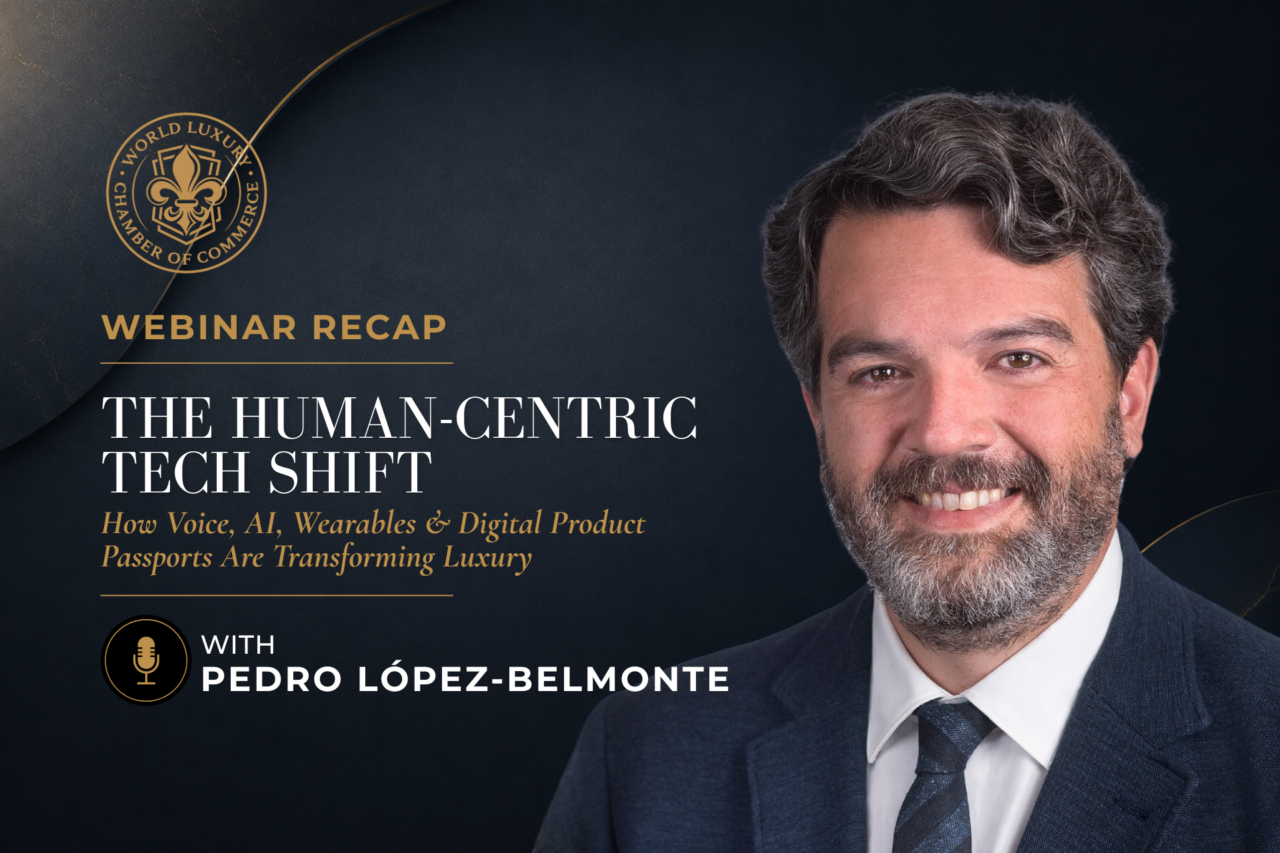
Here are five of the biggest takeaways from The Human-Centric Tech Shift: How Voice, AI, Wearables & Digital Product Passports Are Transforming Luxury webinar with Pedro López-Belmonte.
1. The Future of Luxury Is Human-Centric
What matters most about the next wave of luxury tech isn’t the technology itself; it’s how well it supports human relationships. The innovations that succeed will make interactions simpler, anticipate what customers need, and feel intuitive rather than technical.
Luxury has always run on emotion, trust, and personal connection. As new tools get more advanced, they need to reinforce those things, not get in the way of them. Brands that keep people at the center of their decisions will come out ahead.
Takeaway: Innovation matters most when it makes luxury feel more human, not more digital.
2. Technology Should Adapt to People
For decades, customers had to learn how to use websites, apps, and platforms. That’s flipping. Voice assistants, visual recognition, wearables, and context-aware systems are letting technology adapt to people, instead of the other way around.
The result: interactions that feel more like a conversation and less like navigating a menu. Customers can engage with brands without having to think about the interface at all.
For luxury businesses, that means designing technology that fades into the background while still making every interaction better.
Takeaway: The best technology barely feels like technology.
3. AI Should Enhance Human Service
AI is becoming a genuinely useful tool for luxury brands, but its real value is in supporting people, not replacing them.
It can take administrative work off people’s plates, surface deeper customer insights, anticipate preferences, and smooth out operations. That frees up advisors, sales associates, and client teams to spend more time actually building relationships and delivering great service.
Empathy, intuition, and emotional intelligence are still uniquely human; no algorithm replaces them.
Takeaway: AI handles efficiency. People build trust, emotion, and loyalty.
4. The Customer Journey Never Ends
Luxury brands have traditionally poured their energy into the moment of purchase. But more and more, the value shows up after the sale.
Ongoing personalization, aftercare, exclusive services, community, and thoughtful follow-up all build stronger relationships over time. Every touchpoint is a chance to deepen loyalty, not just close a transaction.
Brands that think past the individual sale end up with stronger, longer-lasting client relationships.
Takeaway: The purchase is the start of the relationship, not the end of it.
5. Ecosystems Create Lasting Value
Luxury is moving past standalone products and into connected ecosystems, products, services, digital identities, and smart experiences working together.
Tools like Digital Product Passports, connected services, and intelligent assistants let brands keep delivering value throughout a product’s life, not just at the point of sale. Instead of treating each purchase as a one-off, brands can build continuous engagement that keeps loyalty growing.
That connected approach turns products into long-term relationships, and opens up new ways to personalize, serve, and build trust.
Takeaway: The strongest luxury brands build ecosystems, not one-off experiences.
Looking Ahead
The future of luxury won’t belong to whoever adopts the most technology; it’ll belong to whoever uses it most thoughtfully. As AI, voice interfaces, wearables, and connected products become part of everyday life, the brands that win will be the ones that keep people at the center of it all.
Technology can make things more efficient and open up new possibilities, but what luxury is built on hasn’t changed: trust, emotion, great service, and lasting relationships. The next chapter belongs to brands that use technology to strengthen those things, not replace them.
Missed the session and want to attend another? Join our community to receive event invitations & more: https://worldluxurychamber.com/wlcc-community/.