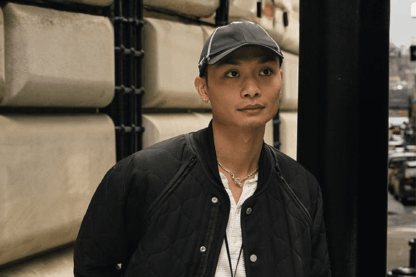
Elizabeth Solaru is changing how the luxury industry approaches excellence, relevance, and leadership. Through her work, she challenges legacy thinking and introduces a more culturally intelligent, commercially grounded vision for the future of luxury.
Luxury People Magazine: You founded the Diversity in Luxury Awards to spotlight talent across the sector. What gaps did you see in the industry that convinced you this kind of platform was necessary?
Elizabeth Solaru: The gap was hiding in plain sight. I would walk into luxury spaces, attend luxury events, read luxury publications, and see the same faces, the same backgrounds, the same narrow definition of who gets to be considered an authority in this industry. And yet the clients’ spending in luxury globally were becoming more diverse, more international, more culturally complex. There was a fundamental mismatch between who the industry was celebrating and who it was actually serving. What troubled me most was not just the absence of diverse faces at the top but the absence of any mechanism for changing that. There was no platform that said these people exist, their work is exceptional, and the industry is diminished by not knowing their names. The Diversity in Luxury Awards was my answer to that silence. I wanted to create a stage that the industry could not ignore, at a venue like Hotel Café Royal in London, with judges whose credibility was beyond question, so that the conversation about diversity in luxury could not be dismissed as peripheral. It is not peripheral. It is the central commercial and cultural question the industry needs to answer if it wants to remain relevant.
LPM: In your book The Luxpreneur, you outline a practical framework for building a luxury brand. What are the most common mistakes entrepreneurs make when trying to position a brand at the premium or luxury level?
ES: Before I answer that, I want to say something about why I wrote the book in the first place. Most of the literature on luxury business strategy is written by academics, professors of luxury management, or consultants who have worked alongside the big heritage houses. That knowledge is valuable, but it is not the same as the knowledge that comes from actually building something from the ground up yourself, from making the decisions with your own money, your own reputation, and your own clients on the line. There are not many books in this space written by actual founders who have lived the journey. That was a gap I felt personally, and it was one of the reasons The Luxpreneur needed to exist. The framework in the book comes from the inside of the experience, not the outside of it.
And what that experience taught me is this. The most common mistake entrepreneurs make is confusing expensive with luxurious. Raising your prices and assuming that the positioning will follow automatically. It does not. Luxury is not a price point. It is a promise, consistently kept, across every single touchpoint of the customer experience. The second mistake, which is connected to the first, is neglecting what I call the House Codes. Every credible luxury brand has a coherent internal language, a set of aesthetic, experiential, and philosophical principles that govern every decision from the packaging to the way the phone is answered to the way a complaint is handled. Without that internal architecture, you do not have a luxury brand. You have an expensive product with inconsistent delivery, and sophisticated clients will feel the difference immediately, even if they cannot articulate exactly why. The third mistake is discounting, in every sense of the word. Financially, yes, but also discounting the importance of story, of provenance, of the emotional and cultural weight that a luxury brand must carry to justify its positioning. Luxury clients are not paying for the object. They are paying for what the object means. If you cannot answer the question of what your brand means at the deepest level, you are not yet ready to operate in this space.
LPM: Many luxury houses still rely heavily on heritage and tradition. How can established brands remain commercially strong while also connecting with a broader and more culturally diverse global audience?
ES: The first thing I would say to any heritage house is that your tradition is an asset only if it is living. A heritage that sits in a glass case and points to the past is a museum exhibit, not a brand strategy. The houses that are doing this well understand that tradition is not about repetition. It is about a set of values and a standard of excellence that can be expressed in multiple cultural languages without losing its integrity. That requires genuine curiosity about the cultures you are trying to serve, and genuine curiosity requires diverse leadership. You cannot connect authentically with a Nigerian client, a Saudi client, or a Korean client by hiring one person from each of those communities and calling it a diversity initiative. You need those perspectives woven into the creative, strategic, and commercial decision-making of the business at every level. The brands that are going to win the next decade are the ones that understand that cultural diversity is not a marketing category. It is a commercial intelligence advantage. The global luxury client is sophisticated, well-travelled, and acutely sensitive to tokenism. They will not be flattered by a campaign that features them. They will be won by a brand that genuinely understands them.
LPM: As someone who works closely with founders and leadership teams, what distinguishes a luxury brand that achieves long-term credibility from one that simply looks luxurious on the surface?
ES: Consistency and courage. Long-term credibility is built by brands that make the same quality decision when no one is watching as they do when the world is looking. That sounds simple, and it is extraordinarily difficult to sustain, particularly when commercial pressure builds and shortcuts become tempting. The brands I have seen fail at the luxury level almost always have the same origin story. They built the aesthetics perfectly. The visual identity was immaculate. The pricing was positioned correctly. But somewhere in the operational reality of the business, the promise broke down. A client was kept waiting without acknowledgement. A product was delivered without the care that the marketing implied. A complaint was handled transactionally rather than with the kind of white-glove attention that luxury clients expect as a baseline. The surface cracked, and underneath it was not the substance that luxury requires. What distinguishes the brands that endure is that they have done the internal work first. They know who they are before they tell anyone else. They have the House Codes, the training, the standards, and the leadership commitment to uphold those standards even when it is inconvenient and expensive to do so. Luxury is a long game. It cannot be built in a campaign cycle.
LPM: Looking ahead, what major shifts do you expect in the global luxury industry over the next decade, particularly in how brands attract and retain the next generation of high-value clients?
ES: The next generation of high-value clients will be the most values-driven, the most globally connected and the most resistant to inauthenticity of any luxury consumer cohort in history. They have grown up with access to information that previous generations did not have. They know when a brand’s sustainability claims are real and when they are marketing. They know when diversity initiatives are structural and when they are cosmetic. And they have options that did not exist before. The dominance of the established European luxury houses is not guaranteed. New luxury voices are emerging from Africa, from Asia, from Latin America, and they carry cultural authority that a heritage house in Paris cannot manufacture. Brands that want to win the next decade need to do three things. They need to build genuine cultural fluency rather than cultural appropriation. They need to create communities rather than just customers, because the next generation of high-value clients wants to belong to something, not just own something. And they need to accept that the definition of luxury itself is shifting. Increasingly, the most precious luxury of all is not a product. It is time, access, knowledge, and experience. The brands that understand that shift and build their offering around it will define what luxury means for the next generation. The brands that are still pointing to a founder who lived in the nineteenth century and hoping that is enough will find that heritage without relevance is just history.
Follow Elizabeth Solaru on LinkedIn for insights on building culturally intelligent luxury brands.
WLCC regularly features conversations and insights from global luxury leaders. Join our community to receive new interviews and perspectives weekly: https://worldluxurychamber.com/wlcc-community/.