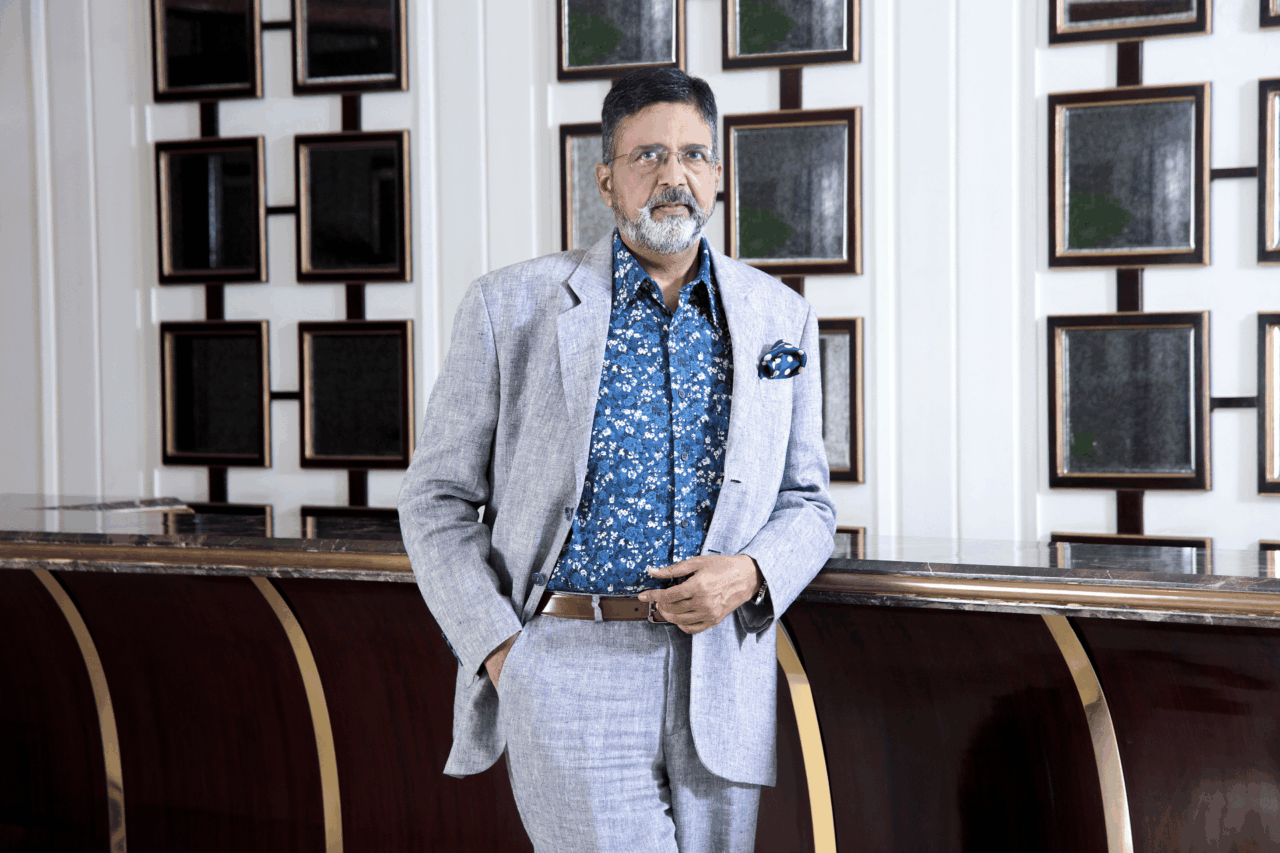
Abhay Gupta has spent more than three decades working at the center of India’s luxury industry, guiding global brands through one of the world’s most complex markets. He shares what truly drives success in India today, and why many international strategies fail to translate.
Luxury People Magazine: Abhay, you have been closely involved in the development of India’s luxury industry for more than three decades. How would you describe the evolution of the Indian luxury market during this time, and what makes it unique compared to other global luxury markets?
Abhay Gupta: When I first began observing the luxury landscape in India in the 1990s, the market was extremely nascent. Luxury consumption was largely confined to a small circle of ultra-high-net-worth families who travelled abroad and purchased most luxury products overseas because the domestic ecosystem was still developing.
Over the past three decades, India has undergone a remarkable transformation. We have moved from an era of limited access to one where luxury is far more visible and aspirational. International brands have entered the market, luxury retail infrastructure has expanded, and digital platforms have significantly increased access and awareness.
What makes India truly unique, however, is that luxury here is deeply intertwined with culture, identity, and social rituals. Heritage craftsmanship, family legacy, and ceremonial consumption play a far greater role than in many Western markets.
This creates what I often describe as the Indian Luxury Paradox: a market that is simultaneously deeply traditional and rapidly modernising. Brands that understand this duality tend to thrive, while those that approach India using purely Western frameworks often struggle.
LPM: You have helped several global luxury brands engage with the Indian market. From your experience, what are the most critical factors that determine whether a luxury brand will succeed in this complex and rapidly evolving market?
AG: The first and perhaps most important factor is strategic patience.
India is not a market that rewards short-term thinking. It requires brands to build trust, cultural relevance, and long-term relationships with clients. Companies that approach India purely as a quick revenue opportunity often underestimate the time required to develop brand equity.
The second factor is local intelligence. India is not a single homogeneous market. Consumer behaviour varies significantly across cities such as Mumbai, Delhi, Hyderabad, or Bangalore. Understanding these nuances—whether in retail location strategy, clienteling, or product assortment—is essential.
The third factor is human capital. The luxury industry in India still faces a significant gap in specialised retail talent. Exceptional client advisors who truly understand luxury culture remain relatively rare. Brands that invest early in training and talent development often outperform competitors over the long term.
Finally, successful brands recognise that luxury in India is deeply experiential. Clients value hospitality, personalised relationships, and storytelling around craftsmanship and heritage. When brands deliver these experiences authentically, they build much deeper engagement with consumers.
LPM: Having observed the luxury market closely for many years, have there been any recent trends in consumer behavior or brand strategy that surprised you or challenged conventional assumptions about luxury?
AG: One of the most interesting developments has been the rising influence of young affluent consumers, particularly millennials and Gen Z.
Historically, luxury consumption in India was driven primarily by older family decision-makers. Today, younger consumers are far more influential. They are globally aware, digitally connected, and comfortable expressing individuality through luxury.
Another notable shift is the expansion of luxury beyond traditional product categories. Luxury is increasingly expressed through experiences—hospitality, travel, wellness, and even branded real estate.
Perhaps the most significant transformation has been driven by digital culture. Social media has dramatically increased the visibility of luxury brands in India. While this has accelerated aspiration, it also requires brands to work much harder to maintain authenticity and exclusivity.
LPM: You are also closely involved in shaping the next generation of luxury professionals through Luxury Connect Business School. In your view, what capabilities and mindsets will be most critical for future leaders of the luxury industry, particularly in emerging markets?
AG: The luxury industry is entering a period where multidisciplinary thinking will be essential.
Future leaders will need to combine brand storytelling, cultural intelligence, digital fluency, and strategic business thinking. Luxury today is no longer simply about product—it is about narrative, community, and emotional connection.
Equally important is cultural intelligence. Emerging markets such as India, Southeast Asia, and the Middle East each have distinct luxury codes. Leaders who understand these nuances while preserving brand heritage will be far more effective.
Finally, the next generation must remember that luxury is fundamentally a human industry. Technology will enhance efficiency, but it cannot replace the emotional resonance that defines truly great luxury brands.
Developing professionals who understand both the artistry and the business of luxury is precisely the mission behind Luxury Connect Business School.
LPM: Many analysts note that luxury consumption in India is increasingly expanding beyond the traditional hubs. How do you see the role of Tier-II and Tier-III cities shaping the next phase of growth for luxury brands?
AG: This is one of the most important structural shifts in the Indian luxury market.
While cities such as Mumbai and Delhi will remain the primary luxury hubs, wealth creation in India is increasingly distributed across Tier-II and Tier-III cities. Entrepreneurs and new-generation wealth creators in cities such as Surat, Ludhiana, Coimbatore, and Jaipur are becoming significant luxury consumers.
However, growth in these markets will not necessarily follow the traditional retail model. Instead, we will likely see hybrid engagement strategies—private clienteling, curated events, digital commerce, and luxury hospitality experiences.
Brands that develop innovative ways to engage these emerging luxury communities will unlock enormous growth potential over the next decade.
LPM: Looking ahead, what major shifts do you believe will define the next decade of the luxury industry in India, and how should global brands prepare to engage with this new generation of consumers?
AG: The next decade of luxury in India will be defined by three major shifts.
First is the rise of confident Indian consumers. Wealth creation in India is accelerating, and with it comes a generation that is proud of its identity and increasingly selective about the brands it engages with.
Second is the rediscovery of Indian craftsmanship and heritage. Global luxury brands are beginning to recognise the extraordinary depth of artisanal knowledge and creativity within the country. This opens up exciting opportunities for collaboration and storytelling.
Third is the emergence of India not only as a luxury market but also as a creator of luxury brands. We are already seeing the rise of Indian luxury houses that combine global aesthetics with local craftsmanship.
For global brands, success in India will require more than simply entering the market. It will require genuine engagement with India’s culture, creativity, and entrepreneurial energy.
Those who do this thoughtfully will find that India is not just another luxury market—it is one of the most dynamic luxury opportunities of the twenty-first century.
Follow Abhay Gupta on LinkedIn for insights on luxury strategy and emerging markets. Discover more at www.abhaygupta.in
WLCC regularly features conversations and insights from global luxury leaders. Join our community to receive new interviews and perspectives weekly: https://worldluxurychamber.com/wlcc-community/.