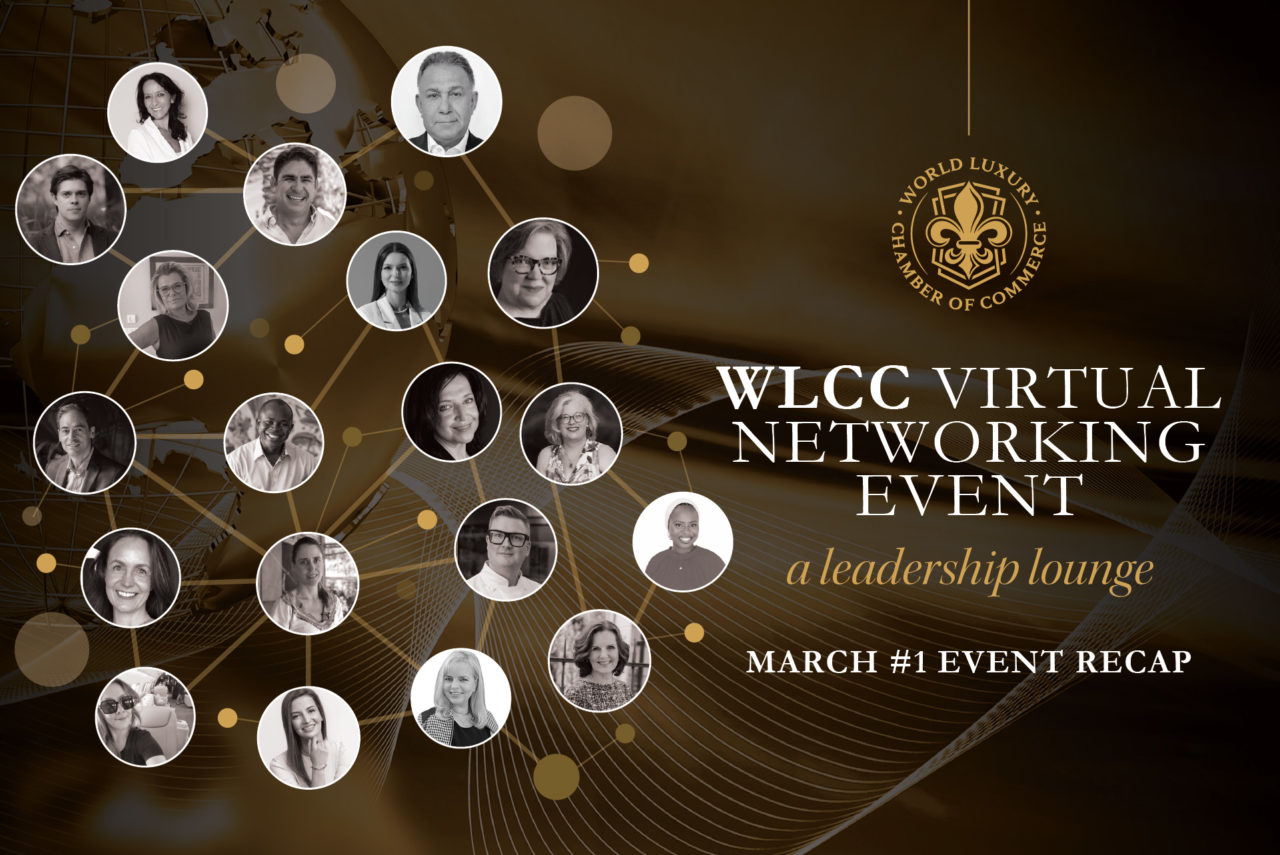
The latest WLCC Leadership Lounge brought together senior leaders from across the global luxury ecosystem for an intimate and thought-provoking conversation on one of the defining questions facing the industry today:
How can luxury brands grow and evolve without losing the culture and authenticity that define true luxury?
Designed as the World Luxury Chamber of Commerce’s signature monthly virtual gathering, the Leadership Lounge offers a curated environment where founders, C-level executives, and senior decision-makers connect, exchange perspectives, and explore strategic collaborations across the luxury landscape.
Participation is intentionally limited, ensuring that discussions remain focused, introductions meaningful, and connections genuinely valuable. Each session combines thought leadership with peer exchange, bringing together leaders from diverse sectors including travel, hospitality, real estate, architecture, and lifestyle services.
The format is simple yet powerful:
• Fireside Chat with a global industry leader
• Curated introductions from participating members
• Moderated discussion and peer exchange
Together, these elements create a setting where insight and connection develop naturally.
A strategic conversation with Bob Kharazmi
The session opened with a fireside conversation featuring Bob Kharazmi, Founder & CEO of Global Hotel Advisors and Board Member of the World Luxury Chamber of Commerce.
With decades of experience across some of the world’s most respected luxury hospitality brands – including The Ritz-Carlton and Bvlgari Hotels & Resorts – Bob shared reflections on leadership, service culture, and the evolving expectations of luxury clients.
Drawing on both operational experience and advisory work with investors and developers worldwide, he outlined several themes shaping the next chapter of luxury hospitality and lifestyle brands.
- Growth must never dilute brand culture
One of the most pressing leadership challenges in luxury today is scaling globally while preserving the original culture and identity of the brand.
Opening new properties or entering new markets may be operationally straightforward. Maintaining the same service philosophy, emotional connection, and cultural DNA across regions is far more complex.
For luxury brands, expansion cannot come at the cost of identity.
- Culture cannot be copied – it must be lived
Luxury service excellence ultimately depends on people.
Bob emphasized that culture cannot simply be documented in a manual and replicated across locations. It must be internalized by employees and reinforced daily through leadership, training, and shared values.
From orientation programs to daily team rituals, the most successful hospitality organizations continuously reinforce their cultural principles – ensuring that service excellence becomes a lived practice rather than a written guideline.
- Technology should support luxury – not replace human connection
While AI and digital technologies are rapidly transforming operations, Bob noted that in luxury hospitality their role should remain largely behind the scenes.
Technology can remove friction, improve efficiency, and provide valuable information. However, the defining moments of luxury experience must remain rooted in human intuition, empathy, and personal interaction.
In ultra-luxury environments, it is the emotional connection between guest and host that ultimately defines the experience.
- The rise of “quiet luxury” and meaningful experiences
Another theme shaping the future of luxury is the evolution of exclusivity itself.
In previous decades, luxury often revolved around visible status and price. Today, many clients seek something different: meaningful experiences, cultural connection, and purposeful journeys.
This shift toward what is often described as “quiet luxury” reflects a broader change in consumer mindset. Rather than displaying wealth, clients increasingly seek experiences that enrich their understanding of the world and deepen their personal connections.
A global, cross-industry dialogue
Following the fireside chat, participants introduced their businesses and shared perspectives on the opportunities and challenges shaping their sectors.
The room reflected the global and cross-industry nature of modernluxury, bringing together leaders from travel, hospitality, real estate, design, lifestyle services, and investment.
Across industries, a clear pattern emerged: today’s luxury clients move seamlessly across destinations, assets, and experiences. As a result, collaboration between sectors is becoming increasingly valuable.
Luxury is no longer defined by individual brands operating in isolation. Instead, it is increasingly shaped by ecosystems of aligned partners working together to deliver exceptional client experiences.
WLCC in action
The Leadership Lounge once again demonstrated what the World Luxury Chamber of Commerce is designed to deliver:
• Access to senior leaders across industries and markets
• A trusted environment for open and strategic dialogue
• Meaningful connections that extend beyond a single event
For many participants, the value of the Lounge lies not only in the insights shared during the session, but in the relationships and collaborations that continue long after the conversation ends.
For leaders who understand that the next stage of growth depends on trusted peers, strategic dialogue, and global perspective, WLCC provides a platform where those connections can develop.
To learn more about WLCC membership, please visit:
https://worldluxurychamber.com/become-a-member/