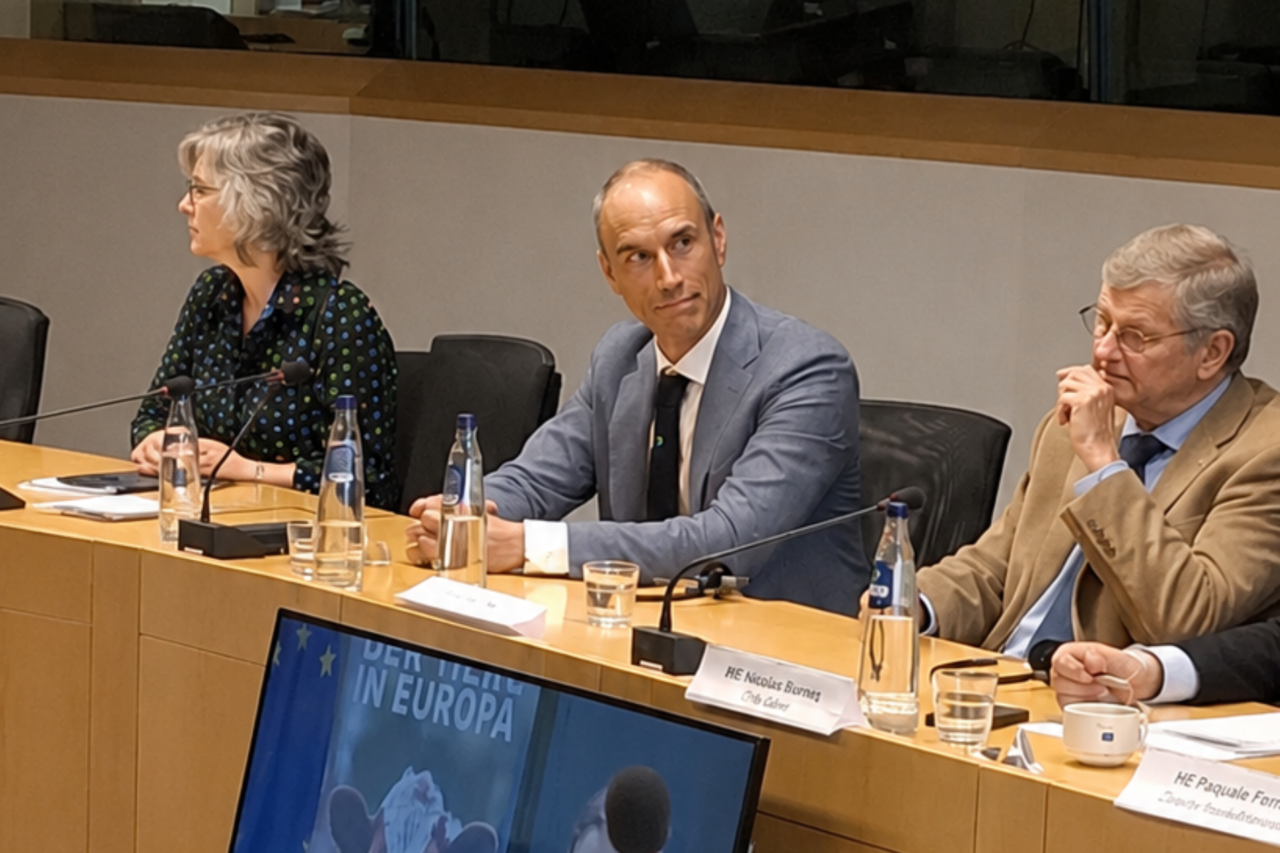
Professor Dr. Carlos Van Mieghem is the founder and director of Sana Medical®, a Belgium-based concierge medicine practice dedicated to delivering highly personalized, physician-led healthcare. An internationally respected cardiologist, researcher, and lifestyle medicine advocate, he combines decades of expertise in interventional cardiology, cardiac imaging, intensive care medicine, and preventive healthcare. His work is driven by the belief that the greatest impact in medicine comes from preventing disease before it occurs rather than simply treating it.
Under his leadership, Sana Medical® offers an exclusive healthcare experience centered on comprehensive health assessments, advanced diagnostics, and tailored wellness strategies for clients seeking long-term vitality and longevity. Inspired by the legacy of pioneers such as Dr. Christiaan Barnard and Professor Pim De Feyter, Professor Van Mieghem continues to champion lifestyle medicine while serving as President of the Belgian College of Lifestyle Medicine and contributing to international scientific organizations.
World Luxury Chamber of Commerce: Sana Medical® combines concierge medicine with a strong focus on prevention and longevity. What inspired you to build a practice around this philosophy, and how has it changed the way you care for your patients?
Professor Dr. Carlos Van Mieghem: I was trained in cardiology almost 25 years ago and learned to treat the many different forms of heart disease. Despite many improvements in the treatment of heart disease, it still remains today the leading cause of death in the Western world. What most people, even many doctors, don’t realise, is that the most common “presentation” (or symptom) of heart disease, is not chest pain, or left arm pain, or shortness of breath, but sudden death. Let me repeat that again, one of the most common diseases we are facing today presents itself as sudden death! My interest in preventing the disease, instead of treating it once it causes symptoms, was awakened during my training in Rotterdam, where I was able to study the early phases of the disease, while doing my PhD on CT imaging of the heart. It became crystal clear to me that heart disease doesn’t arrive suddenly. It develops silently. Over years. Usually decades. The tragedy isn’t missed treatment. It’s missed risk assessment. The same rationale applies to many cancers, type 2 diabetes and many brain diseases like Alzheimer dementia, stroke and Parkinson disease. That’s why I started building a prevention clinic in 2020, in the midst of the COVID crisis, which by the way mainly affected people with underlying health problems. My philosophy in medicine has become one of proactive health care instead of reactive sick care. I help people realize that they cannot die from a disease that they don’t have: my practice is geared towards providing my clients insights into risk factors, the early phases of disease, and optimization of issues such as cholesterol, treating estrogen and testosterone deficiency, improving bone and muscle mass, optimizing metabolic health.
WLCC: Many luxury clients now view their health as one of their most valuable investments. In your experience, what are the expectations of high-net-worth individuals when it comes to personalized medical care, and how are those expectations changing?
CVM: Many of my clients are successful, intelligent investors in finance and property. They are now realizing that proactively investing in their health is the most valuable investment of all, helping them remain strong, vital, and present to enjoy the life and success they’ve built.
By detecting health issues early and focusing on prevention, concierge medicine significantly reduces the need for hospital admissions and emergency care, ultimately saving costs over the long term despite the upfront membership fee.
WLCC: With your background in cardiology, research, and lifestyle medicine, how do you balance cutting-edge medical technology with the importance of everyday habits in achieving long-term health?
CVM: Talking about cutting-edge medical technology. Let me start with mentioning what I see today as the most overrated health claim in popular culture: IV drips, peptides, supplements. We’re living in a longevity circus wrapped in a peptide carnival, fueled by influencers rather than evidence. I just read an article on microplastics, and here’s the gut punch: every IV bag contains over 52,000 nanoplastic particles. While people pay premium prices on wellness hotels and clinics, they’re sending microplastics directly into their bloodstream. The literature already links these particles to fertility problems, dementia, and heart disease.
The basics in my practice are centered around the fundamentals of Lifestyle Medicine: I thereby like to quote Aulus Cornelius Celcus, an encyclopedist from Ancient Rome, who wrote in De Medicina, a primary source on diet, pharmacy and related fields: “Live in rooms full of light. Avoid heavy food. Be moderate in drinking wine. Take massages, baths, exercise, and gymnastics. Fight insomnia with gentle rocking or the sound of running water. Change surroundings and take long journeys. Strictly avoid frightening ideas. Indulge in cheerful conversation and amusements. Listen to music.” My expertise and passion is helping individuals to start thinking different about their personal health. I facilitate them towards making choices that enable them to live a life that is worth living and in good health, exceeding average life expectancy. Cutting-edge medical technology can be very useful in this regard, the basics being nevertheless behaviour change.
WLCC: Trust is essential in both luxury services and healthcare. What principles have helped Sana Medical® build lasting relationships with clients who expect the highest levels of expertise, discretion, and personalized attention?
CVM: Let me first explain what concierge medicine is: the concierge model of healthcare achieves a higher level of care that allows the physician to invest more time in building a relationship with you and getting to know your unique needs and lifestyle. At Sana Medical we care for fewer than 10% of the patients in a traditional practice.
This allows us to focus on prevention and supporting a healthy lifestyle. The benefits of concierge medicine are the difference between living and living well. Our doctors will get to know your unique needs and lifestyle so they can spend more time focusing on prevention and total mental and physical wellness than a traditional medical provider is able to.
We perform an annual comprehensive (“executive”) physical exam to detect issues in their early stages. We are also available around-the-clock for issues, even when you’re out of town for business or pleasure. Don’t wait until you’re sick to seek a higher level of care. If you do get sick or injured, we can coordinate with all local medical facilities. We are not, however, owned by a large hospital system or franchise. Thus we have the freedom to make referrals to the best specialists in the area and the country.
More than the tests themselves, you need someone in your corner. Someone who does not have a financial incentive to order more tests. Someone who will guide you toward what matters and protect you from what doesn’t. Medicine has become a spectator sport when it should be a relationship. Not to sound like a plug, but Sana Medical is based on principles of ethics, science, and evidence. Our doctors are 70% physician, 15% psychologist, 10% rabbi, 4% hairdresser and 1% friend.
WLCC: Looking ahead, what developments do you believe will have the greatest impact on concierge medicine and preventive healthcare over the next decade, and how should both physicians and patients prepare for them?
CVM: The ‘buzzword’ these days in the media is ‘longevity’ and ‘longevity clinics or hotels’ trying to ‘sell’ people more healthy life-years. Longevity medicine is a confusing brew of noble intentions, cutting-edge care and expensive snake oil. That’s partly because there is currently no board certification, nor official guidelines, for practicing longevity medicine. Virtually anyone with a medical degree can call themselves a longevity doctor; witness all the doctor-influencer types positioning themselves as experts on social media.
And while there are practitioners working in good faith to help people live longer, healthier lives, and scientists pursuing treatments to potentially slow the aging process, there are also clinics and companies marketing anything and everything in the name of longevity. That includes supplements, scans and infusions that have little evidence to support their use and even can have dire consequences. The tragic death of a 27-year-old woman following an anti-aging treatment in New York is a reminder that innovation in medicine must always be guided by evidence, safety, and proper medical oversight.
For me, Concierge Medicine is Longevity Medicine done right and can accomplish a few things: give people more time and attention than the typical primary care system allows for, offer more personalized care plans, and shift the priority to preventing disease rather than treating it after it appears. I think in the best-case scenario, longevity medicine is what really good medicine has always aspired to be, but rarely had the tools to deliver.
Thank you, Professor Dr. Carlos Van Mieghem! Connect with Professor Van Mieghem on LinkedIn to follow his latest insights on preventive healthcare, lifestyle medicine, and longevity, or visit Sana Medical at www.sanamedical.be to learn more about its personalized approach to health and wellness.
We publish fresh insight, leadership perspectives, and market intelligence for the luxury industry inside the WLCC community. Join now https://worldluxurychamber.com/wlcc-community/.