As luxury enters a period of greater stability, the question facing brands is no longer simply how to create more products or even more memorable experiences. It is how to remain desirable when customers are placing greater value on meaning, connection and the way luxury makes them feel.
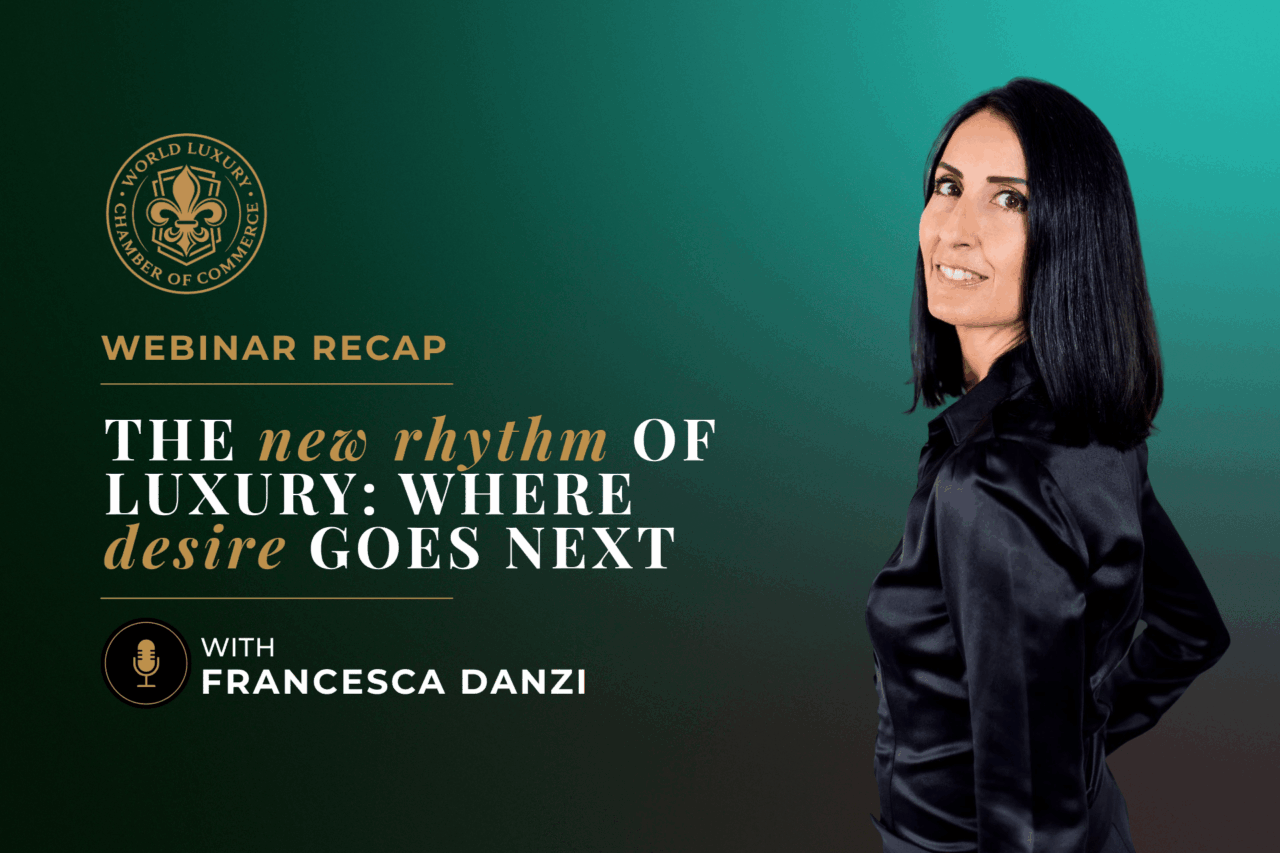
During the latest World Luxury Chamber of Commerce webinar, “The New Rhythm of Luxury: Where Desire Goes Next,” Francesca Danzi, former C-suite luxury executive, board advisor and executive coach, explored what could become the next source of value for the industry.
Her central proposition was a shift from experience and transformation towards something broader: flourishing.
From Experience to Transformation
Luxury brands have become highly skilled at creating worlds that customers can enter and participate in.
Danzi pointed to examples ranging from Moncler Genius and Loewe exhibitions to luxury activations during Milan Design Week. These experiences allow customers to encounter a brand through art, design, culture, craftsmanship and conversation rather than product alone.
But experience is continuing to develop.
Transformation, wellness and longevity are increasingly entering the luxury conversation, reflecting a desire not simply to experience something memorable, but to gain something that continues after the experience itself has ended.
Danzi highlighted three themes within this shift: returning to the body through health, sleep and recovery; restoring inner capacity through attention, emotional wellbeing and silence; and rebuilding human connection.
As she explained, the opportunity is to create experiences that have a lasting and tangible impact on how people live.
Luxury as a Contributor to Flourishing
The next evolution proposed during the session moves from human-centred thinking towards what Danzi described as a more life-centred approach.
This asks brands to consider not only the individual customer, but also the communities, cultures, places, natural environments and future generations around them.
Hermès offered one example. At an event in Makati in the Philippines, there was no product at the centre of the experience. Instead, adults and children were invited to draw, play and create together. For Danzi, the activation connected naturally to the creative gesture behind Hermès objects while also bringing people together and creating activity within the neighbourhood.
Other examples included Bulgari’s investment in the conservation of Rome’s cultural heritage, Chanel’s support of artisans and craftsmanship, Rosewood’s focus on culture and connection, and Fogo Island Inn’s relationship with its local community.
The common thread is a wider question for luxury brands: “What becomes more alive because this brand exists?”
Technology Should Create More Space for People
The discussion also addressed one of luxury’s continuing tensions: technology versus human interaction.
Danzi argued that technology should increasingly become invisible within the luxury experience. AI and other technologies can improve diagnostics, operations and resource optimisation, but their role should also be to create more time for genuine human attention.
Knowing a guest’s preferences through data is no longer necessarily enough to create exceptional service. Human presence brings something different: the ability to observe, exercise judgement and respond to how someone is feeling in that particular moment.
Technology, in this view, supports the experience rather than becoming the experience.
Authenticity Has to Begin Inside the Organisation
If brands take a larger role in supporting people, culture or communities, another challenge emerges: how can they ensure these efforts feel genuine rather than becoming another marketing exercise?
For Danzi, authenticity depends on whether the mission is actually lived inside the organisation.
It cannot sit solely with a sustainability or marketing function. Leadership, incentives, internal culture and the way employees are valued all need to align with what the brand claims to stand for externally.
For smaller luxury brands, this does not necessarily require large investments. Danzi’s advice was simple: choose your lane. Identify one meaningful area where the brand can contribute, nurture it consistently and build from there.
A Broader Measure of Luxury Value
Craftsmanship, quality and provenance remain important. During the Q&A, Danzi described “Made in Italy” as continuing to carry value because of its association with craftsmanship and manufacturing expertise, while arguing that these qualities alone are no longer sufficient.
The wider opportunity is to consider what else a luxury brand enables: whether it helps people feel healthier, more connected, more engaged with culture or more connected to the world around them.
Danzi connected this approach to potential business returns including resilience, irreplaceability, cultural authority, stronger stories and deeper belonging.
Her closing proposition reframed the relationship between purpose and commercial success: rather than treating flourishing and profitability as opposing forces, luxury businesses can consider how the value they create for people, cultures, places and their wider ecosystems can become part of the value of the brand itself.
And perhaps that leaves luxury leaders with the most important question from the session:
What becomes more alive because your brand exists?
Missed the session and want to attend another? Join our community to receive event invitations & more: https://worldluxurychamber.com/wlcc-community/