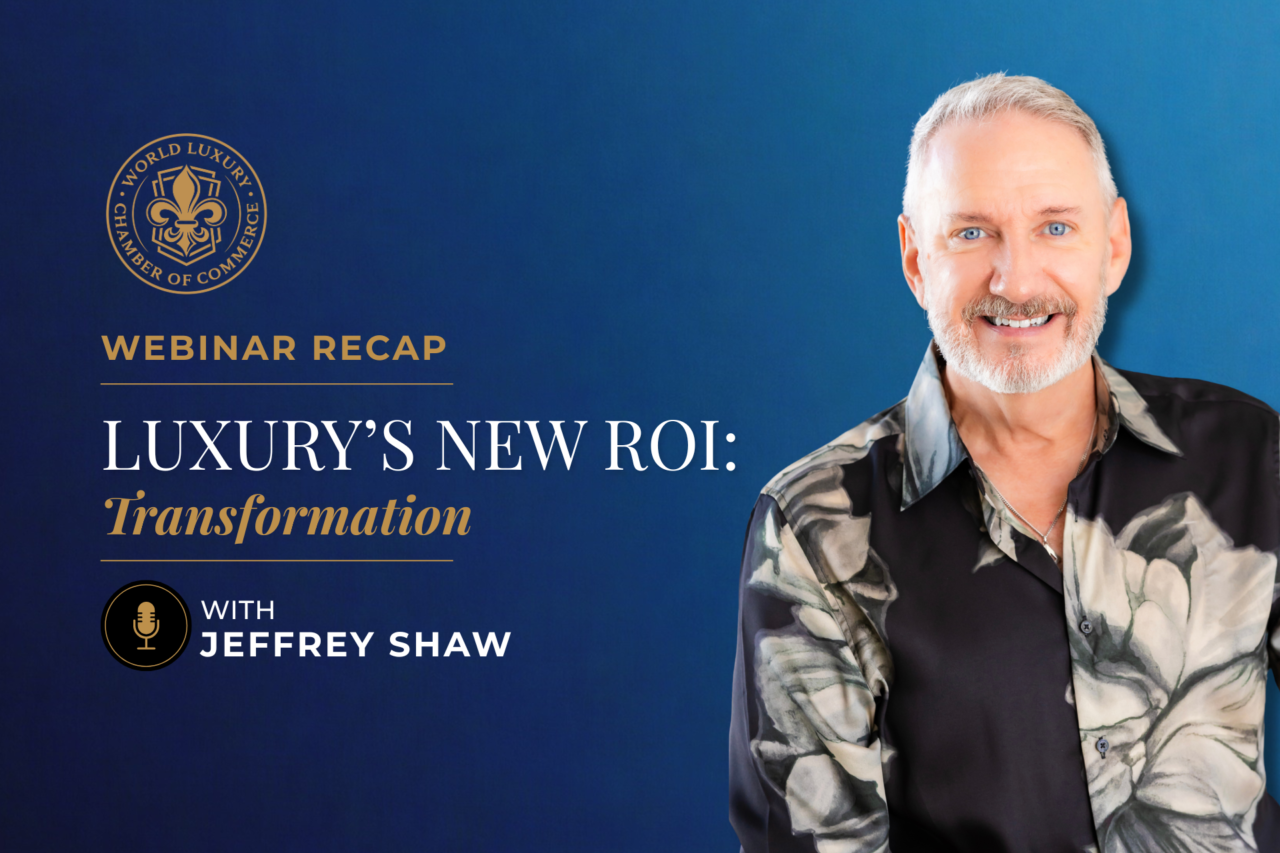
Luxury’s New ROI: Transformation was the focus of the latest World Luxury Chamber of Commerce webinar, where internationally renowned business coach and author Jeffrey Shaw explored why the future of luxury lies beyond exceptional products and memorable experiences. As customer expectations continue to rise, Shaw argued that the brands that will stand out are those that create meaningful personal transformation. Below are the key insights from the session.
1. Luxury’s next competitive advantage is transformation, not experience.
Exceptional experiences are no longer enough. Today’s affluent customers expect outstanding service as a baseline, making personal transformation the new differentiator.
2. Transformation is a lasting internal change.
Jeffrey defined transformation as a lasting change in how someone thinks, feels, behaves, or sees themselves. Luxury brands should aim to create moments that leave a meaningful impact beyond the purchase.
3. Experiences entertain; transformation changes people.
While experiences are memorable, transformation becomes part of a person’s identity. The most valuable luxury offerings help customers see themselves differently.
4. Luxury should continue doing what it has always done: lead rather than follow.
As technology becomes more prevalent and experiences become commonplace, luxury has another opportunity to distinguish itself by becoming more human, more personal, and more emotionally meaningful.
5. Transformation cannot be promised, only enabled.
Brands cannot manufacture transformation or market it as a guarantee. Instead, they should create the right conditions that allow customers to experience it for themselves.
6. Understand what clients truly want, even if they cannot express it.
One of Jeffrey’s central ideas was asking not what customers request, but what they genuinely seek beneath the surface. Luxury purchases often represent identity, meaning, memories, or personal aspirations.
7. Design emotional architecture, not just customer journeys.
Instead of focusing only on the sequence of interactions, brands should intentionally design how customers feel before, during, and after every touchpoint.
8. Invite customers to participate in creating the experience.
Transformation requires active involvement. Personalisation, meaningful conversations, and thoughtful questions create stronger emotional connections than passive service alone.
9. Help customers recognise their own transformation.
Reflection plays a critical role. Jeffrey suggested replacing routine questions like, “Did you enjoy your stay?” with questions that encourage customers to consider how they are leaving differently than when they arrived.
10. Support should begin before the experience and continue afterwards.
Anticipation before an experience and meaningful follow-up afterwards strengthen emotional impact and increase the likelihood that the experience creates lasting value.
Missed the session and want to attend another? Join our community to receive event invitations & more: https://worldluxurychamber.com/wlcc-community/.