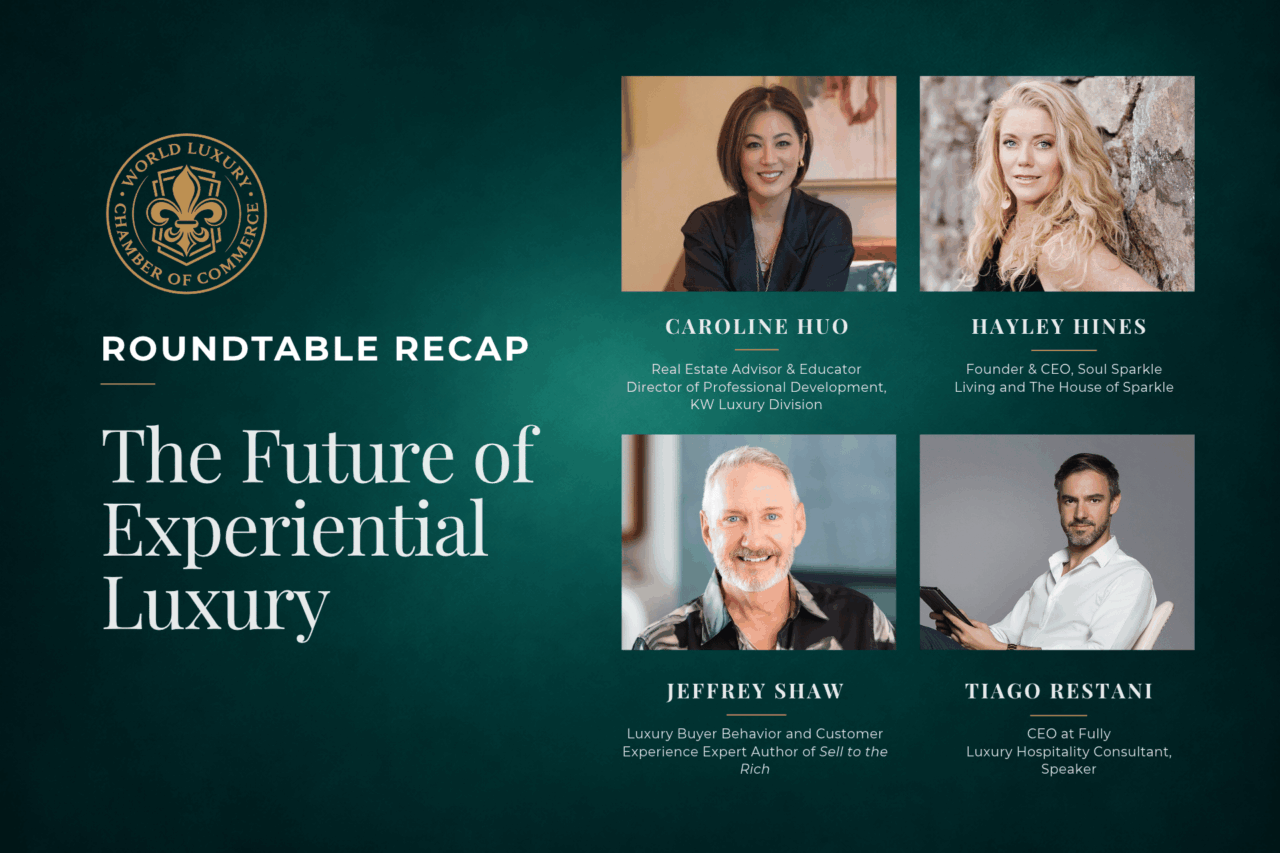
A hotel guest casually mentions that he likes yogurt. When he arrives at 1 a.m., the ingredients for a breakfast parfait are waiting in his room. Jeffrey Shaw shared that story at the World Luxury Chamber of Commerce’s November 18 executive roundtable, The Future of Experiential Luxury. He had called ahead because he needed something to eat before an early meeting. Somewhere in that conversation, someone picked up on a passing detail and made his morning easier.
It was a small story to open a conversation about a part of the luxury industry often associated with elaborate gestures. The session brought together Jeffrey, author of Sell to the Rich, Caroline Huo of Keller Williams Luxury, Hayley Hines of Soul Sparkle Living, and Tiago Restani of Fully. Caroline joined for the introductions before storm-related internet outages cut her time short. As the discussion moved from hotels and restaurants to retail and online service, the panel kept coming back to a quality that’s easy to recognize when you experience it and harder to build into a business: knowing what someone needs in the moment.
Hayley picked up on the hotel story by asking what happens in the first five minutes after a guest arrives. A traveler might have spent hours dealing with delays and walk through the door hungry, tired, and in no mood to answer a series of questions. In that moment, quieter music, gentler lighting, and time to settle in can do a surprising amount of work. Jeffrey brought up hotels that handle check-in in the guest’s room, an idea that took on new relevance in light of Hayley’s point. A process the hotel needs to complete can happen at a pace that suits the person who’s just arrived.
Tiago carried the idea past the hotel lobby. The same care can go into welcoming someone to a watch boutique, guiding them through a property purchase, or following up after they’ve made a decision. Hayley imagined a simple call from someone who asks how everything went and has the authority to help if something went wrong. The follow-up shows the customer that the relationship still matters after the purchase.
The conversation took a turn when Tiago talked about restaurants and the pressure to create something that looks extraordinary in a photograph. “Would we still do this if nobody photographed it?” he asked. Sometimes, he said, the answer is yes. A bit of theater can make the discovery of a new ingredient more memorable. But if the dish cools while guests wait, or a long explanation repeatedly interrupts the table’s conversation, it’s worth asking who the performance is for.
Hayley had a story of her own. At the launch of her social club, she had put care into the lighting, the candles, and how the room felt. By the end of the evening, she realized she hadn’t picked up her phone to take a single photo. She wondered what she would post, then thought about the messages guests were sending her. They were telling her how much they’d enjoyed being there together. Their response told her something a photograph of the room couldn’t capture.
That question of how people feel carried into the discussion about AI. Jeffrey was open to using it to help a customer find their way around a website or narrow down what they’re looking for. What mattered to him was knowing when he was interacting with AI and being able to reach a person easily when the conversation called for one. Tiago pictured a guest whose evening had gone wrong. A system might help staff remember the guest’s preferences, but someone on the team still has to hear the concern, take responsibility, and decide how to put things right.
It was a point Jeffrey returned to when asked what luxury businesses should rethink. Teams can be trained to deliver a service consistently. They also need room to exercise judgment: to spot when someone wants to talk, recognize when they’d rather be left to settle in, or notice a detail worth acting on.
To close, Tiago asked what a customer might remember a month later. It could be the story behind a dish, a conversation they were glad to have, or, for one guest arriving at 1 a.m., the relief of discovering that breakfast was already taken care of.
Five Takeaways from the WLCC Roundtable
- Start with the first five minutes. Walk through the experience as a customer would. What could your team anticipate or take care of before someone has to ask?
- Give the follow-up a purpose. After a purchase or visit, have someone reach out who can act on what the customer tells them. A personal check-in matters more when the person making it can put things right.
- Give teams room to read the moment. Service standards give staff a starting point. Give them the discretion to slow down, offer more guidance, or give a customer space when the situation calls for it.
- Make it easy to reach a person. AI can help customers find information and narrow down choices. When they need human help, pass along enough context that they can pick up the conversation without starting over.
- Ask what customers will remember a month later. Apply Tiago’s test before investing in an elaborate experience: would you still do it if nobody photographed it? The answer can help you decide which details are worth the time, attention, and budget.
Missed the session and want to attend another? Join our community to receive event invitations & more: https://worldluxurychamber.com/wlcc-community/