Asia remains a major source of opportunity for international luxury brands, but success increasingly depends on understanding the differences between its markets rather than treating the region as a single consumer base.
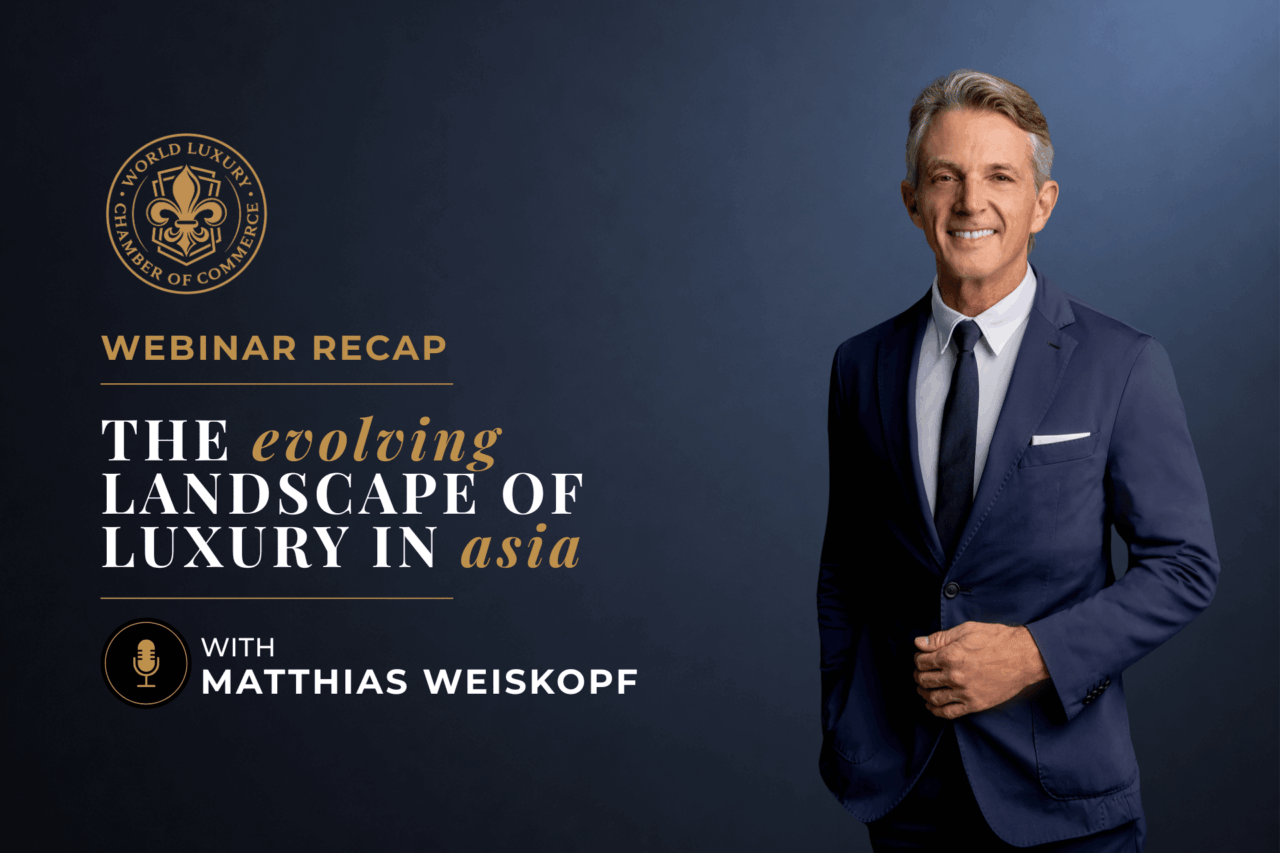
During a recent World Luxury Chamber of Commerce webinar, Matthias Weiskopf, drawing on more than 25 years of experience with brands including Porsche, Ferrari, and McLaren, examined how Asia’s luxury markets have matured, why established expansion strategies are losing effectiveness, and what brands must reconsider to remain competitive.
The End of the Universal Asia Strategy
For years, international luxury brands relied heavily on China as the foundation of their regional strategies, often attempting to replicate successful approaches in neighboring markets.
Weiskopf challenged this model, emphasizing that differences in consumer sophistication, cultural expectations, retail infrastructure, and market maturity make standardized strategies increasingly ineffective.
Singapore’s advanced infrastructure and technology-oriented consumers, Japan’s exceptional service standards, South Korea’s cultural influence, and India’s geographically dispersed wealth each demand distinct approaches.
The implication is clear: regional scale cannot replace local understanding.
Luxury Retail Must Offer More Than Products
Physical retail is experiencing renewed investment across Asia, but the purpose of luxury stores is changing.
Weiskopf highlighted Dior Gold House in Bangkok, Louis Vuitton’s experiential destinations in China, and Porsche’s innovative retail concepts in Singapore as examples of brands creating environments that combine commerce, hospitality, culture, and storytelling.
These spaces serve different audiences, from aspirational consumers discovering a brand through accessible experiences to established clients seeking private, highly personalized services.
However, Weiskopf cautioned that experiential retail cannot rely on novelty alone. Brands must continually refresh their environments and offer compelling reasons for customers to return.
Heritage Is Becoming a Competitive Advantage
As Asian luxury markets mature and local competitors strengthen, international brands can no longer depend solely on recognition or prestige.
Weiskopf pointed to initiatives showcasing craftsmanship and automotive heritage as ways established brands communicate the substance behind their positioning.
For European luxury houses, demonstrating how products are made, explaining their heritage, and making craftsmanship tangible can help distinguish genuine expertise from increasingly sophisticated competition.
India’s Opportunity Comes With Complexity
India presents substantial potential, supported by growing wealth and expanding luxury demand outside its largest metropolitan centers.
Yet Weiskopf stressed that market entry requires more than opening a flagship boutique. Distribution partnerships, geographic reach, infrastructure, and cultural preferences all influence commercial viability.
His experience introducing McLaren to India illustrated why brands may need nationwide roadshows and localized engagement to reach customers spread across multiple cities.
The Next Competitive Advantage: Meaningful Integration
Perhaps the session’s most important conclusion was that digital commerce and physical retail are not competing strategies.
While e-commerce and omnichannel engagement remain essential, brands are simultaneously reinvesting in physical environments that establish trust, deepen relationships, and communicate their identity.
For luxury businesses considering further expansion across Asia, the opportunity lies not simply in entering more markets, but in building the right presence, experience, and relationships within each one.
As Weiskopf observed, the era of opening stores and expecting automatic success is over.
Missed the session and want to attend another? Join our community to receive event invitations & more: https://worldluxurychamber.com/wlcc-community/