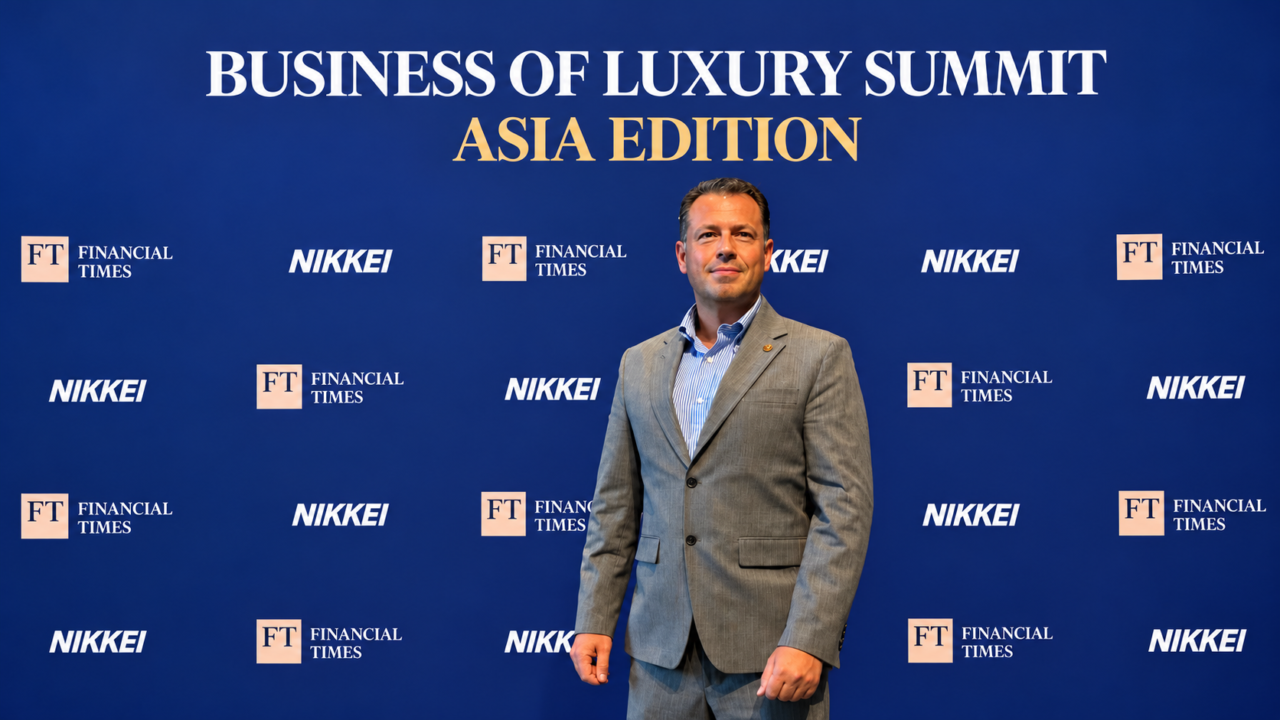
The Financial Times Business of Luxury Summit – Asia Edition, held on 19–20 October 2026 at Capella Bangkok, brought together international luxury executives, industry experts and business leaders to discuss the opportunities and challenges facing the global luxury sector. The World Luxury Chamber of Commerce (WLCC) was pleased to support the event as an official Supporting Partner.
Following the Summit, Alexander Chetchikov, President of the WLCC, shared eight key insights into the future of luxury in Asia, highlighting changing consumer expectations, the growing influence of local brands and the new realities of competing in one of the world’s most important luxury markets.
1. The End of Luxury’s Golden Era of Growth
For years, China served as a major growth engine for the global luxury industry, driven by strong consumer demand and an extraordinary appetite for international luxury brands.
That period of relatively predictable expansion is coming to an end. Luxury houses can no longer assume that established brand recognition or international prestige will automatically translate into sales.
Future growth will require stronger differentiation, a deeper understanding of consumer priorities and a compelling reason for customers to choose one brand over another.
2. China’s Fragile Economic Recovery
China’s economic slowdown and uncertainty surrounding its domestic market have contributed to more cautious consumer spending.
Even affluent customers are reconsidering discretionary purchases, placing greater emphasis on value and becoming more selective about where they spend.
For luxury businesses, this environment requires a more considered approach to pricing, product positioning and customer relationships.
3. The Growing Influence of Local Luxury Brands
European heritage is no longer an automatic guarantee of consumer preference.
The rise of Guochao, a movement celebrating Chinese culture, craftsmanship and innovation, is strengthening the position of domestic luxury brands.
Companies such as Qeelin, Chow Tai Fook, Atelier Wen, Samuel Guì Yang, Uma Wang and Shanghai Tang demonstrate the growing diversity and appeal of luxury brands with strong Chinese cultural connections.
Their increasing relevance suggests that international luxury houses must compete not only on reputation and heritage, but also on creativity, cultural relevance and product quality.
4. Asia’s Younger Luxury Consumers
Luxury consumers in many Asian markets are considerably younger than their counterparts in Europe and the United States.
Millennials and Generation Z, particularly those aged 20–35, play an important role in luxury consumption. For these customers, luxury often becomes a form of personal expression earlier in life.
Digital platforms, social media and family purchasing power contribute to this dynamic.
Brands must respond to younger consumers’ expectations and engage with them through familiar digital ecosystems, including WeChat in China and KakaoTalk in South Korea.
5. More Knowledgeable and Selective Customers
Asian luxury consumers are becoming increasingly sophisticated in their understanding of fashion, craftsmanship, quality and pricing.
Purchasing decisions are less dependent on visible logos or brand recognition alone. Customers are paying closer attention to the value, originality and quality behind luxury products.
This development places greater importance on product excellence, transparency and the ability of brands to communicate what makes their offerings genuinely distinctive.
6. A Shift Towards Domestic Luxury Shopping
Luxury shopping in Asia is increasingly taking place closer to home.
Narrowing international price differences, the expansion of flagship boutiques and improvements in local luxury retail experiences are encouraging consumers to purchase domestically rather than travel abroad.
For many customers, personalised service, exclusive products and meaningful brand experiences are becoming more important than the traditional appeal of shopping in Paris, Milan or Tokyo.
This creates opportunities for luxury brands to strengthen their local retail presence and invest in long-term customer relationships.
7. Authentic Cultural Understanding Over Superficial Localisation
Consumers increasingly expect luxury brands to demonstrate a genuine understanding of local traditions, values and cultural identities.
Simply adding familiar cultural symbols to products or seasonal campaigns is no longer sufficient.
Successful localisation requires meaningful engagement with local creative communities, including collaborations with architects, designers, artists and craftspeople.
For international luxury houses, cultural sensitivity and authenticity are becoming essential elements of brand strategy.
8. The Expansion of Luxury Resale
The luxury resale market is gaining acceptance across Asia as attitudes towards pre-owned goods continue to change.
Digital resale platforms and livestream commerce are making secondary-market transactions more accessible and transparent.
Consumers are also paying closer attention to the potential resale value of their purchases, particularly in categories such as collectible watches and iconic handbags.
This reflects a broader change in how customers evaluate luxury goods, considering not only immediate desirability but also their long-term value.
What These Developments Mean for the Future of Luxury in Asia
Together, these observations point to an increasingly competitive and sophisticated luxury market across Asia. Established international brands face growing pressure to demonstrate their relevance, while domestic luxury businesses are gaining recognition through craftsmanship, cultural identity and innovation. Consumers are younger, better informed and more selective. They expect brands to understand their lifestyles, respect their cultures and provide experiences that justify premium pricing.
For the global luxury industry, Asia remains a market of considerable opportunity, but success will increasingly depend on the ability to respond to these changing expectations.
Through its international network and partnerships with leading industry events, the World Luxury Chamber of Commerce continues to encourage dialogue between luxury leaders, share market perspectives and support meaningful connections across the global luxury community.
Explore the WLCC Events Calendar to discover upcoming luxury industry events, international summits, and networking opportunities around the world: https://worldluxurychamber.com/events/