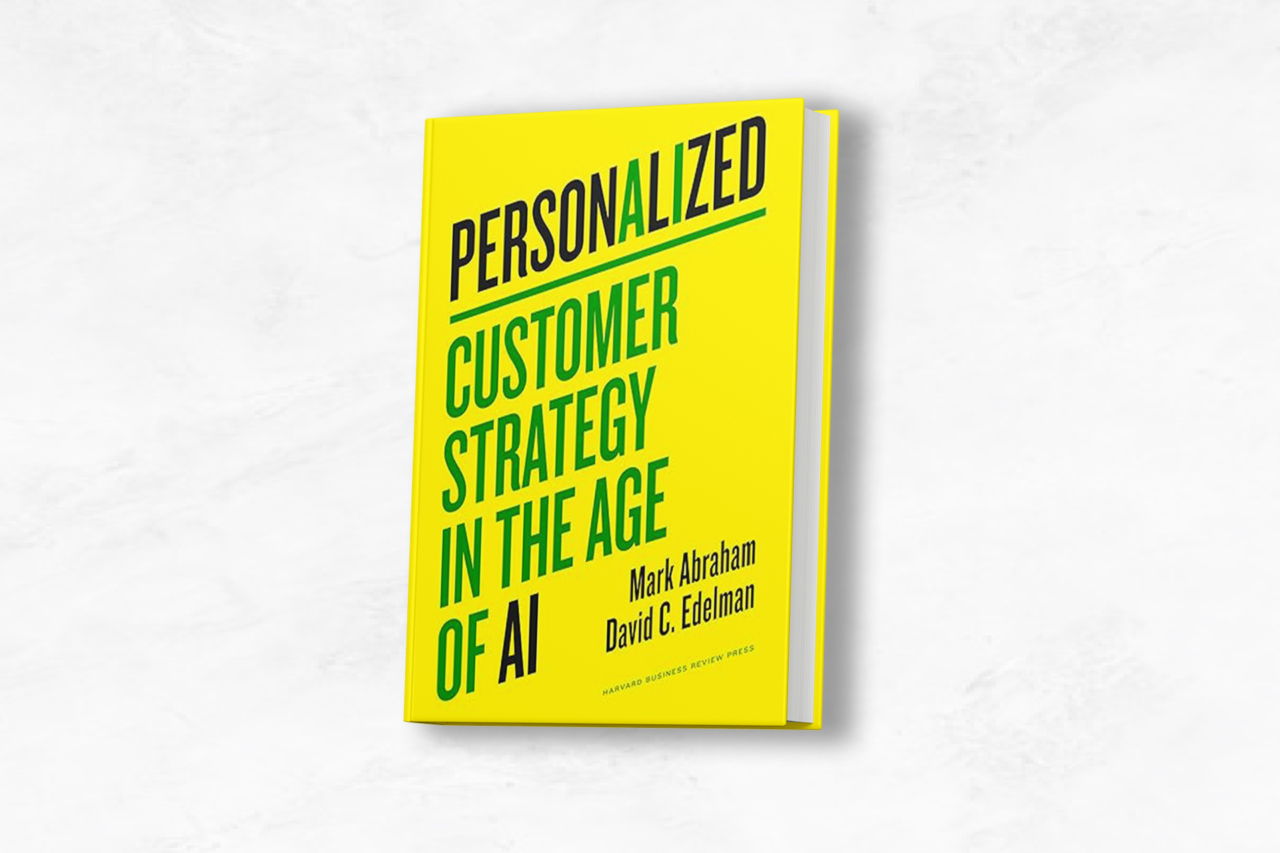
Authors: Mark Abraham, David C. Edelman
Publication Date: 2024
Personalized: Customer Strategy in the Age of AI argues that personalization has moved beyond marketing jargon and become a core business requirement. Mark Abraham and David C. Edelman examine why many companies still fail to deliver experiences that feel relevant, useful, and timely, even as consumers have grown accustomed to platforms that anticipate their needs. The book focuses on how businesses can use data, AI, and organizational change to build customer relationships that feel consistent rather than fragmented.
The authors contend that most personalization efforts fall apart because companies treat them as isolated campaigns instead of a company-wide strategy. A business may send targeted emails or product recommendations, but still frustrate customers with disconnected service, repetitive messaging, or irrelevant offers. Abraham and Edelman argue that effective personalization depends on coordination across marketing, operations, technology, and customer service.
At the center of the book are the “Five Promises of Personalization,” a framework designed to help companies rethink how they interact with customers. “Empower Me” focuses on understanding what customers are trying to accomplish and removing friction from the process. “Know Me” examines the role of trust, particularly how companies collect and use data responsibly. “Reach Me” deals with timing and communication channels, stressing that customers respond better when outreach feels appropriate instead of intrusive. “Show Me” looks at tailored content and the growing role of generative AI in producing individualized experiences at scale. Finally, “Delight Me” addresses the internal systems and workflows required to sustain improvement over time.
Rather than presenting personalization as a purely technical problem, the book spends considerable time on culture and execution. The authors discuss how companies often struggle with outdated structures, siloed teams, and competing incentives that prevent customer data from being used effectively. AI may provide the tools, but leadership decisions determine whether those tools create value or confusion.
The examples come from industries including retail, banking, healthcare, travel, and technology. These case studies illustrate both successful and failed attempts to personalize customer interactions. Some organizations use AI to simplify decisions and improve service, while others overwhelm customers with poorly targeted communication that damages trust.
Throughout the book, Abraham and Edelman maintain a practical tone. They avoid presenting AI as a magic solution and instead emphasize experimentation, measurement, and operational discipline. Their argument is straightforward: companies that understand customers at an individual level and respond intelligently will gain loyalty and long-term growth, while those that rely on generic experiences will struggle to keep pace with rising expectations.
Get the book on Amazon
Join the WLCC Community for exclusive insights, curated updates, and meaningful connections with global leaders: https://worldluxurychamber.com/wlcc-community/