By James W Phillips, Founder & CEO, JWP Media Group
In a world overflowing with luxury products, perhaps the most valuable thing a brand can offer is no longer the object itself — but access to the people, passion and craftsmanship behind it.
There was a time when acquiring something luxurious felt genuinely significant.
A beautifully engineered watch, a hand-finished motor car, a couture garment, a piece of jewellery or a bottle from an exceptional Champagne house wasn’t simply another purchase. There was anticipation attached to it. You noticed the weight of it in your hand, the stitching, the materials, the engineering, the tiny details somebody had obsessed over.
You respected it.
More importantly, perhaps, you respected the people who had created it.
Today, in my view, luxury finds itself in a very different world.
There are thousands of brands competing for the luxury consumer’s attention. Social media has created an endless shop window of supercars, watches, yachts, hotels, handbags, private jets and restaurants. Things that were once rarely seen are now consumed visually hundreds of times before breakfast.
And that presents luxury with an interesting problem.
What happens when extraordinary becomes nothing more than ordinary content?
We have entered an age in which the luxury object can sometimes be worth less to its owner than the content it generates.
A supercar doesn’t necessarily need to be cherished. For some influencers, damaging it or even destroying it can generate millions of views.
The destruction itself becomes entertainment. I noticed this recently with a content creator, his rare supercar had been destroyed in an accident, but he quickly turned destruction of something precious into a comical post, stood on the roof and posed – I was appalled.
The algorithm doesn’t particularly care about the thousands of hours of engineering, design and craftsmanship behind the object. It cares whether somebody stops scrolling.
That represents an extraordinary cultural shift.
I’m not suggesting that every luxury consumer behaves this way — far from it. There remains a sophisticated global audience with enormous appreciation for craftsmanship and provenance.
But luxury brands should pay attention to what this culture tells us.
When possessions become props, the emotional connection between creator and consumer begins to disappear.
We Have Forgotten The Hands Behind The Object
This, for me, is where luxury needs to rediscover something fundamental.
Behind every genuinely exceptional product there are people.
There is the watchmaker assembling movements that most of us could barely see without magnification. The tailor who knows instinctively how a fabric should fall. The winemaker or cellar master whose decisions today may not be fully appreciated for years. The designer drawing something that doesn’t yet exist. The engineer obsessing over a component the eventual owner may never even see.
Luxury has always been about these people.
Yet somewhere along the way, we became obsessed with the finished object as a prop and increasingly disconnected from its creation.
And perhaps that is why some luxury has become so easy to disrespect.
Luxury In An Increasingly Fractured World
There is another uncomfortable dimension to this.
We are living through a period of geopolitical tension, war, protest and increasingly polarised ideologies. Luxury objects and symbols of wealth can become targets for anger, protest or destruction.
An expensive object can very quickly stop being viewed as the culmination of human ingenuity and instead become simply a symbol of wealth, privilege or a system somebody opposes.
But destroying an object doesn’t erase the human endeavour that created it.
Behind the façade of luxury are designers, craftspeople, engineers, entrepreneurs, family businesses and generations of accumulated knowledge.
Perhaps luxury has not done enough to tell their stories.
The Founder Is Becoming The Brand
This is why I believe one of the most important developments in luxury will be a return to the human being.
Consumers increasingly want to meet the founder.
They want to hear the designer speak.
They want to see inside the atelier.
They want to understand why something exists, where the materials came from, how it was made and why somebody devoted years of their life to becoming exceptionally good at making it.
That creates something which cannot simply be purchased from a boutique: connection.
And connection may become one of luxury’s most valuable currencies.
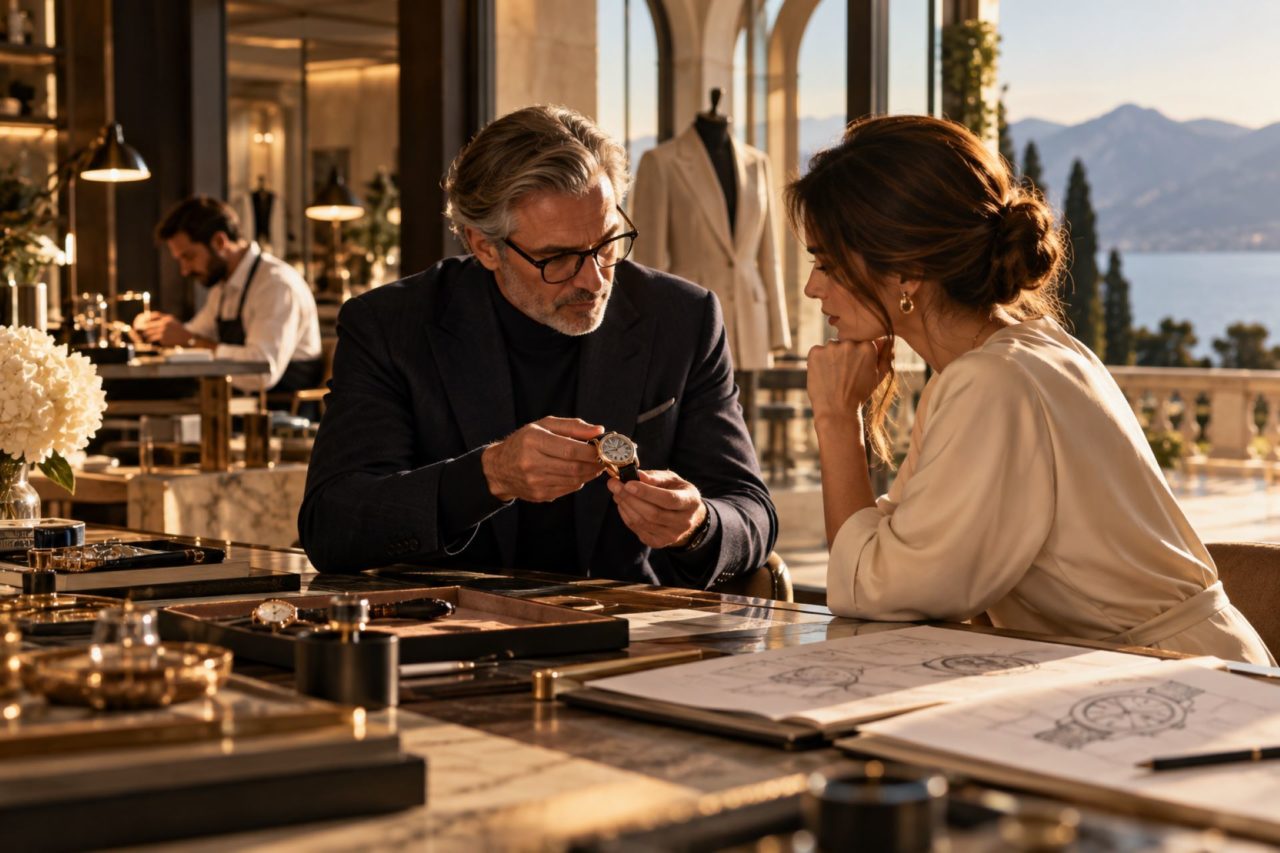
Imagine buying a watch having met the person who designed it.
Drinking a wine after walking the vineyard with the family who produced it.
Wearing a garment after meeting the designer and understanding what inspired the collection.
Owning a piece of art after spending an evening discussing it with the artist.
Suddenly the object means something different. It has a story.
And crucially, you are now part of that story.
From Ownership To Belonging
For decades, luxury marketing has largely been built around aspiration: this is something extraordinary that you should want to own.
The next chapter may be subtly different: This is something extraordinary we want you to understand.
That changes the relationship.
Luxury brands can become communities built around founders, craftspeople, clients, collectors and shared experiences rather than simply manufacturers selling expensive products.
Private dinners. Atelier visits. Factory tours. Conversations with designers. Members’ gatherings. Intimate launches. Behind-the-scenes experiences.
Not manufactured “VIP” theatre, but genuine access.
Because access to a £20,000 object can ultimately be replicated by anybody with £20,000.
Access to the person who created it cannot.
Making Luxury Feel Precious Again
Perhaps, then, the challenge facing luxury isn’t simply how to sell more luxury.
It is how to make luxury feel precious again.
And the answer may not lie in making products even more expensive, more exclusive or more ostentatious.
It may lie in reconnecting the product with the human story behind it.
The founder, the designer, the artisan, the engineer, the family, the obsession. The failures. The years it took to master the craft. When consumers understand those things, something changes. An object stops being merely expensive. It becomes something worth respecting.
And in a world overflowing with things labelled “luxury”, perhaps the greatest luxury of all will be knowing the people who made something truly exceptional.

James W Phillips
CEO & Founder of JWP Media Group
James W Phillips is a media entrepreneur, publisher, and luxury lifestyle specialist with over 30 years of experience in marketing, publishing, and business. He is the Founder and CEO of JWP Media Group and Editor-in-Chief of Relentless Magazine, focusing on luxury, entrepreneurship, brand development, and the evolving world of premium lifestyle media.
Editorial Note: The views, opinions, and analysis expressed in this article are those of the author and do not necessarily represent the views or positions of the World Luxury Chamber of Commerce (WLCC).
For more expert articles and exclusive interviews, subscribe to the WLCC Newsletter: https://worldluxurychamber.com/wlcc-community/