For decades, luxury was largely defined by status, exclusivity, and scarcity. Yet as consumer expectations continue to evolve, these traditional markers alone are no longer enough to create lasting value.
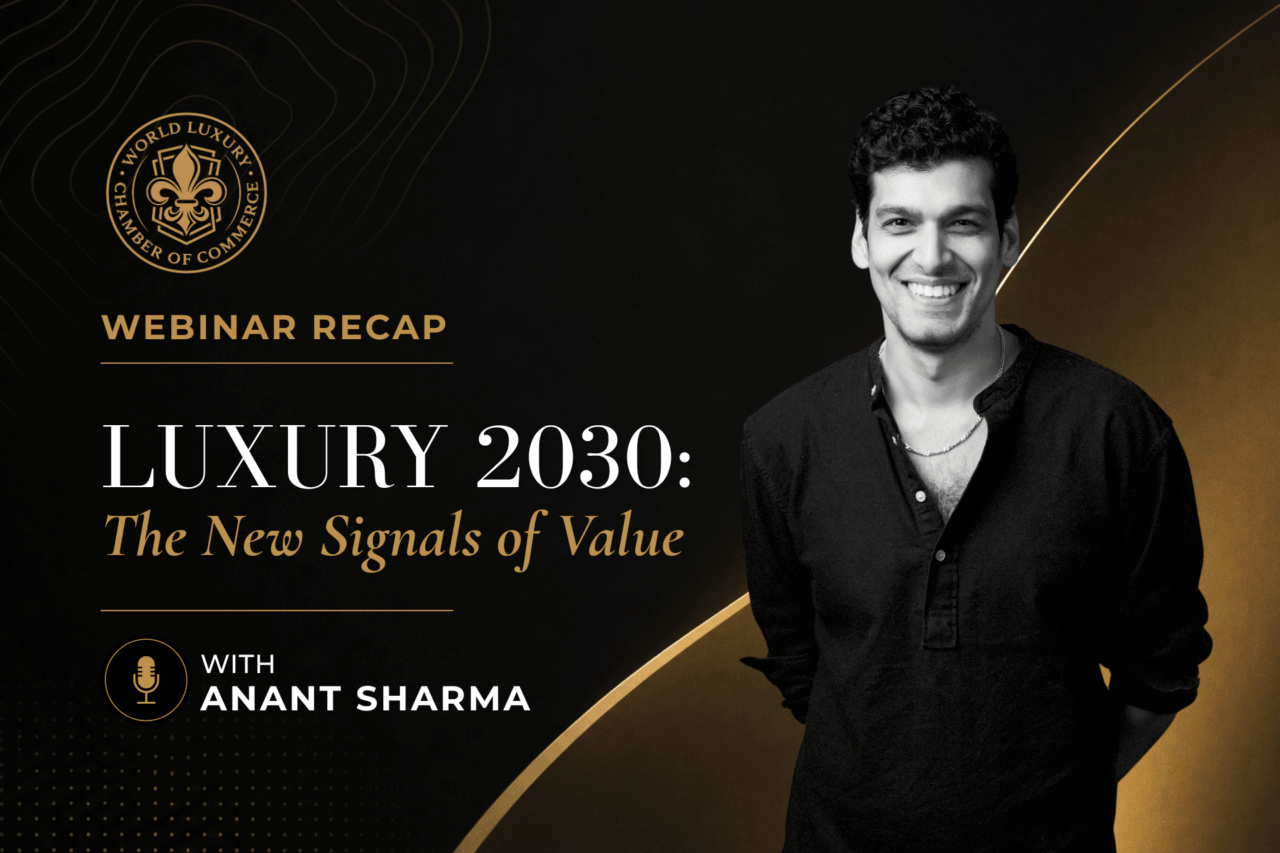
In WLCC’s recent webinar, Luxury 2030: The New Signals of Value, Anant Sharma, Founder and CEO of Matter Of Form, explored the emerging forces reshaping the luxury landscape and what brands must understand to remain relevant in the decade ahead.
Luxury Is Shifting from Possession to Meaning
One of the central themes of the discussion was that luxury is increasingly moving beyond ownership and outward displays of wealth. While craftsmanship, heritage, and exclusivity remain important, consumers are placing greater emphasis on meaning, identity, wellbeing, emotional connection, and cultural relevance.
Luxury is becoming less about what people have and more about how experiences make them feel and what those experiences say about who they are.
For brands, this means designing value that resonates on a deeper psychological and emotional level rather than relying solely on traditional status signals.
Across fashion, automotive, hospitality and beyond, there is a similar red thread: what is the concept of value, and how do you design for it?
Anant Sharma
The Future of Luxury Is Built on Experience
As products become more accessible and digital channels continue to expand, experiences are becoming a primary source of differentiation.
Consumers increasingly seek memorable moments, personal stories, and meaningful interactions that create lasting emotional impact. The brands that succeed will be those that understand how to design experiences that are not only seamless but also emotionally engaging.
Luxury is no longer simply delivered. It is felt, remembered, and shared.
The Rise of Wellbeing as a Luxury Priority
Wellbeing emerged as one of the most significant themes influencing future luxury consumption.
From hospitality and travel to retail and lifestyle brands, consumers are placing greater value on experiences that contribute to physical, emotional, and mental wellbeing. This extends beyond traditional wellness offerings and into how brands create environments, services, and experiences that help people feel better, connect more deeply, and live more intentionally.
As luxury evolves, wellbeing is becoming a core component of perceived value rather than an optional enhancement.
Meaningful Inconvenience Creates Memorable Value
One of the most thought-provoking concepts discussed was “meaningful inconvenience.”
While consumers expect operational excellence and frictionless service, they do not necessarily want every experience to be effortless. Experiences often become more valuable when they involve participation, anticipation, discovery, or a sense of personal investment.
The lesson for luxury brands is clear: remove the invisible friction, but preserve the elements that create adventure, anticipation, authenticity, and emotional reward.
In a world optimized for convenience, carefully designed effort can enhance perceived value.
Families and Multi-Generational Experiences Matter More Than Ever
The conversation also highlighted the growing importance of designing luxury experiences for entire families rather than individual consumers.
Today’s affluent consumers increasingly seek opportunities to create shared memories and meaningful moments with loved ones. Children, in particular, are becoming important participants in luxury experiences, influencing decisions and shaping family expectations.
Brands that create experiences that bring families together and foster genuine connection will be well-positioned for future growth.
Designing for Human Psychology
Throughout the session, Sharma emphasized that understanding human behaviour remains at the heart of luxury strategy.
Whether through storytelling, experience design, hospitality, or product development, the most successful brands will be those that understand how people perceive value, form memories, and create meaning.
Luxury has always been psychological. What is changing are the signals consumers use to determine what is valuable.
Looking Ahead to 2030
The future of luxury will not be defined solely by rarity, prestige, or price. Instead, value will increasingly be created through emotional connection, wellbeing, personal identity, cultural relevance, and thoughtfully designed experiences.
For luxury leaders, the challenge is not simply to keep pace with changing consumer expectations but to understand the deeper human motivations driving them.
The brands that thrive by 2030 will be those that move beyond selling products and instead create meaningful value in people’s lives.
Missed the session and want to attend another? Join our community to receive event invitations & more: https://worldluxurychamber.com/wlcc-community/.